Last updated: September 2026
How Much Are Pocket Knives Worth?
Check current market values, learn what affects pricing, and get tips for buying and selling.
← All Pocket Knives valuationsWhat do you want to value?
Get the free app for unlimited scans


Pocket Knives Price Guide
Current market values based on recent sales data and market trends.
| Item | Condition | Price Range |
|---|---|---|
| Case pattern knife, current production | Mint in box | $45 - $120 |
| Case knife, 1970s dot dating | Unsharpened, excellent | $70 - $300 |
| Case knife, pre-1940 | Unsharpened | $150 - $900 |
| Remington bullet knife, pre-1940 | Excellent | $500 - $3,500 |
| Winchester knife, 1920s-30s | Excellent | $200 - $1,200 |
| Buck 110 folding hunter, vintage | Excellent | $60 - $250 |
| Schrade Walden, 1950s-70s | Excellent | $40 - $200 |
| Chris Reeve Sebenza | Excellent | $300 - $600 |
| Benchmade or Spyderco, current | Excellent | 40% - 60% of retail |
| Any knife that has been sharpened | Good | 30% - 60% of unsharpened |
What Determines Pocket Knives Value
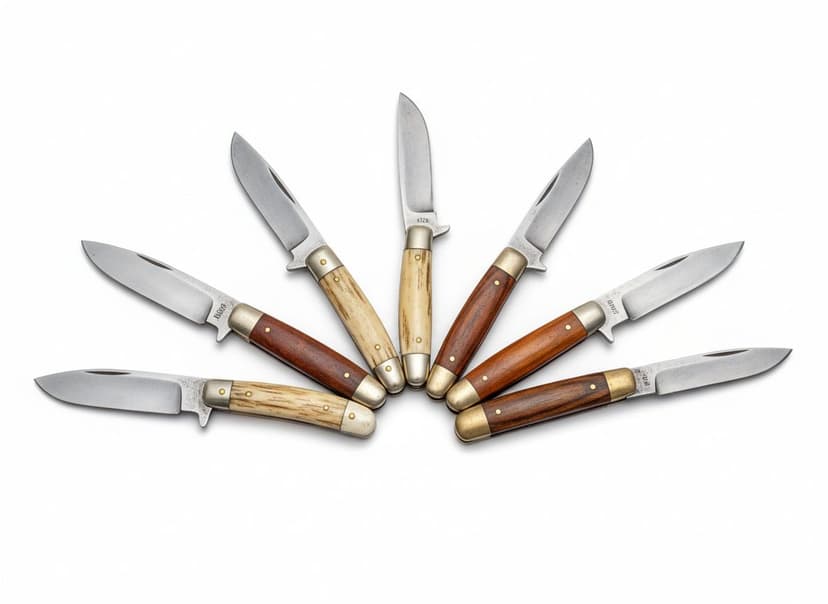
Pocket knife collecting is organized around brand, pattern, and the tang stamp, which is the maker's mark on the blade base that dates the knife precisely. W.R. Case & Sons is the dominant American collecting brand, and Case used a dot-and-symbol dating system on its tang stamps that identifies the exact year of manufacture, which is why Case collectors can price a knife from a photograph of the blade base. Older American knives from Schrade, Remington, Winchester, and Marbles have their own followings, with pre-1940 Remington and Winchester knives among the most valuable. Modern production knives from Benchmade, Spyderco, and Chris Reeve occupy a separate market driven by materials and mechanism rather than age. The condition rules in this category are strict and specific: sharpening removes metal from the blade and permanently reduces collector value, so an unsharpened knife with full original blade profile is worth several times a used one.
Brand and era set the framework, with pre-1940 American knives from Remington, Winchester, and early Case at the top. Tang stamp identification is the primary dating tool and collectors price directly from it, so learning the stamp progression for any brand you collect is the essential skill. Blade condition dominates the physical assessment, and the market distinguishes sharply between unsharpened knives with full factory blade profile and used knives where sharpening has narrowed the blade. Snap and walk, meaning how crisply the blade opens and closes against the backspring, indicates mechanical health. Handle material matters, with genuine stag, bone, and pearl above synthetic, and cracked or shrunken bone reducing value. Blade etching and shield condition are inspected. Original box and papers add value for modern collectible knives specifically. Rust and pitting are common on old carbon steel blades and reduce value substantially.
Buying & Selling Tips
Buying
Photograph or examine the tang stamp first. It dates the knife precisely and determines the value bracket.
Check whether the blade has been sharpened by comparing the profile to a known unsharpened example. Sharpening halves collector value.
Test the snap and walk. A blade that opens loosely or does not seat firmly indicates a worn backspring.
Inspect bone and stag handles for cracks and shrinkage. Natural materials move with humidity over decades.
Buy unsharpened knives if collecting. If buying to carry, sharpened knives are much cheaper and function identically.
Selling
Photograph the tang stamp clearly. It is the single image every knife collector asks for.
Never sharpen a collectible knife before selling. It permanently reduces value by more than the sharpening improves usability.
State whether the knife has been carried, sharpened, or is unused. Collectors grade strictly and honesty prevents returns.
Include the original box and papers for modern collectible knives. They add a meaningful premium.
Check shipping restrictions before listing. Some carriers and jurisdictions restrict knife shipments and marketplace policies vary.
Pocket Knives FAQ
How do I date a Case pocket knife?
Case uses a dot and symbol system on the tang stamp, the mark at the base of the blade. From 1970 onward the number of dots below the stamp decreases by one each year within a decade, allowing precise dating.
Does sharpening reduce a pocket knife's value?
Substantially, by roughly forty to seventy percent for collectible knives. Sharpening removes metal and narrows the blade profile permanently, and collectors pay a large premium for knives with full factory geometry.
Which pocket knives are the most valuable?
Pre-1940 Remington bullet knives lead at $500 to $3,500, followed by 1920s and 1930s Winchester knives at $200 to $1,200 and early Case patterns with pre-war tang stamps.
Do modern knives hold their value?
Premium American makers do reasonably well. A Chris Reeve Sebenza holds sixty to eighty percent of retail, while mainstream Benchmade and Spyderco models settle at forty to sixty percent.
What is snap and walk on a folding knife?
It describes how the blade travels against the backspring and how firmly it seats when open or closed. Strong snap indicates a healthy spring and good fit, while a loose or sluggish blade indicates wear.
Got Pocket Knives to Value?
Upload a photo and get a free AI-powered valuation in seconds. No sign-up required.