Last updated: September 2026
How Much Is a Persian Rug Worth?
Check current market values, learn what affects pricing, and get tips for buying and selling.
← All Persian & Oriental Rugs valuationsWhat do you want to value?
Get the free app for unlimited scans


Persian Rugs Price Guide
Current market values based on recent sales data and market trends.
| Item | Condition | Price Range |
|---|---|---|
| Fine silk Qum, 4x6 ft | Excellent, 500+ KPSI | $6,000 - $30,000 |
| Isfahan wool on silk, 5x8 ft | Excellent, 400+ KPSI | $5,000 - $25,000 |
| Nain, 8x10 ft | Excellent, 300 KPSI | $3,000 - $12,000 |
| Tabriz, 9x12 ft | Excellent, 200-300 KPSI | $2,500 - $12,000 |
| Kashan, 8x10 ft | Excellent | $1,800 - $7,000 |
| Heriz, 9x12 ft | Good | $1,200 - $6,000 |
| Hamadan or village rug, 5x8 ft | Good | $300 - $1,200 |
| Antique pre-1930 fine rug | Excellent | $8,000 - $80,000 |
| Any rug with wear to the foundation | Worn | 20% - 50% of good |
| Machine-made Persian style rug | Any | $60 - $400 |
What Determines Persian Rugs Value
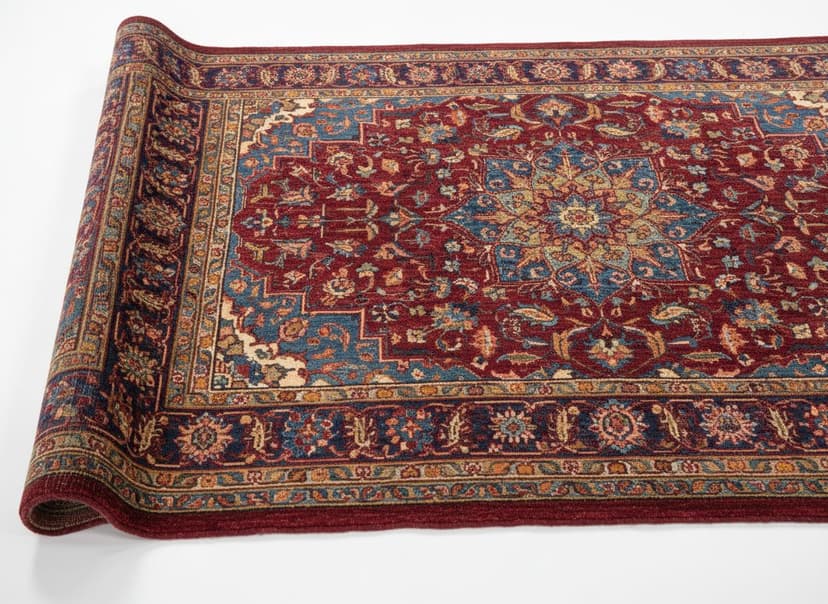
Persian rug values are determined by a specific set of measurable factors, which makes this category more objective than most antiques once you know what to look for. Origin is the first, and rugs are named for the city or region where they were woven, with Isfahan, Nain, Qum, and Tabriz at the fine end and tribal weavings from Hamadan, Heriz, and various nomadic groups occupying different markets. Knot density, counted per square inch on the back, is the clearest single quality indicator and ranges from around 30 for coarse tribal rugs to over 500 for the finest silk city pieces. Materials matter enormously, with silk above fine wool above ordinary wool, and the foundation being cotton or silk rather than wool in finer pieces. Age adds value only when combined with quality and condition. The most important commercial distinction is hand-knotted versus machine-made, and it is instantly checkable by looking at the back and the fringe.
Origin and weaving quality set the framework, and the named city weaves command consistent premiums over village and tribal production. Knot density is the most objective quality measure and is counted directly on the back, with higher counts allowing finer detail. Materials matter greatly, and silk pile on a silk foundation is the top tier. Dye type is a major factor, since natural vegetable dyes age into rich, varied tones while early synthetic dyes can fade badly or run, and this is checked by examining the color at the base of the pile versus the tip. Age adds value when combined with quality, and antique pieces from before roughly 1930 with natural dyes command large premiums. Condition covers pile height, foundation exposure, moth damage, repairs, and any color run from water damage. Size affects price non-linearly, with unusual sizes sometimes harder to sell despite quality.
Buying & Selling Tips
Buying
Look at the back. Hand-knotted rugs show the pattern clearly with visible individual knots, while machine-made rugs have a uniform grid backing.
Check the fringe. On hand-knotted rugs the fringe is a continuation of the warp threads, not sewn on separately.
Count knots per square inch on the back. It is the most objective quality measure and correlates directly with price.
Part the pile and compare color at the base to the tip. Significant difference indicates fading or, in some cases, chemical washing.
Inspect for moth damage along the edges and under furniture positions. It is common in stored rugs and expensive to repair.
Selling
Have the rug professionally identified. Origin and age determine most of the value and a misidentified rug sells for a fraction.
Photograph the front, the back showing knot density, the fringe, and any wear areas or repairs.
Get it professionally cleaned before selling. It is inexpensive relative to the value and dramatically improves presentation.
Disclose all repairs and wear. Rug buyers examine carefully and undisclosed issues reliably cause returns.
Consider an oriental rug specialist or auction. General marketplaces routinely undervalue fine Persian rugs.
Persian Rugs FAQ
How can I tell if a Persian rug is handmade?
Look at the back. Hand-knotted rugs show the design clearly with individual knots visible, and the fringe is an extension of the warp threads. Machine-made rugs have a uniform backing and sewn-on fringe.
What is knot density and why does it matter?
Knot density is the number of knots per square inch, counted on the back of the rug. Higher density allows finer detail and indicates more labor, ranging from around 30 for coarse tribal rugs to over 500 for the finest silk pieces.
Are old Persian rugs worth more?
When combined with quality and good condition, yes. Antique rugs from before roughly 1930 used natural vegetable dyes that age into richer tones, and fine antique examples bring $8,000 to $80,000 or more.
Which Persian rugs are the most valuable?
Fine silk Qum and Isfahan rugs with knot densities above 400 per square inch lead, at $5,000 to $30,000 for moderate sizes. Antique examples of any fine city weave can exceed those figures substantially.
Does wear ruin a Persian rug's value?
Moderate pile wear reduces value by twenty to fifty percent, and wear that exposes the foundation warp is more serious. Professional repair is possible but visible, so condition should be assessed before purchase.
Got Persian Rugs to Value?
Upload a photo and get a free AI-powered valuation in seconds. No sign-up required.