Last updated: September 2026
How Much Are Martin Acoustic Guitars Worth?
Check current market values, learn what affects pricing, and get tips for buying and selling.
← All Guitars valuationsWhat do you want to value?
Get the free app for unlimited scans


Martin Acoustic Guitars Price Guide
Current market values based on recent sales data and market trends.
| Item | Condition | Price Range |
|---|---|---|
| Pre-War D-45 (1930s) | Good | $300,000 - $600,000 |
| Pre-War D-28 (1930s-40s) | Good (Player Grade) | $30,000 - $60,000 |
| 1960s D-28 | Very Good | $4,000 - $7,000 |
| 1970s D-28 | Very Good | $2,000 - $3,500 |
| D-28 (Current Model, Used) | Excellent | $1,800 - $2,400 |
| D-18 (Current Model, Used) | Excellent | $1,400 - $1,900 |
| HD-28 (Current Model, Used) | Excellent | $2,000 - $2,700 |
| OM-28 (Current Model, Used) | Excellent | $2,000 - $2,600 |
| 000-15M | Excellent (Used) | $800 - $1,100 |
What Determines Martin Acoustic Guitars Value
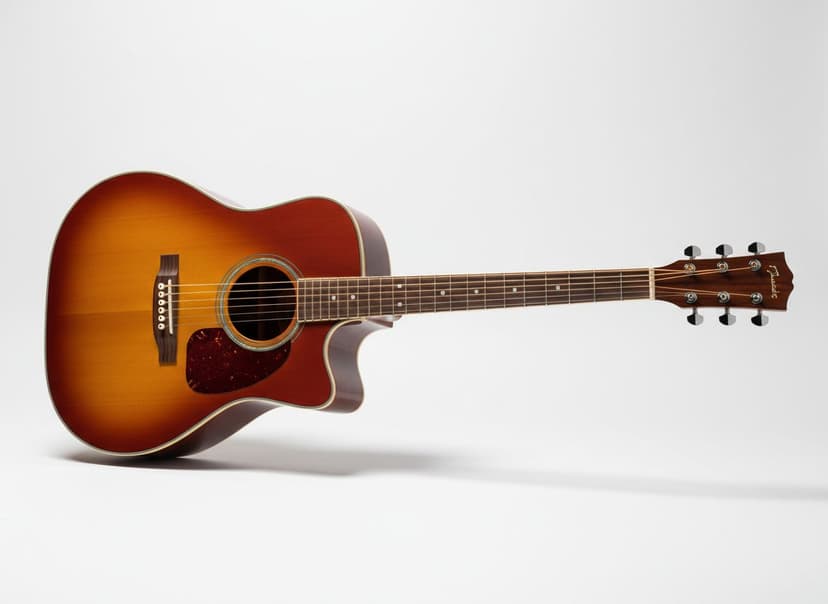
C.F. Martin & Company has been crafting acoustic guitars in Nazareth, Pennsylvania since 1833, making it one of the oldest and most respected guitar manufacturers in the world. Martin essentially invented the dreadnought body shape and the X-bracing pattern that became the industry standard. Vintage pre-war Martins (pre-1945) are among the most valuable acoustic guitars in existence, with a 1930s D-45 capable of fetching over $500,000. Modern Martin guitars hold their value exceptionally well compared to other acoustic brands, with popular models like the D-28, D-18, and HD-28 retaining 60-80% of their retail price on the used market.
Martin guitar values depend on the era (pre-war guitars command enormous premiums), model designation (D-45 > D-28 > D-18 in the dreadnought line), tonewoods (Brazilian rosewood commands the highest premiums, followed by Indian rosewood, then mahogany), bracing pattern (scalloped X-bracing is preferred for dreadnoughts), structural integrity (neck resets and crack repairs are common and reduce value), originality of all parts including tuners, bridge, nut, and saddle, and overall playability. Martin's Style numbers (18, 28, 35, 42, 45) indicate the level of ornamentation, with 45 being the most elaborate with abalone inlays.
Buying & Selling Tips
Buying
Have a luthier inspect any vintage Martin before purchase. Neck angle, brace condition, and hidden cracks can be expensive to repair.
Play the guitar acoustically without amplification to assess its true voice. A great Martin will project powerfully with complex overtones.
The Martin 15 series (000-15M, D-15M) offers all-solid-wood Martin quality at the most affordable price point.
Be cautious of guitars advertised as having Brazilian rosewood. Demand documentation or provenance, as misidentification is common.
Check the neck relief and action height: Martins are known for sometimes developing high action over time as the top bellies upward.
Selling
Include the serial number (stamped inside the body, visible through the soundhole) in your listing for easy model and year verification.
Have a luthier check the neck angle and overall setup before selling. A well-playing Martin sells significantly faster.
Photograph the top, back, sides, headstock, and soundhole label, plus any cracks, wear, or repairs.
Sell through Reverb.com, acoustic guitar forums, or specialty vintage guitar dealers for the best prices.
The original Martin hardshell case adds $100-$200 in value for modern models and considerably more for vintage instruments.
Martin Acoustic Guitars FAQ
Why are pre-war Martin guitars so valuable?
Pre-war Martins (made before 1945) are revered for several reasons: they used Brazilian rosewood and Adirondack (red) spruce, tonewoods now extremely scarce, combined with forward-shifted scalloped bracing that produces a rich, powerful tone. Decades of wood aging have opened up the tone further. Their historical significance, limited survival rate, and legendary sound quality create extreme demand among collectors and professional musicians.
What is the difference between a D-28 and an HD-28?
The HD-28 features herringbone trim around the top (hence the 'H'), scalloped bracing (lighter, more responsive tone), and a 1930s-style vintage appearance. The standard D-28 has non-scalloped bracing and simpler trim. Many players prefer the HD-28 for its slightly more open, vintage-style sound. The HD-28 retails for about $300-$400 more than the D-28.
How do I date my Martin guitar?
Martin guitars can be precisely dated using the serial number stamped on the neck block inside the body (visible through the soundhole). Martin has maintained detailed records since the company's founding, and serial number charts are widely available online. The serial number will tell you the exact year of manufacture.
Are modern Martin guitars as good as vintage ones?
This is debated among players and collectors. Modern Martins benefit from more consistent quality control and CNC precision, while vintage Martins have the advantage of aged tonewoods that have dried and opened up over decades. Many players feel that modern Martins with Authentic series features (scalloped bracing, hide glue, Adirondack spruce) approach vintage tone. The best answer is to play both and decide for yourself.
Related Articles
Related Price Guides
Got Martin Acoustic Guitars to Value?
Upload a photo and get a free AI-powered valuation in seconds. No sign-up required.