Last updated: September 2026
How Much Is a Gibson Les Paul Worth?
Check current market values, learn what affects pricing, and get tips for buying and selling.
← All Guitars valuationsWhat do you want to value?
Get the free app for unlimited scans


Gibson Les Paul Price Guide
Current market values based on recent sales data and market trends.
| Item | Condition | Price Range |
|---|---|---|
| 1959 Les Paul Standard 'Burst' | Very Good | $300,000 - $500,000+ |
| 1956 Les Paul Goldtop (P-90s) | Good | $20,000 - $35,000 |
| 1976 Les Paul Custom | Very Good | $3,500 - $5,500 |
| Les Paul Standard '50s (Current) | Excellent (Used) | $1,700 - $2,100 |
| Les Paul Standard '60s (Current) | Excellent (Used) | $1,700 - $2,100 |
| Les Paul Classic | Excellent (Used) | $1,200 - $1,600 |
| Les Paul Studio | Excellent (Used) | $800 - $1,100 |
| Les Paul Tribute | Excellent (Used) | $700 - $900 |
| Gibson Custom Shop Les Paul R9 ('59 Reissue) | Excellent | $4,000 - $6,000 |
| Epiphone Les Paul Standard | Excellent (Used) | $250 - $400 |
What Determines Gibson Les Paul Value
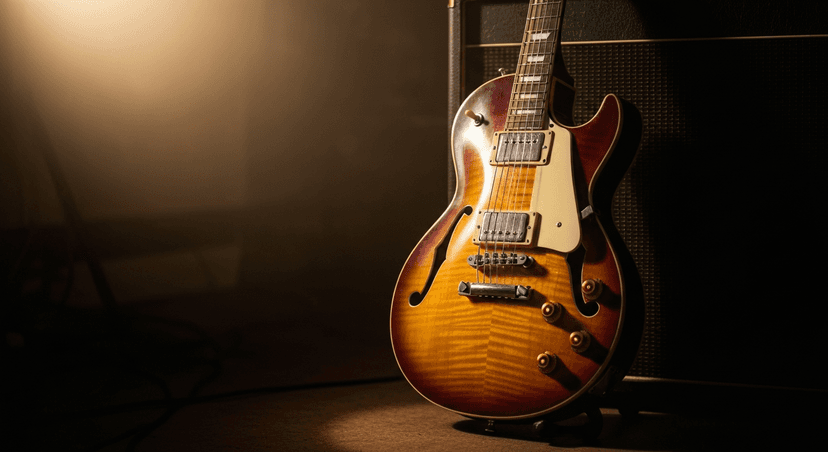
The Gibson Les Paul is one of the most celebrated electric guitars in history, prized for its rich, warm tone and sustain. Originally introduced in 1952 as a collaboration with guitarist Les Paul, the solid-body guitar has evolved through numerous iterations. The late-1950s 'Burst' models (1958-1960 Standard with sunburst finish) are considered the pinnacle of guitar craftsmanship, with prices regularly exceeding $300,000. Modern Gibson Les Pauls range from the affordable Tribute and Studio models to the flagship Standard, Custom, and Custom Shop offerings. The Les Paul's dual-humbucker design, mahogany body with maple top, and set neck construction give it a distinctive thick tone favored in rock, blues, and jazz.
Gibson Les Paul values depend on the era (1950s originals are worth a fortune), model tier (Custom Shop > Standard > Classic > Studio > Tribute), the quality of the figured maple top (flame and quilt tops command premiums), weight (lighter Les Pauls from the 1950s-60s are more desirable, while heavy Norlin-era guitars trade at a discount), hardware and pickup originality, finish condition, and neck profile. Gibson's inconsistent quality control over the decades means individual examples can vary. Some years and production runs are more desirable than others. The 2015 model year with its brass zero-fret nut and wider headstock is particularly avoided by buyers.
Buying & Selling Tips
Buying
Play before you buy when possible.Gibson Les Pauls vary significantly in weight (7-12 lbs), and heavy ones can cause shoulder fatigue.
Check the headstock joint carefully for repairs.Les Pauls are notorious for headstock breaks due to the angled design.
Avoid 2015 model year Les Pauls unless heavily discounted. The wider headstock and G-Force tuning system were unpopular.
Gibson Custom Shop R8 and R9 reissues offer vintage-like quality at a fraction of the cost of a real vintage 'Burst'.
The Les Paul Studio offers identical electronics and pickups as the Standard in a no-frills package at a significant savings.
Selling
Weigh your Les Paul and include the weight in listings. Sub-9 lb Les Pauls are highly sought after.
Photograph the flame or quilt maple top under good lighting to showcase the figure, which is a major selling point.
Check for and disclose any headstock repairs. These are common and significantly affect value, but many repaired Les Pauls are excellent players.
Sell through Reverb.com for the guitar-specific buyer audience, or use local classifieds for a quick sale.
Include original Gibson hardshell case, certificate of authenticity, and hang tags for maximum value.
Gibson Les Paul FAQ
Why are 1959 Les Pauls so expensive?
The 1958-1960 Les Paul Standards (known as 'Bursts' for their sunburst finish) are considered the finest electric guitars ever made. Only about 1,700 were produced before Gibson replaced the model with the SG. Their PAF (Patent Applied For) humbucking pickups, lightweight mahogany bodies, and beautifully figured maple tops produce a tone that has defined rock music. Scarcity, legendary status, and celebrity provenance have pushed prices to $300,000-$500,000 and beyond.
Is there a difference between Gibson and Epiphone Les Pauls?
Gibson Les Pauls are made in the USA with higher-grade tonewoods, Burstbucker or '57 Classic pickups, and nitrocellulose lacquer finishes. Epiphone Les Pauls are made in Asia with more affordable materials and proprietary pickups. The build quality gap has narrowed significantly in recent years, and many Epiphone Les Pauls play and sound excellent, making them a compelling value at 25-30% of Gibson's price.
What is a headstock break and does it affect value?
A headstock break occurs when the Gibson Les Paul's angled headstock snaps, typically from the guitar falling over. This is the most common damage to Les Pauls due to their headstock design. A properly repaired headstock break reduces value by 40-60%, but the guitar can play and sound just as good as before the break. Always inspect the back of the headstock under bright light for signs of repair.
Which Les Paul model is the best value?
The Gibson Les Paul Studio and Tribute offer the best bang for the buck. Both use the same USA factory, similar pickups, and identical scale length as the Standard. The Studio lacks binding and some cosmetic appointments, while the Tribute has a satin finish. Used Studios sell for $800-$1,100 and represent an outstanding value for a USA-made Gibson.
Related Articles
Related Price Guides
Got Gibson Les Paul to Value?
Upload a photo and get a free AI-powered valuation in seconds. No sign-up required.