Last updated: September 2026
How Much Are Lionel Trains Worth?
Check current market values, learn what affects pricing, and get tips for buying and selling.
← All Model Trains valuationsWhat do you want to value?
Get the free app for unlimited scans


Lionel Trains Price Guide
Current market values based on recent sales data and market trends.
| Item | Condition | Price Range |
|---|---|---|
| Prewar Standard Gauge 400E locomotive | Excellent | $800 - $3,000 |
| Prewar Standard Gauge set, boxed | Excellent | $1,500 - $8,000 |
| Postwar 773 Hudson locomotive | Excellent, boxed | $700 - $2,000 |
| Postwar 2333 F3 diesel pair | Excellent, boxed | $400 - $1,200 |
| Common postwar locomotive | Good, running | $50 - $200 |
| Postwar freight car, common | Excellent | $10 - $50 |
| Rare postwar color variation | Excellent, boxed | $500 - $6,000 |
| Complete postwar set with box | Excellent | $300 - $2,500 |
| Modern era (1970-present) | Mint boxed | $40 - $400 |
| Non-running or repainted piece | Fair | 20% - 40% of original |
What Determines Lionel Trains Value
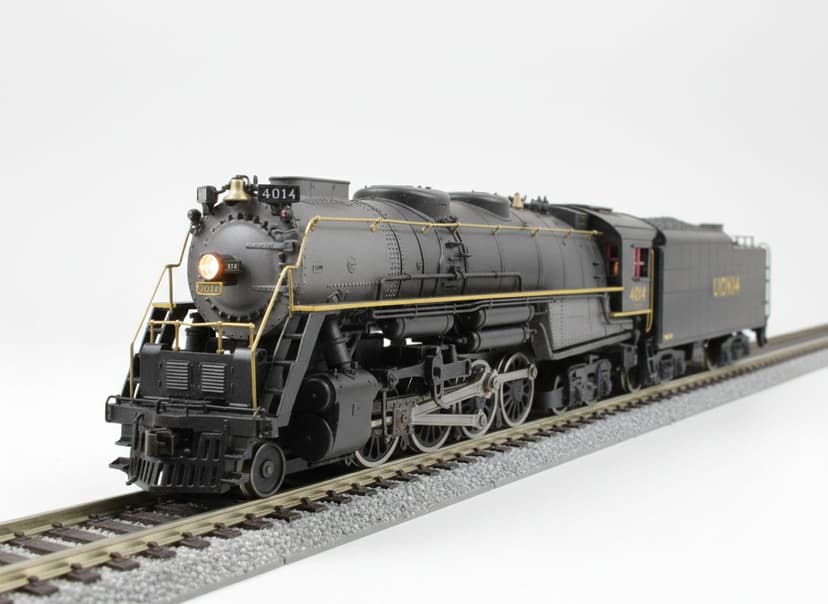
Lionel has produced model trains since 1900 and the collecting market divides into three clear eras that price very differently. Prewar production, running from 1900 to 1942, includes the large Standard Gauge trains that are the most visually impressive and among the most valuable. Postwar production from 1945 to 1969 is the era most collectors grew up with and represents the largest share of the market, with O gauge sets that are plentiful but where specific locomotives and rare color variations command real money. Modern production from 1970 onward, under several successive owners, generally sells below its original retail because supply is ample and the collector base skews older. The two variables that most affect any individual piece are original boxes and working condition. A boxed postwar set with its original inserts can be worth three times the same set loose, and Lionel boxes were routinely discarded.
Era and gauge set the framework, with prewar Standard Gauge and top postwar O gauge locomotives at the top and modern production at the bottom. Original boxes are one of the largest single multipliers in this hobby, and a boxed piece with its inserts and instruction sheets can be worth three times a loose one. Working condition matters, and buyers expect locomotives to run, though collectors of the highest-value prewar pieces accept non-running examples at a discount. Original paint is critical, since repainting was common among operators and a repainted piece loses most of its collector value regardless of how well it was done. Color and lettering variations are the specialty area where the biggest surprises appear, and documented factory variations of otherwise common cars can be worth thousands. Completeness of sets with the correct cars, track, and transformer adds substantially.
Buying & Selling Tips
Buying
Check for repaints by examining the underside and inside surfaces. Original factory paint has distinctive overspray patterns that repaints lack.
Buy boxed whenever possible. The box premium in Lionel collecting is among the largest in any toy category.
Test locomotives under power before buying. Motor and e-unit repairs are possible but add cost and time.
Learn the documented color variations for the cars you collect. That knowledge is where the real value is found.
Avoid modern production if buying for value. It generally sells below its original retail price.
Selling
Sell complete sets intact with their boxes. Breaking a set to sell pieces individually almost always realizes less.
Photograph the boxes, the inserts, and the underside of each piece. Collectors assess originality from those images.
Service and test locomotives before listing. A running engine sells for substantially more than an untested one.
Disclose any repaint or restoration. Experienced Lionel buyers detect it immediately and undisclosed work causes returns.
Consider a specialist train auction for prewar and rare postwar pieces. General marketplaces undervalue them consistently.
Lionel Trains FAQ
Are old Lionel trains worth money?
Prewar Standard Gauge and top postwar locomotives are, with values from several hundred to several thousand dollars. Common postwar freight cars bring $10 to $50, and modern production usually sells below its original retail.
Do original boxes matter for Lionel trains?
Enormously. A boxed piece with its original inserts and paperwork can be worth three times the same item loose, because boxes were routinely discarded and complete examples are scarce.
What is the most valuable Lionel train?
Prewar Standard Gauge sets in original boxes and rare documented color variations lead the market, reaching $6,000 to $8,000 or more. Certain factory prototypes and one-off pieces have sold considerably higher.
Does a Lionel locomotive need to run to sell?
It helps a great deal for postwar and modern pieces, where buyers expect operation. For high-value prewar pieces, collectors accept non-running examples at a modest discount since restoration is routine.
How can I tell if a Lionel piece has been repainted?
Examine the underside and interior surfaces, where factory overspray patterns are visible on originals. Repaints typically have cleaner interiors, slightly wrong color shades, and paint over rivets or lettering edges.
Got Lionel Trains to Value?
Upload a photo and get a free AI-powered valuation in seconds. No sign-up required.