Last updated: September 2026
How Much Is a Harley-Davidson Worth?
Check current market values, learn what affects pricing, and get tips for buying and selling.
← All Harley-Davidson valuationsWhat do you want to value?
Get the free app for unlimited scans


Harley-Davidson Motorcycles Price Guide
Current market values based on recent sales data and market trends.
| Item | Condition | Price Range |
|---|---|---|
| 1936-1947 Knucklehead | Restored, documented | $45,000 - $120,000 |
| 1948-1965 Panhead | Restored | $25,000 - $70,000 |
| 1966-1984 Shovelhead | Good, running | $8,000 - $25,000 |
| Road King, 5 years old | Excellent, under 20k miles | $13,000 - $19,000 |
| Street Glide, 5 years old | Excellent | $14,000 - $21,000 |
| Softail Heritage, 8 years old | Good | $9,000 - $14,000 |
| Sportster 883 or 1200, 8 years | Good | $4,000 - $7,500 |
| Any Harley with heavy custom work | Excellent | 50% - 75% of stock |
| Harley with high mileage (60k+) | Well maintained | $2,000 - $5,000 below average |
| Non-running or project bike | Complete | 30% - 50% of running |
What Determines Harley-Davidson Motorcycles Value
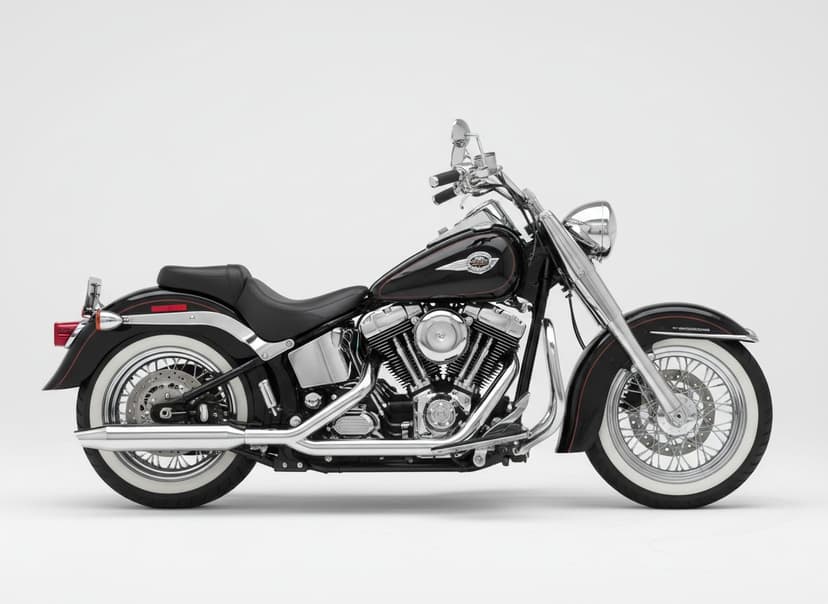
Harley-Davidson resale follows two distinct logics depending on age. Modern bikes, meaning roughly 2000 onward, depreciate like other motorcycles but more slowly, typically losing thirty to forty percent in the first three years and then flattening. Touring models, particularly the Road King and Street Glide, hold value best because their buyer base replaces bikes on a regular cycle and demand is steady. Sportsters depreciate hardest because they are the entry model and used supply is deep. Vintage Harleys are a different market entirely, driven by originality and documentation, with pre-1970 Knucklehead, Panhead, and Shovelhead engines commanding prices that dwarf any modern bike. The two variables that most affect a modern Harley's price are mileage, which matters less than on cars because these engines last, and modifications, which almost always reduce value because buyers want either stock bikes or bikes modified exactly to their taste.
Model family and era set the framework, with vintage engine generations forming their own market and modern touring bikes holding value best among current production. Mileage matters less than on cars because Harley engines routinely exceed a hundred thousand miles with maintenance, but buyers still discount high-mileage bikes. Modifications are almost always a negative, since exhaust, seat, handlebar, and paint changes reflect the previous owner's taste rather than the next buyer's, and the original parts should be retained and included. Service history is a real value factor, particularly documented maintenance at the intervals Harley specifies. Cosmetic condition covers chrome pitting, paint chips, and scratches from tip-overs, all of which are inspected closely. For vintage bikes, originality of the engine, frame, and numbers matching is critical, and matching numbers can double the value of a Knucklehead or Panhead.
Buying & Selling Tips
Buying
Ask for the original stock parts if the bike is modified. Their presence lets a buyer return the bike to stock and preserves value.
Check service records against Harley's specified intervals. Documented maintenance is worth real money on a used bike.
Inspect the chrome closely for pitting, especially on bikes ridden in salted-road regions. Rechroming is expensive.
Buy a used touring model rather than a new Sportster if value matters. Touring bikes hold value far better.
For vintage bikes, verify engine and frame numbers match and are period correct. Reproduction cases are common.
Selling
Return the bike to stock or include the original parts. Custom work reduces value and stock parts recover some of it.
Compile all service records and the owner's manual. Documented maintenance shortens the sale and raises the price.
Clean and detail thoroughly including the engine and wheels. Presentation affects motorcycle sales more than most categories.
Photograph the odometer, the VIN, both sides, the engine, and any damage.
Sell in spring. Motorcycle prices are strongly seasonal and a bike listed in February brings more than the same bike in October.
Harley-Davidson Motorcycles FAQ
Do Harley-Davidsons hold their value?
Better than most motorcycles. Touring models like the Road King and Street Glide lose thirty to forty percent in three years then flatten, while Sportsters depreciate faster because used supply is deep.
Does high mileage hurt a Harley's value?
Less than on a car. These engines routinely exceed a hundred thousand miles with proper maintenance, though buyers still discount bikes over sixty thousand miles by roughly $2,000 to $5,000.
Do custom modifications increase a Harley's resale value?
Almost never. Buyers want either a stock bike or one modified to their own taste, so aftermarket exhaust, bars, and paint typically reduce value by twenty-five to fifty percent. Keep and include the original parts.
Which vintage Harley is the most valuable?
The Knucklehead, produced from 1936 to 1947, is the most collectible engine generation and restored documented examples bring $45,000 to $120,000. Panheads follow at $25,000 to $70,000.
When is the best time to sell a motorcycle?
Spring, when riding season begins. Motorcycle prices are strongly seasonal and the same bike can bring fifteen to twenty-five percent more in March than in October.
Got Harley-Davidson Motorcycles to Value?
Upload a photo and get a free AI-powered valuation in seconds. No sign-up required.