Last updated: September 2026
How Much Is a Grandfather Clock Worth?
Check current market values, learn what affects pricing, and get tips for buying and selling.
← All Grandfather Clocks valuationsWhat do you want to value?
Get the free app for unlimited scans


Grandfather Clocks Price Guide
Current market values based on recent sales data and market trends.
| Item | Condition | Price Range |
|---|---|---|
| Howard Miller, 1980s-2000s | Working, excellent | $350 - $900 |
| Ridgeway or Sligh, modern | Working | $250 - $700 |
| Modern clock, not running | Complete | $80 - $300 |
| English longcase, 18th c., 8-day brass dial | Original, running | $3,000 - $12,000 |
| English longcase, 30-hour | Original, running | $800 - $3,000 |
| English painted dial longcase, early 19th c. | Original | $1,200 - $4,500 |
| American tall case, 18th-19th c. | Original, documented | $4,000 - $40,000 |
| Vienna regulator or precision clock | Excellent | $800 - $8,000 |
| Marriage (mismatched case and movement) | Working | 40% - 60% of original |
| Clock with replaced dial or hands | Working | 50% - 70% of original |
What Determines Grandfather Clocks Value
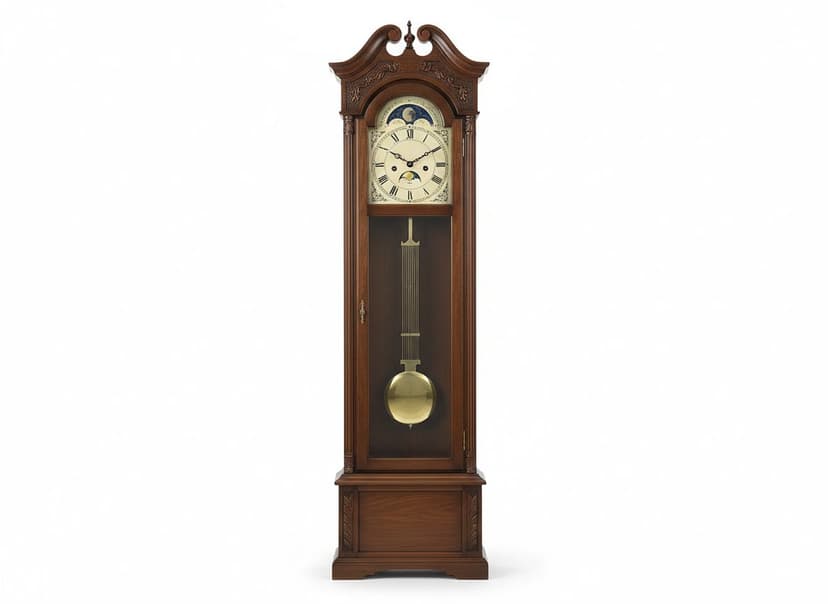
Grandfather clocks, properly called longcase clocks, present one of the widest gaps between perceived and actual value of any household antique. A modern Howard Miller or Ridgeway clock that cost $3,000 to $6,000 new typically resells for $300 to $900, because the market is flooded with them as households downsize and few younger buyers want a seven-foot clock. Genuine antiques behave very differently. An eighteenth-century English longcase with a brass dial and an eight-day movement by a named maker can bring $3,000 to $25,000 or more, and early American clocks by makers such as Simon Willard reach far higher. The decisive variables are age, maker, movement type, and case originality. A thirty-hour movement is worth substantially less than an eight-day. Marriages, where a case and movement from different clocks have been combined, are common and reduce value by half or more, so provenance and internal consistency matter.
Age and maker together set the ceiling, and a documented eighteenth-century clock by a recognized maker occupies a different market from anything produced after 1900. Movement type is the next major factor, with eight-day movements worth several times thirty-hour ones because they required more skill and material. Originality is critical: the case, dial, movement, hands, and weights should all belong together, and a marriage of mismatched components halves the value. Case quality and timber matter, with figured mahogany and oak commanding premiums over pine. Height affects saleability, since very tall clocks do not fit modern ceilings and sell more slowly. Working condition matters less than people expect for antiques, since collectors expect to service a movement, but for modern clocks a non-running movement is a significant deduction because service costs approach the clock's value. Finally, moving cost is a real market friction that suppresses prices everywhere.
Buying & Selling Tips
Buying
Check whether the movement fits the case properly. Filled screw holes, mismatched seat boards, and gaps indicate a marriage.
Count the winding holes. Two holes indicate an eight-day movement, one indicates thirty-hour, and the difference in value is large.
Look for a maker's name on the dial and research it. Named makers with documented output are worth far more than anonymous clocks.
Measure your ceiling height before buying. Many antique longcase clocks exceed eight feet with the finial installed.
Do not overpay for a modern clock. Howard Miller and Ridgeway models are plentiful and sell for a fraction of original retail.
Selling
Get the clock running before selling if the repair is modest. A working clock sells far faster than a silent one.
Photograph the dial, the movement, the case interior, and the seat board. Buyers assess originality from those images.
Sell antiques through a specialist clock dealer or auction house. General marketplaces cannot reach the collectors who pay for eighteenth-century clocks.
Include the weights, pendulum, crank, and key. Missing components significantly reduce value and are hard to source correctly.
Be prepared to arrange delivery. Buyer reluctance to transport a seven-foot clock is the single biggest obstacle to a sale.
Grandfather Clocks FAQ
How much is an antique grandfather clock worth?
An eighteenth-century English longcase with an eight-day brass dial movement typically brings $3,000 to $12,000, and named American makers reach far higher. Thirty-hour movements and anonymous clocks sell for $800 to $3,000.
Why are modern grandfather clocks worth so little?
Howard Miller and Ridgeway produced them in large numbers, and demand has collapsed as households downsize and younger buyers avoid large furniture. A clock that retailed for $5,000 typically resells for $350 to $900.
What is a clock marriage?
It is a clock assembled from a case and movement that did not originate together. It is detected by mismatched fit, filled screw holes, or an inconsistent seat board, and it reduces value by roughly half.
How do I know if my clock is eight-day or thirty-hour?
Count the winding holes on the dial. Two holes means an eight-day movement wound weekly, one hole or a chain-pull means a thirty-hour movement wound daily. Eight-day clocks are worth substantially more.
Does a grandfather clock need to work to sell?
For antiques, not necessarily, since collectors expect to service a movement. For modern clocks it matters a great deal, because a $400 to $900 service cost can exceed the clock's entire resale value.
Got Grandfather Clocks to Value?
Upload a photo and get a free AI-powered valuation in seconds. No sign-up required.