Last updated: September 2026
How Much Is Fiestaware Worth?
Check current market values, learn what affects pricing, and get tips for buying and selling.
← All Fiestaware valuationsWhat do you want to value?
Get the free app for unlimited scans


Fiestaware Price Guide
Current market values based on recent sales data and market trends.
| Item | Condition | Price Range |
|---|---|---|
| Vintage covered onion soup bowl | Excellent | $400 - $1,500 |
| Vintage syrup pitcher | Excellent with lid | $250 - $700 |
| Vintage carafe | Excellent with lid | $180 - $500 |
| Vintage red (uranium glaze) plate | Excellent | $30 - $110 |
| Vintage medium green piece | Excellent | $80 - $600 |
| Vintage common color dinner plate | Excellent | $15 - $40 |
| Vintage mixing bowl set | Complete, excellent | $400 - $1,400 |
| Post-1986 modern piece | Excellent | $5 - $20 |
| Retired modern color | Excellent | $15 - $60 |
| Any piece with chips or crazing | Damaged | $2 - $12 |
What Determines Fiestaware Value
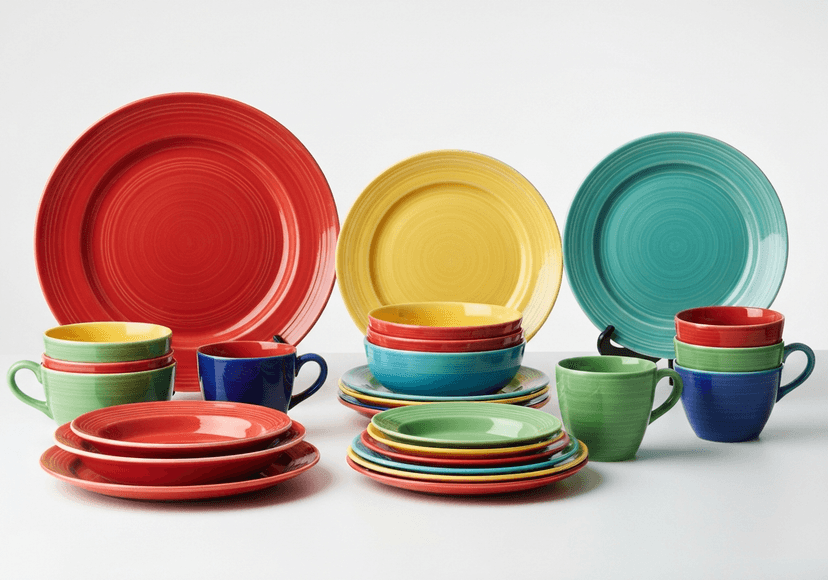
Fiestaware has been produced by the Homer Laughlin China Company since 1936, and the collecting market splits cleanly between vintage production, which ran from 1936 to 1972, and the modern line reintroduced in 1986. Vintage pieces are identified by their colors, which are distinct from the modern palette, and by the mark on the base. The most discussed vintage color is the original red, which used uranium oxide in the glaze and is mildly radioactive, a fact that has become part of its collecting appeal rather than a deterrent for most buyers. Value is driven by color rarity, form rarity, and condition. Some vintage colors were produced for only a few years and are genuinely scarce, while others ran for decades. Unusual serving forms such as the covered onion soup bowl, the syrup pitcher, and the carafe are far rarer than plates and cups. Modern Fiestaware, produced continuously, has very little resale value except for retired colors.
Era is the first split, and vintage pieces from 1936 to 1972 occupy a completely different market from modern production. Color is the primary driver within vintage, with short-run colors like medium green worth many times common ones like yellow and turquoise. Form rarity is equally important, and unusual serving pieces produced briefly are worth far more than dinnerware that stayed in the line for decades. Condition is assessed on chips, particularly at rims and handles, glaze crazing which appears as a fine crack network, and utensil marks on plate surfaces. Lid presence is critical for covered forms and separated lids are a chronic problem. The uranium red glaze has its own collecting niche and its radioactivity is easily demonstrated with a Geiger counter, which some sellers use as a selling point. Modern retired colors form a small secondary market of their own.
Buying & Selling Tips
Buying
Learn the vintage color palette. Distinguishing vintage from modern is the single most useful skill in this category.
Check rims and handles closely for chips. Fiesta's ring pattern hides small chips well in photographs.
Look for crazing by holding the piece to a light. The fine crack network reduces value and can harbor staining.
Prioritize unusual forms over common plates. Serving pieces are where the real scarcity sits.
Confirm lids are present and correct for covered pieces. Mismatched or missing lids substantially reduce value.
Selling
Identify the color and era precisely in your title. Collectors search by specific vintage color names.
Photograph the base mark and the full piece in natural light. Both are needed to establish era and color.
Sell rare forms individually and common plates in lots. The value spread is too wide to bundle.
Mention the uranium glaze on vintage red pieces. It is a genuine selling point rather than a concern for most collectors.
Pack with generous cushioning and double box. Chipped arrivals are the most common problem in ceramic shipping.
Fiestaware FAQ
Is vintage red Fiestaware radioactive?
Yes, mildly. The original red glaze used uranium oxide, and pieces register on a Geiger counter. The radiation level is low and generally considered safe for display, though many collectors avoid using them for food.
Which Fiestaware color is the rarest?
Medium green, produced only from 1959 to 1969, is the scarcest of the standard vintage colors and pieces bring $80 to $600 depending on form. Certain experimental and sample colors are rarer still.
How do I tell vintage Fiestaware from modern?
Compare the color to the vintage palette, which differs noticeably from the modern one, and check the base mark. Vintage pieces also tend to be heavier with a distinct glaze depth that modern production does not replicate.
What is the most valuable Fiestaware piece?
The covered onion soup bowl is the classic rarity at $400 to $1,500, particularly in scarce colors. Complete vintage mixing bowl sets in all seven sizes also reach $400 to $1,400.
Is modern Fiestaware worth collecting?
For use, yes; for value, generally not. Current production sells for $5 to $20 secondhand. Retired modern colors such as lilac have developed small collector markets and bring $15 to $60.
Got Fiestaware to Value?
Upload a photo and get a free AI-powered valuation in seconds. No sign-up required.