Last updated: September 2026
How Much Is Vintage CorningWare Worth?
Check current market values, learn what affects pricing, and get tips for buying and selling.
← All CorningWare valuationsWhat do you want to value?
Get the free app for unlimited scans


Vintage CorningWare Price Guide
Current market values based on recent sales data and market trends.
| Item | Condition | Price Range |
|---|---|---|
| Blue Cornflower 1.5qt casserole | Excellent with lid | $25 - $70 |
| Blue Cornflower complete set | Excellent, all lids | $100 - $300 |
| Spice O' Life casserole | Excellent with lid | $30 - $90 |
| Wildflower pattern piece | Excellent | $120 - $500 |
| Floral Bouquet or short-run pattern | Excellent | $150 - $700 |
| Black Starburst / Atomic patterns | Excellent | $80 - $350 |
| Percolator, any pattern | Complete with parts | $60 - $250 |
| Any piece without its lid | Excellent | 40% - 60% of complete |
| Modern stoneware CorningWare | Excellent | $5 - $20 |
| Chipped or heavily stained piece | Damaged | $3 - $12 |
What Determines Vintage CorningWare Value
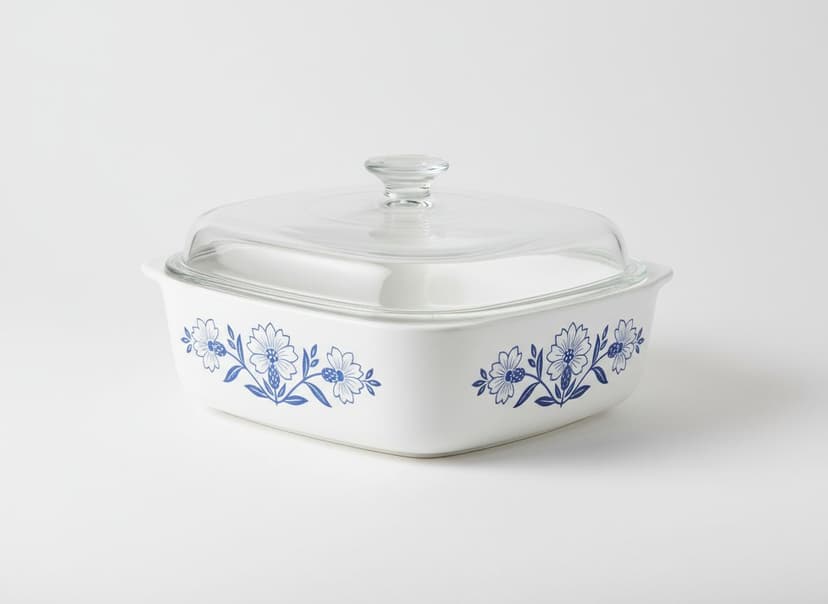
Vintage CorningWare is made from Pyroceram, a glass-ceramic originally developed for missile nose cones, and that material is the reason collectors care. It goes from freezer to stovetop to oven without cracking, a property modern stoneware CorningWare does not share. Production of the original Pyroceram line ran from 1958 to roughly 1998 in North America, and pieces from that era are identified by their white body, distinctive handles, and the pattern printed on the side. Blue Cornflower is the iconic and most common pattern, produced for decades and worth modest amounts. Value concentrates in short-run patterns, unusual sizes, and complete sets with their original glass lids. A handful of patterns, particularly certain floral designs produced for only a year or two, sell for hundreds. The most common seller error is confusing genuine Pyroceram with the modern stoneware line, which looks similar but has no collector market.
Material comes first, since only genuine Pyroceram pieces have a collector market and modern stoneware does not. Pattern is the primary value driver within Pyroceram, and the difference between Blue Cornflower and a one-year floral pattern can be twenty times. Lid presence is critical because the clear glass Pyrex lids break easily and pattern-appropriate replacements are hard to source, so a lidless casserole loses forty to sixty percent. Size and form matter, with unusual pieces such as percolators, browning skillets, and the largest roasters bringing premiums over standard casseroles. Condition is judged on chips at the rim and handle, interior staining from years of use, and utensil scratching. Complete nesting sets in matching pattern and condition sell for more than the sum of the pieces. Backstamp details help date pieces and confirm North American versus later production.
Buying & Selling Tips
Buying
Confirm the piece is Pyroceram, not stoneware. Pyroceram is thinner, lighter for its size, and has a distinctive translucent white body.
Check that the glass lid is present and undamaged. Replacement lids are difficult to find in the correct size.
Look for interior staining and utensil marks. Both are hard to remove and reduce value noticeably.
Learn the short-run patterns. That knowledge is where the surprising finds in thrift stores come from.
Buy complete sets when available. Matching pattern and condition across sizes is difficult to assemble piece by piece.
Selling
State the pattern name and confirm Pyroceram in the title. Buyers search by pattern and material.
Photograph the backstamp, the pattern, and the lid separately. Those three images answer most buyer questions.
Clean interior staining with a gentle abrasive before photographing. It measurably improves offers.
Sell rare patterns individually and Blue Cornflower in lots. The value gap is too wide to bundle.
Double box with the lid wrapped separately. Glass lids break in transit more often than the dishes do.
Vintage CorningWare FAQ
What is Pyroceram CorningWare?
Pyroceram is a glass-ceramic originally developed for missile nose cones and used in CorningWare from 1958 to around 1998. It can go from freezer to stovetop to oven without cracking, unlike the modern stoneware line.
Which CorningWare patterns are the most valuable?
Short-run patterns like Wildflower and various one to two year floral designs bring $120 to $700. Blue Cornflower, produced for decades, is the most common and sells for $25 to $70 per casserole.
How do I tell vintage from modern CorningWare?
Vintage Pyroceram is a thin, light, translucent white ceramic that rings when tapped. Modern stoneware is heavier, thicker, and has a duller sound. The backstamp also differs between the two.
Does a missing lid hurt CorningWare value?
Yes, by forty to sixty percent. The clear Pyrex lids break easily and matching a replacement to the correct diameter and pattern era is difficult, so complete pieces command a real premium.
Can you still use vintage CorningWare on the stovetop?
Genuine Pyroceram pieces are designed for stovetop use and remain safe if undamaged. Modern stoneware CorningWare is not stovetop safe, so identifying the material matters for practical use as well as value.
Got Vintage CorningWare to Value?
Upload a photo and get a free AI-powered valuation in seconds. No sign-up required.