Last updated: September 2026
How Much Is a Class Ring Worth?
Check current market values, learn what affects pricing, and get tips for buying and selling.
← All Class Rings valuationsWhat do you want to value?
Get the free app for unlimited scans


Class Rings Price Guide
Current market values based on recent sales data and market trends.
| Item | Condition | Price Range |
|---|---|---|
| 10k gold men's ring, 18g | Any | $260 - $400 |
| 10k gold women's ring, 8g | Any | $115 - $180 |
| 14k gold men's ring, 20g | Any | $400 - $620 |
| 14k gold women's ring, 9g | Any | $180 - $280 |
| 18k gold class ring, 20g | Any | $530 - $800 |
| White gold class ring, 10k | Any | $200 - $350 |
| Sterling silver class ring | Any | $8 - $25 |
| Siladium / Celestrium / Valadium | Any | $0 - $10 |
| Antique class ring, pre-1940 | Excellent | $150 - $900 |
| Ring with genuine gemstone | Verified | Melt plus stone value |
What Determines Class Rings Value
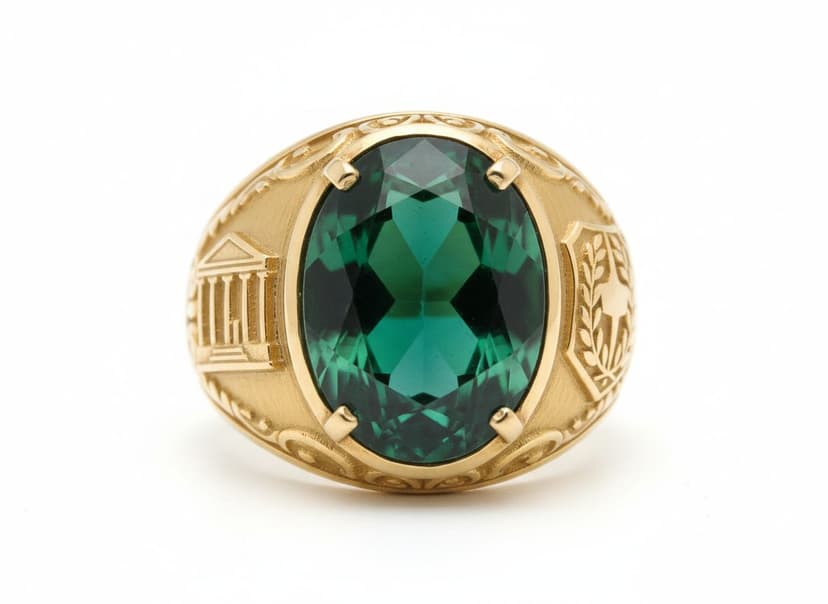
A class ring's resale value is almost entirely its scrap gold value, and that surprises most people who paid several hundred dollars for one. The reason is simple: a class ring is personalized with a school, a year, and often initials, which makes it unsellable as jewelry to anyone else. Buyers therefore price it as metal. The calculation depends on karat and weight, and class rings are commonly made in 10k, which is only 41.7 percent gold. A typical men's 10k class ring weighs fifteen to twenty-five grams including the stone, and the stone itself is usually synthetic spinel or glass with no value. That yields a scrap figure of roughly $250 to $450 at current gold prices, before the buyer's margin. White gold and sterling silver rings are worth considerably less, and the increasingly common alternative metals such as Siladium, Celestrium, and Valadium have essentially no scrap value at all.
Karat and weight determine nearly all of the value, and everything else is noise. The stone is usually synthetic and contributes nothing, though a small number of rings from earlier decades used genuine gemstones and should be checked. Manufacturer branding from Jostens, Balfour, or Herff Jones does not add value, since these companies produced millions of rings. Condition is irrelevant to a scrap buyer, so a battered ring and a pristine one of the same weight are worth the same. The one exception to the melt rule is genuinely antique rings, typically pre-1940, where craftsmanship and design can support a collector price above metal content. Personalization is a pure negative: engraving, a specific school name, and a graduation year all confirm to any buyer that resale as jewelry is impossible, which is why nearly every class ring goes to a refiner.
Buying & Selling Tips
Buying
Weigh the ring and identify the karat stamp before agreeing on any price. Those two facts give you the entire value.
Deduct the stone weight from the total. A large synthetic stone can account for several grams of the gross weight and is worth nothing.
Test unmarked rings. Alternative alloys like Siladium look identical to white gold and have no scrap value.
Do not pay a premium for a name-brand manufacturer. Jostens and Balfour rings carry no collector premium.
Check pre-1940 rings for genuine stones and hand engraving. That is the only segment where the ring may be worth more than melt.
Selling
Calculate the scrap value yourself before getting quotes. Weight times karat purity times spot price is the number to negotiate from.
Ask the buyer to remove and return the stone. Some refiners deduct its weight fairly and others do not.
Get quotes from at least three buyers. Payouts on class rings vary widely because sellers rarely know the melt value.
Consider mail-in refiners for the best rate. They typically pay eighty to ninety percent of melt versus fifty to seventy at a pawn shop.
Do not expect any premium for condition or sentiment. The market prices class rings purely as metal.
Class Rings FAQ
How much is a 10k gold class ring worth?
Typically $260 to $400 for a men's ring weighing around eighteen grams, based on 41.7 percent gold content at current prices. Women's rings weigh less and usually bring $115 to $180.
Is the stone in a class ring worth anything?
Almost never. Class ring stones are usually synthetic spinel or glass, produced specifically for the purpose. A small number of older rings used genuine gemstones, so it is worth having an unusual stone checked.
What is Siladium or Celestrium?
They are trade names for stainless steel and nickel alloys used by class ring manufacturers as a lower-cost alternative to gold. They contain no precious metal and have essentially no scrap value.
Can I sell a class ring for more than scrap value?
Rarely. The personalization makes it unsellable as jewelry to anyone else, so buyers price it as metal. The exception is genuinely antique rings from before 1940 with hand engraving or real gemstones.
Where is the best place to sell a class ring?
A mail-in gold refiner typically pays the most, around eighty to ninety percent of melt value. Local jewelers and pawn shops are faster but pay fifty to seventy percent, which on a $350 ring is a difference of over $100.
Got Class Rings to Value?
Upload a photo and get a free AI-powered valuation in seconds. No sign-up required.