Last updated: September 2026
How Much Is a Camera Lens Worth?
Check current market values, learn what affects pricing, and get tips for buying and selling.
← All Camera Lenses valuationsWhat do you want to value?
Get the free app for unlimited scans


Camera Lenses Price Guide
Current market values based on recent sales data and market trends.
| Item | Condition | Price Range |
|---|---|---|
| Canon RF 24-70mm f/2.8L | Excellent | $1,600 - $2,100 |
| Sony FE 70-200mm f/2.8 GM II | Excellent | $1,900 - $2,400 |
| Nikon Z 50mm f/1.8 S | Excellent | $400 - $520 |
| Sony FE 50mm f/1.8 | Excellent | $130 - $190 |
| Canon EF 24-70mm f/2.8L II | Excellent | $700 - $1,000 |
| Nikon F mount pro zoom | Excellent | $450 - $850 |
| Sigma Art prime, mirrorless mount | Excellent | $450 - $850 |
| Vintage Helios 44-2 | Clean glass | $50 - $130 |
| Leica M lens, modern | Excellent | $1,800 - $6,000 |
| Any lens with fungus or haze | Functional | 25% - 50% of clean |
What Determines Camera Lenses Value
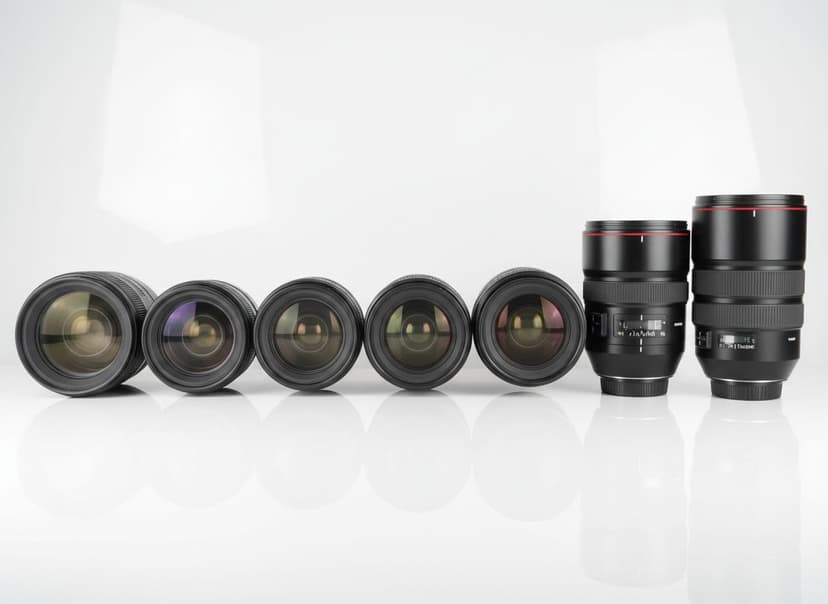
Camera lenses hold value far better than camera bodies, and understanding why explains the whole market. A lens has no sensor to become obsolete, no processor to fall behind, and no battery to degrade, so a well-made optic from twenty years ago can still perform at the level it did when new. Bodies depreciate forty percent in two years while professional lenses often retain seventy to eighty percent over the same period. Mount system is the dominant variable, and the industry's shift to mirrorless created a clear split: modern mirrorless mounts including Canon RF, Sony E, and Nikon Z hold value strongly, while DSLR mount lenses for Canon EF and Nikon F have fallen substantially as the bodies that use them are discontinued. Vintage manual focus lenses form a separate market driven by rendering character rather than sharpness, and certain cult classics have appreciated sharply. The condition issues specific to lenses are fungus, haze, separation, and stiff or oily aperture blades.
Mount system is the largest structural factor, and the DSLR to mirrorless transition has permanently repriced entire catalogs. Optical condition is the primary physical variable, and buyers inspect for fungus, which appears as branching filaments and can etch coatings permanently, haze from evaporated lubricants, and element separation visible as a rainbow edge. Mechanical condition covers focus ring smoothness, aperture blade cleanliness, and whether image stabilization functions. Professional grade lenses with fast constant apertures hold value far better than consumer kit zooms, which are bundled in enormous quantities and worth very little. Third-party optics from Sigma and Tamron have improved enough that their modern mirrorless lenses hold value reasonably, though below first-party equivalents. Leica occupies its own tier with the best value retention in the industry. Original box, hood, and caps add a modest but consistent premium.
Buying & Selling Tips
Buying
Shine a light through the lens from the front while looking through the rear. Fungus, haze, and dust all become visible immediately.
Work the aperture blades through their range and check for oil. Oily blades stick and the repair costs $100 to $250.
Avoid DSLR mount lenses unless you own the body. That segment is declining and will continue to.
Buy professional constant-aperture zooms and fast primes for value retention. Kit zooms are nearly worthless on resale.
Check the front and rear elements for cleaning marks. Light scratches rarely affect images but heavily affect price.
Selling
Photograph the front and rear elements against a bright background. Buyers judge optical condition entirely from these shots.
Include the hood, caps, and box. Lens hoods alone cost $40 to $80 to replace and buyers deduct more than that.
State the mount clearly in the title. It is the first filter every buyer applies.
Sell DSLR mount lenses sooner rather than later. That market has been in steady decline and will continue.
Disclose any fungus honestly. It spreads to other lenses in a bag and undisclosed fungus reliably causes disputes.
Camera Lenses FAQ
Do camera lenses hold their value?
Far better than camera bodies. Professional lenses commonly retain seventy to eighty percent of value over several years because they do not become technologically obsolete the way sensors and processors do.
Are DSLR lenses still worth anything?
Yes, but their values have fallen significantly as manufacturers discontinued DSLR bodies. Canon EF and Nikon F professional lenses now sell for roughly half what equivalent mirrorless versions bring, and the gap is widening.
What is lens fungus and does it matter?
Fungus is a biological growth inside the lens that appears as fine branching filaments. It feeds on coatings and can permanently etch glass. It also spreads to other lenses stored nearby, so it reduces value by half or more.
Are vintage manual lenses worth buying?
For character rather than performance. Lenses like the Helios 44-2 with its swirly bokeh have cult followings and sell for $50 to $130. They adapt easily to mirrorless bodies, which has sustained demand.
Which lenses hold value best?
Leica M mount lenses have the best retention in photography, followed by first-party professional lenses for current mirrorless mounts. Consumer kit zooms have the worst, often selling for under twenty percent of retail.
Got Camera Lenses to Value?
Upload a photo and get a free AI-powered valuation in seconds. No sign-up required.