March 23, 2026 · Updated March 2026
How to Tell If a Watch Is Real: Spot Fake Luxury Watches
Why Watch Authentication Matters
The luxury watch counterfeiting industry is estimated at over $1 billion per year. Fake watches have become so sophisticated that even experienced collectors can be fooled. A counterfeit Rolex Submariner can cost $50 to produce but sell for $500 to $2,000 to an unsuspecting buyer. Meanwhile, the genuine article is worth $8,000 to $15,000. Whether you are buying your first luxury watch, evaluating an inheritance, or shopping on the secondary market, knowing how to authenticate a watch protects your investment.
12 Ways to Spot a Fake Watch
1. The Weight Test
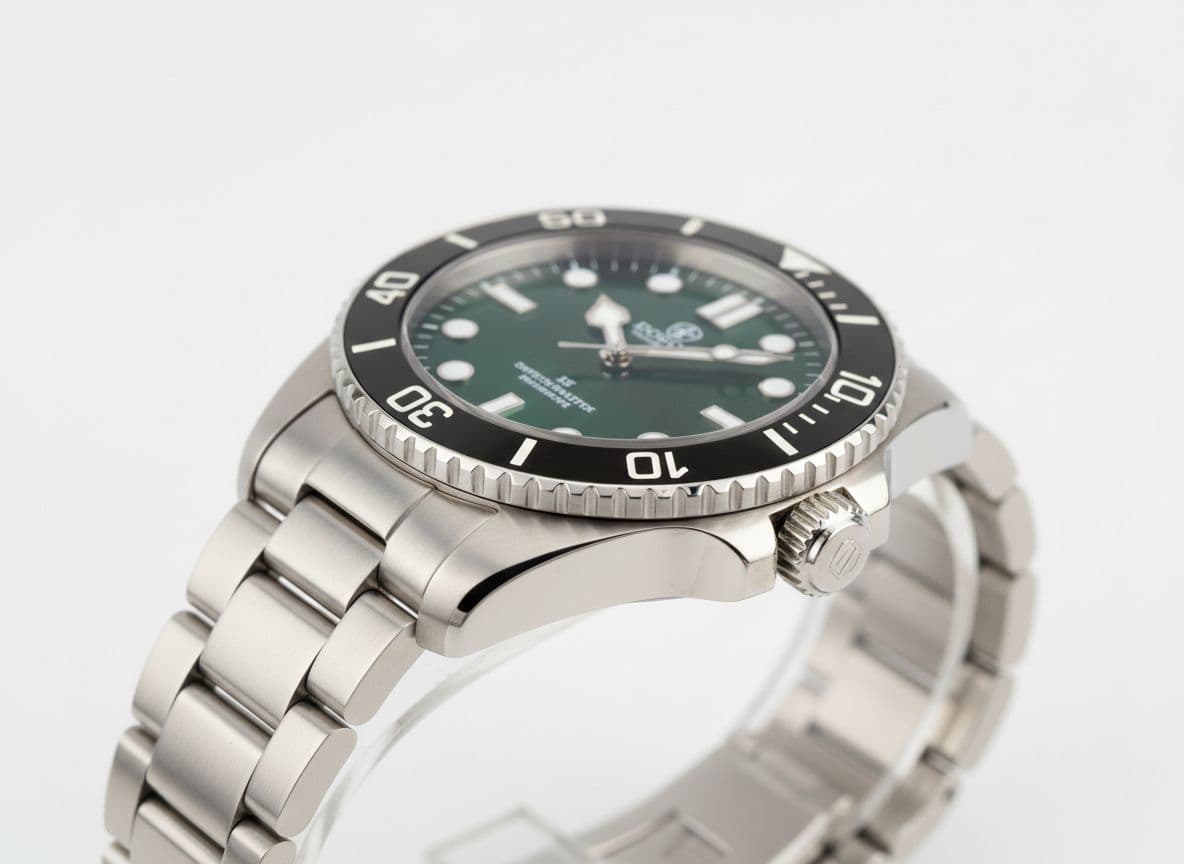
Genuine luxury watches are made from high-quality metals. 904L stainless steel for Rolex, precious metals for dress watches. Hold the watch in your hand. A real Rolex Submariner weighs about 155 grams. Fakes typically use cheaper 316L steel or even base metals and feel noticeably lighter. This is the simplest first test and catches the majority of cheap counterfeits immediately.
2. The Cyclops Lens (Rolex)
Rolex’s date window features a Cyclops magnifying lens that magnifies the date 2.5x. On genuine Rolex watches, the date fills most of the Cyclops window and is perfectly centered. On fakes, the magnification is often only 1.5x, the date appears small within the window, or the lens has a visible seam where it was glued on. Look at the Cyclops from an angle. On a genuine Rolex, there should be an anti-reflective coating on the inside that gives a slight blue tint.
3. The Sweep of the Second Hand
Rolex and most Swiss luxury watches use automatic mechanical movements where the second hand sweeps smoothly around the dial (approximately 8 beats per second for modern Rolex movements). Most fakes use cheap quartz movements where the second hand ticks once per second in distinct jumps. However, better fakes now use cheap automatic movements, so a sweeping second hand alone does not confirm authenticity.
4. Serial and Model Numbers
Every genuine luxury watch has a unique serial number engraved on the case. On Rolex watches made after 2005, the serial number is engraved on the inner bezel (rehaut) at the 6 o’clock position, and also between the lugs at 6 o’clock. The engraving should be crisp, evenly spaced, and precise. On fakes, engravings are often shallow, uneven, or use the wrong font. You can verify Rolex serial numbers against known production ranges to confirm the watch matches its claimed year.
5. The Dial and Printing
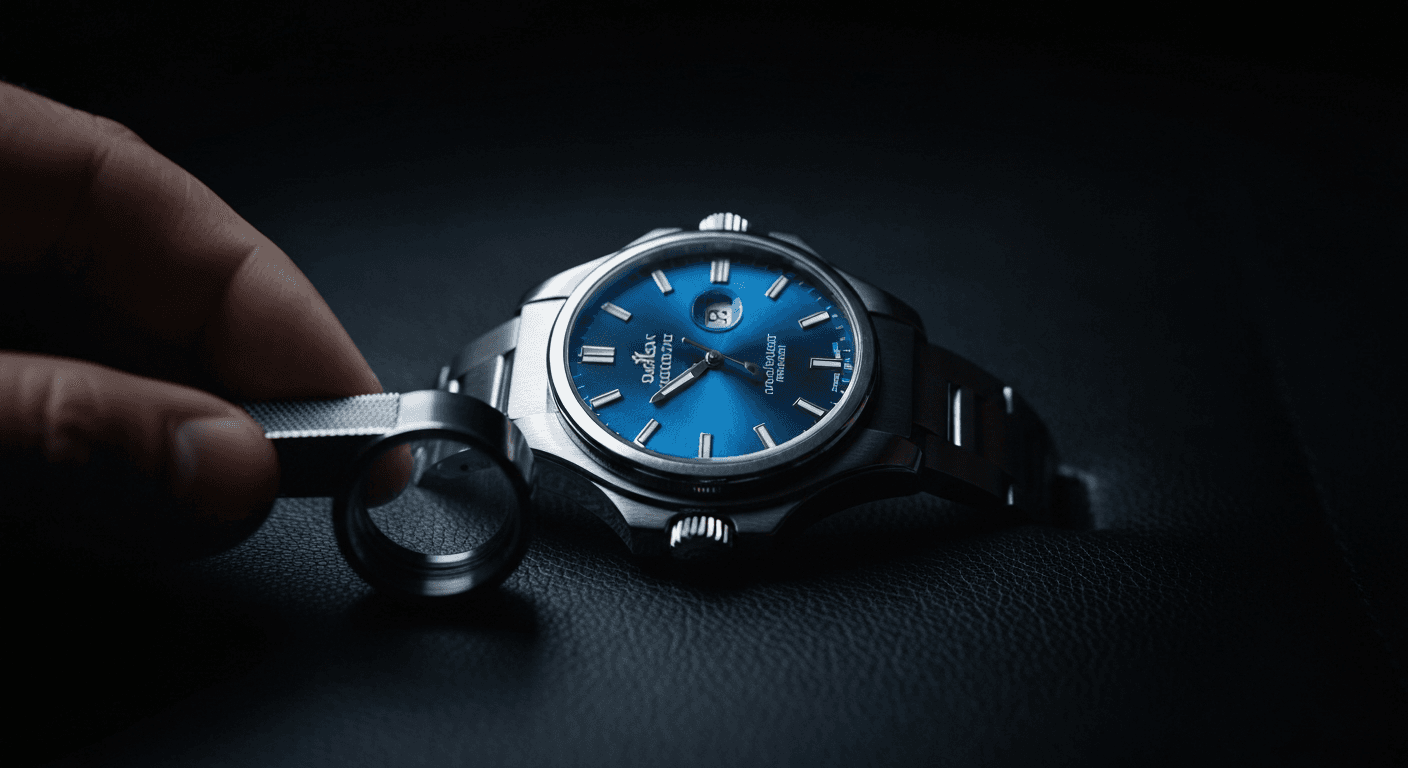
Examine the dial under magnification. On a genuine luxury watch, all text is perfectly printed with no bleeding, smudging, or uneven spacing. The Rolex crown logo at 12 o’clock should be precisely formed with three-dimensional depth. On Omega Speedmaster watches, the applied logo should be sharply defined. Look for spelling errors. Fakes sometimes misspell “CHRONOMETER” or “SUPERLATIVE.”
6. The Crown and Crown Guards
The winding crown on a genuine Rolex has a finely detailed Rolex crown logo etched into the tip. On sport models, the crown guards (the protruding metal around the crown) should be solidly integrated into the case, not welded on separately. The crown should screw down smoothly and firmly. Fake crowns often feel gritty, loose, or have poorly defined logos.
7. The Case Back
Most modern Rolex watches have a solid, smooth case back with no engravings, windows, or markings (except for some Cellini models). If a “Rolex” has a transparent case back showing the movement, it is almost certainly fake. Omega, by contrast, does use transparent case backs on many models, so research the specific model you are examining.
8. The Movement
If you can access the movement (or see it through a transparent case back), this is the most definitive authentication method. Genuine Swiss movements have beautifully finished components with Geneva stripes, polished bevels, and precise engraving. Fake movements use rough, unfinished parts. For Patek Philippe watches, the movement finishing is among the finest in the world and virtually impossible to replicate at any price point.
9. The Bracelet and Clasp
Run your fingers along the bracelet links. On genuine luxury watches, the links are solid with no sharp edges, and the bracelet drapes smoothly. The clasp should open and close with a satisfying click and have the brand logo precisely engraved (not stamped or printed). On Rolex Oyster bracelets, genuine examples have a smooth micro-adjustment mechanism in the clasp. Fakes often have rattly, hollow-feeling links and loose clasps.
10. Lume (Glow-in-the-Dark)
Charge the watch under bright light for 30 seconds, then take it into a dark room. Genuine luxury watches use high-quality luminous material (Rolex uses Chromalight, which glows blue; Omega uses Super-LumiNova). The lume should be evenly applied, bright, and long-lasting. On fakes, the lume is often uneven, dim, fades quickly, or glows the wrong color.
11. The Rehaut Engraving (Rolex)
On modern Rolex watches (post-2004), the inner bezel ring (rehaut) has “ROLEX ROLEX ROLEX” engraved repeatedly around the entire circumference. At the 6 o’clock position, you will find the serial number. The engraving should be laser-etched with perfect consistency. On fakes, the rehaut engraving is often too deep, too shallow, unevenly spaced, or missing entirely.
12. The Micro-Etched Crown (Rolex)
Since 2002, Rolex has laser-etched a tiny crown logo on the crystal at the 6 o’clock position. It is virtually invisible to the naked eye and requires a loupe or magnifying glass to see. Tilt the watch at various angles under good light to find it. Many fakes either omit this entirely or have a crown that is too large and visible.
When to Get Professional Authentication
For any purchase over $2,000, professional authentication is strongly recommended. Options include:
- Authorized service centers: Rolex, Omega, and other brands will authenticate watches at their service centers, though they may not provide written certificates.
- Independent watchmakers: Experienced watchmakers can open the case back and inspect the movement. Expect to pay $50 to $100 for an inspection.
- Authentication services: Companies like Beckett Authentication and WatchCSA offer mail-in authentication services with certificates.
- AI valuation tools: Upload a photo to our free watch valuation tool for an initial assessment of authenticity and estimated value.
Red Flags When Buying
- Price too good to be true. A “new Rolex Submariner” for $2,000 is a fake. Period.
- No box or papers. While legitimate watches can exist without original packaging, the absence of documentation should increase scrutiny.
- Seller refuses inspection. Any legitimate seller will allow you to have the watch independently authenticated before purchase.
- Mismatched serial numbers. The serial number on the case should match the papers and the warranty card.
- Generic or stock photos. Insist on detailed photos of the actual watch being sold, including close-ups of the dial, case back, crown, and clasp.
Want to know what your watch is worth? Upload a photo to our free AI valuation tool and get an instant estimate. Our AI can also flag potential signs of counterfeiting.

Shop & Compare Prices
See current listings and recently sold items on eBay