Last updated: September 2026
How Much Is My Business Worth?
Our small business valuation calculator estimates your company's market value using industry-standard methods based on annual revenue, net profit, industry type, business maturity, team size, and revenue trajectory. Whether you're planning an exit, seeking investment, buying a business, or simply tracking your company's worth, this tool provides data-informed valuations using comparable transaction multiples for your industry.
Get the free app for unlimited scans


Small Business Value Value Calculator
Fill in the details below for an accurate estimate
Why Knowing Your Small Business Value Value Matters
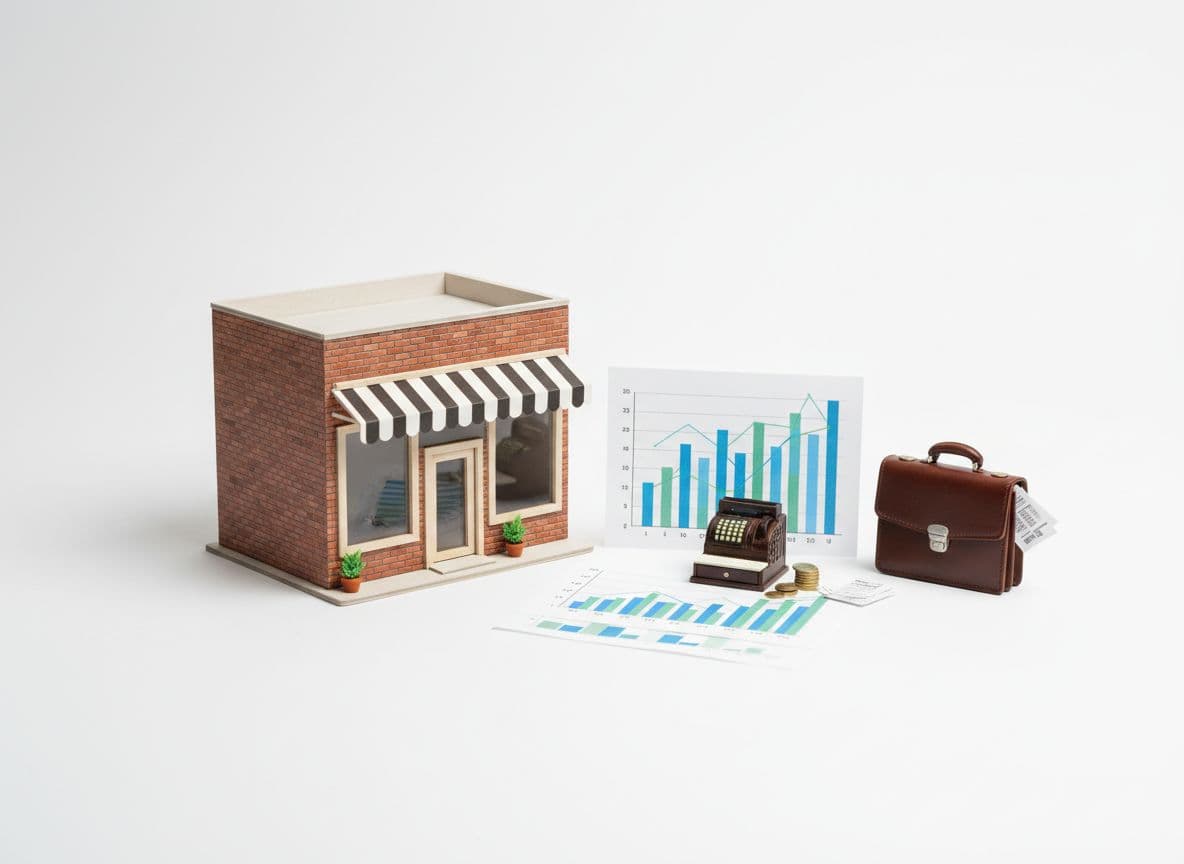
Approximately 10 million small businesses will change hands over the next decade as Baby Boomer owners retire, making accurate valuation more important than ever. The average small business sells for 2-4x annual net profit (known as the earnings multiple), but this varies enormously by industry. SaaS companies sell for 5-15x revenue while restaurants sell for 1.5-3x earnings. A business generating $100,000 in annual profit might be worth $200,000 in a low-growth industry or $600,000+ in a high-growth one. Owners who don't understand their business's value frequently leave money on the table. Studies show that 70-80% of businesses listed for sale never complete a transaction, often because of unrealistic pricing. Even owners not planning to sell benefit from knowing their business value for insurance, estate planning, partnership buyouts, and strategic decision-making. The difference between a well-positioned $500,000 business and a $1,500,000 business often comes down to documented systems, recurring revenue, and reduced owner dependency. Factors that can be improved once identified through proper valuation.
Key Factors That Affect Small Business Value Value
Understanding what drives the price of small business value helps you get the most accurate valuation.
Annual Revenue
Revenue is the top-line metric that establishes the business's scale. Revenue-based valuations typically range from 0.5-2x annual revenue for most small businesses, with technology and subscription businesses commanding 2-10x revenue. A business doing $500,000 in revenue is in a different buyer pool than one doing $5,000,000. Revenue quality matters: recurring revenue (subscriptions, contracts) is worth 2-3x more than one-time or project-based revenue. Revenue concentration is a risk factor. If one client represents more than 20% of revenue, the business is valued lower due to concentration risk.
Net Profit & Owner's Discretionary Earnings
Net profit is the most important number for small business valuation. Most businesses are valued using SDE (Seller's Discretionary Earnings), which includes net profit plus owner's salary, benefits, and non-essential expenses. A business with $500,000 revenue and $150,000 SDE is more valuable than one with $800,000 revenue and $80,000 SDE. Typical SDE multiples: 1.5-3x for main street businesses (restaurants, retail), 2.5-4x for established service businesses, and 3-6x for businesses with strong growth, recurring revenue, and limited owner dependency.
Industry & Business Type
Industry dramatically impacts valuation multiples. SaaS/software businesses sell at 5-15x ARR (annual recurring revenue). Professional services firms sell at 2-4x SDE. Restaurants and retail sell at 1.5-3x SDE. Manufacturing businesses sell at 3-5x EBITDA. Home services (HVAC, plumbing, landscaping) have become acquisition targets, now selling at 3-5x SDE compared to 2-3x five years ago. Franchise businesses often sell at premium multiples due to brand recognition and proven systems. E-commerce businesses typically sell at 2.5-4x annual profit depending on brand strength and customer acquisition costs.
Years in Business & Track Record
Business maturity significantly impacts value and buyer confidence. Businesses under 3 years old are considered high-risk and sell at discounted multiples (1-2x SDE). Established businesses (5-10 years) command standard multiples with verified financial history. Businesses with 10+ years of consistent profitability are premium assets, often selling at the high end of industry multiples. Buyers and lenders want to see 3+ years of clean financial statements (tax returns, P&L statements) to validate the business's earning power and identify trends.
Team & Owner Dependency
A business that runs without the owner's daily involvement is worth 30-50% more than one that depends entirely on the owner's skills, relationships, or labor. Businesses with trained management teams, documented processes, and established customer relationships that survive an ownership change command premium valuations. The number of employees indicates scale and operational maturity. A 10-person company with a manager is more transferable than a solopreneur operation. Buyers pay more for businesses they can operate or scale, not ones where they're buying themselves a job.
Revenue Trend & Growth
Revenue trajectory is a strong valuation modifier. A business growing at 10%+ annually commands 20-50% higher multiples than a flat-revenue business. Declining revenue can reduce valuation by 30-50% even if current profits are healthy, because buyers project future performance. Three-year revenue trends are the standard evaluation window. Consistent growth demonstrates market demand and operational competence. Seasonal patterns are normal, but year-over-year comparisons should show improvement. Explosive growth (30%+ annually) can push multiples to the high end of industry ranges.
Tips for Valuing Small Business Value
Get the most accurate estimate by following these tips when evaluating your small business value.
Enter your annual revenue from your most recent complete fiscal year, as this provides the baseline for revenue-multiple valuations and demonstrates your business's current scale
Report your true annual net profit after all operating expenses but before owner's salary and discretionary expenses. Buyers will add your salary back to calculate SDE (Seller's Discretionary Earnings)
Be specific about your industry since valuation multiples vary 3-10x between industries. A SaaS business and a restaurant at the same profit level have dramatically different valuations
Accurately indicate your revenue trend, as growing businesses can command 20-50% higher multiples than flat or declining businesses with identical current profits
Small Business Value Market Insights
The small business acquisition market has heated up significantly, driven by several trends. Private equity firms have expanded into smaller deal sizes, with 'search funds' and 'micro PE' actively acquiring businesses with $500,000-$5,000,000 in revenue. SBA loan programs (offering up to $5 million with 10-25% down) have made business acquisitions accessible to individual buyers. Online business brokerages and marketplaces have increased transparency and deal flow. The 'Silver Tsunami' of Baby Boomer retirements (approximately 50% of small business owners are 55+) is creating a buyer's market in many industries, though well-run profitable businesses still command premium prices. Tech-enabled businesses and those with recurring revenue models are seeing the strongest demand and highest multiples. The COVID era accelerated a divide: businesses that adapted to digital operations and diversified revenue saw valuations increase, while those dependent on physical foot traffic and single revenue streams lost value. Industry consolidation through 'roll-up' strategies has driven premium multiples in fragmented industries like home services, veterinary clinics, and car washes.
Notable Small Business Value Values
Real-world examples of what specific small business value have sold for, so you can benchmark your own.
| Small Business Value | Condition | Typical Value |
|---|---|---|
| Local Pizza Franchise (single unit, $500K annual revenue) | Profitable, 5+ years | $150,000 - $400,000 |
| Independent Auto Repair Shop (2-4 bays, $800K revenue) | Established, loyal customer base | $200,000 - $600,000 |
| SaaS Micro-Business ($10K MRR, low churn) | Bootstrapped, profitable | $300,000 - $600,000 |
| Landscaping Company (10 employees, $1.2M revenue) | Owner-operated, seasonal | $180,000 - $360,000 |
| E-commerce Store (Amazon FBA, $300K annual net profit) | Diversified SKUs, established brand | $600,000 - $1,200,000 |
| Dental Practice (solo dentist, $900K collections) | Active patient roster, owned equipment | $450,000 - $900,000 |
| Content/Niche Website ($5K/month ad revenue) | 12+ months traffic history | $90,000 - $216,000 |
| Retail Boutique (clothing, $400K revenue, brick-and-mortar) | Mid-tier, lease transferable | $40,000 - $120,000 |
| Accounting / Bookkeeping Firm (recurring clients, $350K revenue) | Established, 80%+ recurring | $280,000 - $525,000 |
Based on documented sale data from business brokers (BizBuySell, Empire Flippers, Acquire.com, Flippa) and industry valuation guides (IBBA, Pepperdine Private Capital Markets Report).
Find Out What Your Small Business Value Are Worth
Upload a photo now and get a free AI-powered valuation in seconds. No sign-up required.
Small Business Value Valuation FAQ
How do you value a small business?
The three most common small business valuation methods are: (1) Earnings Multiple. Multiply SDE (Seller's Discretionary Earnings) or EBITDA by an industry-specific multiple (typically 2-5x). This is the most common method for businesses under $5M revenue. (2) Revenue Multiple. Multiply annual revenue by an industry factor (0.5-10x).common for SaaS, tech, and high-growth businesses. (3) Asset-Based. Sum up the value of all business assets (equipment, inventory, real estate) minus liabilities. Used for asset-heavy businesses or those being liquidated. Most transactions use a combination of methods, with the earnings multiple being the primary driver. Professional business appraisals ($3,000-$10,000) provide certified valuations for legal and financial purposes.
What multiple should I use for my business?
Multiples vary significantly by industry, size, and quality. General SDE multiple ranges: restaurants (1.5-3x), retail (1.5-2.5x), professional services (2-4x), home services/trades (2.5-4.5x), manufacturing (3-5x EBITDA), e-commerce (2.5-4x), and SaaS/technology (5-15x revenue or 8-20x profit). Within each range, factors that push toward the high end include: growing revenue, recurring/subscription income, low owner dependency, diversified customer base, strong brand, and proprietary technology or processes. Factors that push toward the low end: declining revenue, owner dependency, customer concentration, below-market margins, and deferred maintenance or investment.
How can I increase my business's value before selling?
The most impactful value-building strategies: (1) Reduce owner dependency by hiring and training management. This alone can increase value 30-50%. (2) Build recurring revenue through subscriptions, maintenance contracts, or retainer agreements. (3) Document all processes and systems so the business is transferable. (4) Diversify your customer base. No single client should exceed 15% of revenue. (5) Clean up financials by running personal expenses through personal accounts, not the business. (6) Grow revenue consistently for 2-3 years before selling. (7) Invest in brand assets (website, reviews, social media presence). Most business value improvement takes 2-3 years of intentional effort, so start early.
When is the best time to sell my business?
The optimal time to sell is when the business is growing, profitable, and the owner is not burnt out or desperate. Selling during a growth phase (10-20% YoY revenue increases) maximizes multiples because buyers project continued growth. Industry timing matters too. Selling when your industry is 'hot' with active acquirers and strong deal multiples can add 20-40% to valuation. Avoid selling during personal crises, economic downturns, or when the business is declining, as desperation reduces negotiating power and values. The selling process takes 6-12 months on average, so begin preparation 1-2 years before your target exit. Many advisors recommend starting the process when you 'want to sell' rather than when you 'need to sell.'
Do I need a business broker to sell?
For businesses under $500,000, owners sometimes sell directly through marketplaces (BizBuySell, BusinessBroker.net) to save the 8-12% broker commission. However, businesses valued above $500,000 typically benefit from professional representation. Business brokers provide: accurate valuation, buyer screening and qualification, marketing to qualified buyer networks, deal structuring expertise, negotiation support, and confidentiality management (critical for employee and customer retention during the sale). The best brokers specialize in your industry and business size. Broker fees typically range from 8-12% for businesses under $1M and 5-8% for businesses above $1M, often on a sliding scale. A good broker frequently achieves a sale price that exceeds the DIY price by more than their commission, making the service net-positive financially.
Value anything, anytime
Unlimited valuations, saved history and full reports in the free app.