Last updated: September 2026
How Much Are Retro Game Consoles Worth?
Retro gaming consoles from the 1970s through early 2000s have become highly collectible. From the Atari 2600 and NES to the Sega Genesis and PlayStation 1, these machines are the foundation of gaming history.complete-in-box consoles command premium prices, and certain limited editions and variants are worth thousands. Our AI identifies your console model, condition, and completeness for an accurate valuation.
Get the free app for unlimited scans


Compare real prices
See what retro game consoles are listed for right now
Affiliate link: we earn a commission if you buy, at no extra cost to you.
What do you want to value?
Get the free app for unlimited scans
Why Knowing Your Retro Game Consoles Value Matters
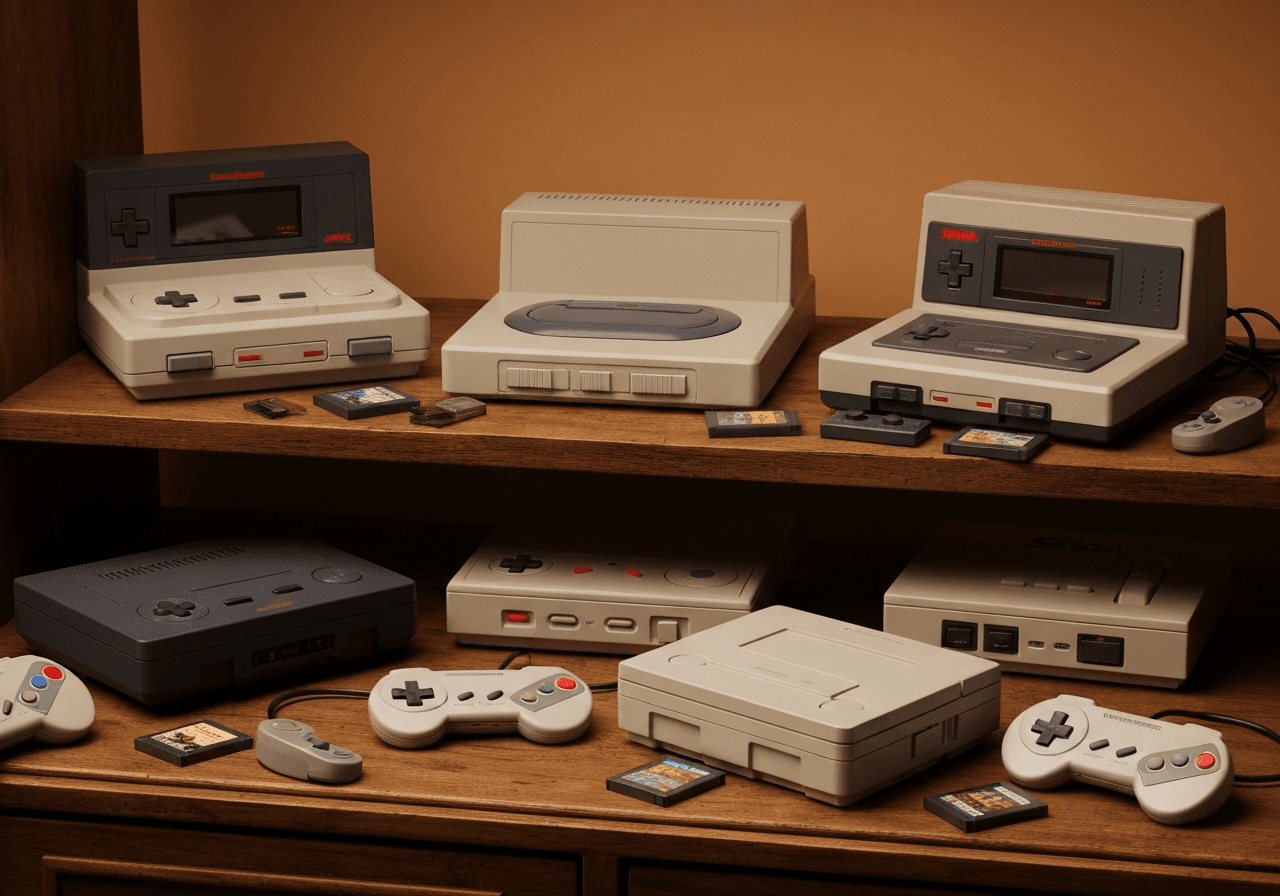
Retro game consoles have transformed from 'old electronics' to genuine collectibles. A complete-in-box NES Action Set that sold for $25 at garage sales in the 2000s now brings $200-$500. A boxed Sega Genesis with original games can bring $150-$300. Limited editions and variants are even more valuable. A Panasonic Q (GameCube/DVD combo) can sell for $1,000-$2,000+. Even loose consoles in working condition hold steady value as retro gaming continues to grow. Many people have old consoles in closets and attics without realizing their resale value.
Key Factors That Affect Retro Game Consoles Value
Understanding what drives the price of retro game consoles helps you get the most accurate valuation.
Console & Model
Approximate values (loose, working, with controller): Atari 2600 ($30-$60), NES ($50-$80), SNES ($70-$120), Sega Genesis ($40-$70), N64 ($60-$100), PlayStation 1 ($30-$50), Dreamcast ($50-$80), GameCube ($80-$150). Limited/special editions: $150-$5,000+.
Complete in Box (CIB)
Original box and packaging multiply value 2-5x for most consoles. CIB NES: $200-$500. CIB SNES: $200-$400. CIB N64: $200-$400. The box condition matters. Mint boxes command the highest premiums. Including all original inserts, manuals, and foam adds value.
Special Editions & Variants
Most valuable retro consoles: Panasonic Q ($1K-$2K), NES top loader NES-101 ($100-$200), Pikachu N64 ($150-$300), Sega CDX ($200-$400), Sharp Twin Famicom ($200-$400), colored N64/GameCube variants ($100-$250+). Region-specific consoles (Japanese, PAL) have niche collector markets.
Condition & Functionality
Working perfectly: full market value. Cosmetic issues but working: 70-85%. Yellowed plastic (SNES, NES): 60-80% (retrobrite treatment is controversial). Non-working: 30-50% (parts value).common issues: corroded pins (NES), capacitor failure (various), disc read errors (PS1, Saturn).
Included Accessories
Original controllers in good condition: essential, included in base value. Extra controllers: $10-$30 each. Original AV/RF cables: $5-$15. Power supply: $10-$20. Pack-in games (if applicable): add $10-$50+. Memory cards, expansion paks: $10-$40.
Tips for Valuing Retro Game Consoles
Get the most accurate valuation by following these tips when photographing your retro game consoles.
Test the console before selling. Working units are worth significantly more
Include all cables, controllers, and accessories.completeness matters
If you have the original box, mention it prominently. It doubles or triples value
Clean the console gently with isopropyl alcohol. A clean console photographs and sells better
Retro Game Consoles Market Insights
The retro gaming market has matured significantly, with established pricing for most consoles and games. Values have stabilized after the 2020-2022 pandemic-driven boom. The market is supported by multiple demand sources: nostalgia collectors, retro gaming enthusiasts who prefer original hardware, content creators showcasing retro games, and investors in sealed/CIB items. The retro gaming convention scene is thriving. As supply of mint-condition retro consoles gradually decreases (electronics degrade, get thrown away), values for quality examples should continue to appreciate.
Find Out What Your Retro Game Consoles Are Worth
Upload a photo now and get a free AI-powered valuation in seconds. No sign-up required.
Retro Game Consoles Valuation FAQ
What retro game consoles are worth the most?
Most valuable common consoles (loose, working): GameCube ($80-$150), SNES ($70-$120), N64 ($60-$100), Dreamcast ($50-$80). Special editions: Panasonic Q ($1K-$2K+), NES top loader ($100-$200), colored N64 variants ($100-$250).complete-in-box consoles are worth 2-5x these prices.
Is my old Nintendo worth anything?
Yes! Original NES (loose, working): $50-$80. With original box: $200-$500. SNES: $70-$120 loose, $200-$400 CIB. N64: $60-$100 loose, $200-$400 CIB. Even non-working consoles have parts value ($20-$40). Game Boy models are also collectible ($30-$150+ depending on model).
Should I retrobrite my yellowed console?
Retrobrite (hydrogen peroxide UV treatment) removes yellowing but is controversial among collectors. Pros: improves appearance and potentially resale value. Cons: can be uneven, may damage plastic long-term, and some collectors prefer original condition. For consoles you plan to sell, clean presentation matters, but disclose any cosmetic treatments.
Where can I sell retro game consoles?
eBay is the largest marketplace with the most buyers. Facebook Marketplace for local sales (no shipping fragile electronics). Specialty retro game stores buy consoles but typically pay 40-60% of resale value. Retro gaming conventions allow direct sales to enthusiastic buyers. For rare/valuable items, eBay auction format achieves the best prices.
Do retro consoles increase in value?
Generally yes, especially CIB and limited editions. Values have stabilized after the 2020-2022 boom but remain well above pre-boom levels. The key factors: decreasing supply (consoles get thrown away or break), steady/growing demand from nostalgic adults, and cultural significance of early gaming. Loose common consoles appreciate modestly; CIB and sealed items appreciate more significantly.
Retro Game Consoles Guides & Articles
Value anything, anytime
Unlimited valuations, saved history and full reports in the free app.