Last updated: September 2026
How Much Are Vintage Fountain Pens Worth?
Check current market values, learn what affects pricing, and get tips for buying and selling.
← All Fountain Pens valuationsWhat do you want to value?
Get the free app for unlimited scans


Vintage Fountain Pens Price Guide
Current market values based on recent sales data and market trends.
| Item | Condition | Price Range |
|---|---|---|
| Parker 51 Aerometric | Restored, working | $60 - $180 |
| Parker 51 Vacumatic, rare color | Restored | $150 - $600 |
| Parker Duofold, 1920s | Excellent, no cracks | $150 - $700 |
| Sheaffer Balance, 1930s | Restored | $80 - $350 |
| Waterman 52 or similar, 1920s | Restored | $70 - $300 |
| Vintage Montblanc 149, 1950s-60s | Excellent | $700 - $3,000 |
| Montblanc celluloid, 1930s-40s | Excellent | $1,500 - $8,000 |
| Pen with flexible or stub nib | Working | +50% - 200% |
| Any pen with a hairline crack | Working | 30% - 50% of clean |
| Unrestored pen with perished sac | Not filling | 40% - 60% of restored |
What Determines Vintage Fountain Pens Value
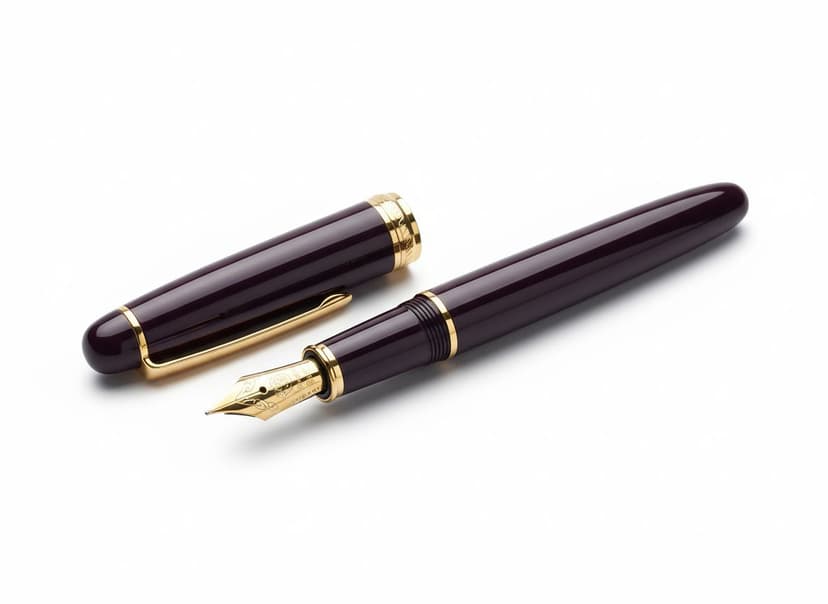
Vintage fountain pens are collected both as objects and as writing instruments, and that dual demand supports prices better than in most twentieth-century categories. The major American brands, Parker, Sheaffer, Waterman, and Wahl-Eversharp, produced pens from the 1920s through the 1960s that remain highly usable, and specific models have devoted followings. The Parker 51, produced from 1941 into the 1970s, is the most-produced quality fountain pen ever made and prices accordingly at forty to two hundred dollars. Above it sit less common models, oversized pens, and unusual colors. Montblanc occupies its own tier, with vintage 149s and celluloid pens from the 1930s and 1940s reaching thousands. The condition variables specific to pens are nib condition and whether it is gold, cracks in the celluloid or plastic body which are often hairline and easy to miss, and the state of the filling system, since sacs and diaphragms perish and need replacement.
Brand and model set the baseline, with Montblanc's vintage celluloid pens in a tier above the American makers. Nib characteristics create large premiums, and flexible nibs that produce line variation are actively sought by calligraphers and can double a pen's value. Nib material matters, with gold nibs worth substantially more than steel. Body condition is assessed carefully for hairline cracks, especially around the cap lip and the section join, since celluloid and early plastics become brittle. Color and pattern drive value within any model, and scarce colors can multiply the price of an otherwise common pen. Filling system condition determines whether the pen is usable, and perished sacs and diaphragms are expected on unrestored pens with restoration costing $40 to $100. Completeness with the original box and papers adds a modest premium. Personalized engraving is a negative for most collectors.
Buying & Selling Tips
Buying
Inspect the cap lip and section join under magnification for hairline cracks. They are the most commonly missed defect.
Check whether the nib is gold. It should be stamped with a karat mark, and gold nibs are worth considerably more than steel.
Ask whether the pen has been restored. Unrestored pens with perished sacs need $40 to $100 of work before use.
Look for flexible nibs if you write. Flex adds both writing pleasure and substantial resale value.
Learn the scarce colors for the models you collect. Color knowledge is the main edge in vintage pen buying.
Selling
Have the pen restored before selling if you can. A working, filling pen sells for considerably more than a non-functional one.
Photograph the nib under magnification, the full pen, the cap lip, and any imprints.
Include a writing sample photo. It demonstrates the nib works and shows line width, which buyers ask about.
State the model, color, and nib grade in the title. Collectors search by all three.
Disclose any cracks or engraving. Both are significant to buyers and undisclosed issues cause returns.
Vintage Fountain Pens FAQ
How much is a Parker 51 worth?
A standard Aerometric model restored and working brings $60 to $180. Vacumatic fillers in scarce colors reach $150 to $600. It is the most produced quality fountain pen in history, which keeps common versions affordable.
What is a flexible nib and why does it matter?
A flexible nib spreads under pressure to produce line variation, which calligraphers and letter writers prize. Flex can add fifty to two hundred percent to a pen's value over the same model with a rigid nib.
Do vintage fountain pens need restoration?
Usually yes. Rubber sacs and Vacumatic diaphragms perish over decades, so most unrestored pens will not fill. Restoration costs $40 to $100 and is essential for the pen to be usable.
Which vintage fountain pens are the most valuable?
Pre-war Montblanc celluloid pens lead at $1,500 to $8,000. Among American makers, 1920s Parker Duofolds in scarce colors and oversized models bring $150 to $700.
Does a crack ruin a fountain pen's value?
It reduces it to roughly thirty to fifty percent. Hairline cracks in celluloid spread over time and repair is difficult, so collectors inspect the cap lip and section join carefully before buying.
Got Vintage Fountain Pens to Value?
Upload a photo and get a free AI-powered valuation in seconds. No sign-up required.