Last updated: September 2026
How Much Is a Used Piano Worth?
Check current market values, learn what affects pricing, and get tips for buying and selling.
← All Pianos valuationsWhat do you want to value?
Get the free app for unlimited scans


Used Pianos Price Guide
Current market values based on recent sales data and market trends.
| Item | Condition | Price Range |
|---|---|---|
| Steinway Model B grand, rebuilt | Excellent | $35,000 - $80,000 |
| Steinway Model M or L, good original | Playable, tunable | $12,000 - $35,000 |
| Yamaha C series grand, 15 years old | Excellent | $8,000 - $20,000 |
| Kawai grand, 20 years old | Good | $4,000 - $12,000 |
| Baby grand, unbranded or budget maker | Playable | $800 - $4,000 |
| Yamaha U series upright, 20 years | Excellent | $2,000 - $5,000 |
| Console or spinet piano, 1960s-80s | Playable | $100 - $800 |
| Antique upright, pre-1930 | Playable | $0 - $500 |
| Piano with cracked soundboard or loose pins | Unplayable | $0 |
| Player piano, restored and working | Excellent | $2,000 - $12,000 |
What Determines Used Pianos Value
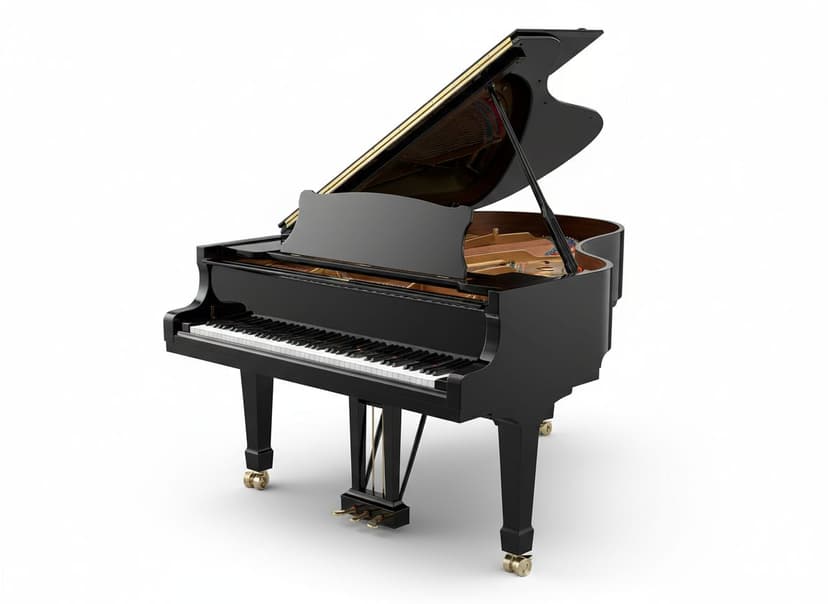
The used piano market contains the largest gap between perceived and actual value of any household item, and the reality is harsh: most old upright pianos are worth nothing and cost money to remove. A century-old upright that a family paid the equivalent of thousands for has a soundboard that has lost its crown, a pinblock that no longer holds tuning, and a cost to move of three to six hundred dollars. Piano technicians routinely advise that such instruments be scrapped. Value survives in specific places. Steinway, Mason and Hamlin, Bösendorfer, and a handful of other premium makers hold value in grand form, with a rebuilt Steinway B bringing tens of thousands. Newer quality pianos from Yamaha and Kawai depreciate but retain real value for decades. Digital pianos are a separate market entirely. The two questions that determine any piano's value are the maker and whether the pinblock and soundboard are sound.
Maker is the dominant factor, and the gap between a Steinway and a generic upright is total rather than incremental. Instrument type matters, with grands worth far more than uprights and spinets at the bottom. Age interacts with maker: a twenty-year-old Yamaha is a good instrument while a hundred-year-old generic upright is scrap. The two technical questions that determine playability are pinblock condition, which governs whether the piano holds tuning, and soundboard condition, since a cracked board or one that has lost its crown cannot be economically repaired. Action condition and whether the piano has been regulated affect playability. Case cosmetics matter far less than most sellers expect, since buyers care about sound. Moving cost is a real market factor that suppresses prices everywhere, because a buyer must add three to six hundred dollars to any purchase price.
Buying & Selling Tips
Buying
Have a piano technician inspect any instrument over a few thousand dollars. Pinblock and soundboard problems are invisible to a buyer.
Test tuning stability by asking when it was last tuned and checking pitch against a reference. A piano that will not hold tuning is unusable.
Buy a good used Yamaha or Kawai upright over a cheap new piano. The build quality difference is substantial at the same price.
Factor moving cost into every offer. Three to six hundred dollars is the realistic figure for a local move.
Avoid pre-1930 uprights unless you want a project. Most are beyond economical repair.
Selling
Have the piano tuned before showing it. An out-of-tune piano sounds broken to a non-technical buyer.
Get a technician's assessment in writing for valuable instruments. It reassures buyers and justifies the price.
Photograph the soundboard, the pinblock area, and the action along with the exterior.
Be honest if the instrument is not economically salvageable. Free-to-a-good-home listings with the buyer paying the move often work best.
For premium brands, sell through a piano dealer on consignment. They reach serious buyers a general listing cannot.
Used Pianos FAQ
Is my old upright piano worth anything?
Usually not. Pre-1930 uprights typically have degraded soundboards and pinblocks that no longer hold tuning, and moving one costs $300 to $600. Many technicians recommend scrapping rather than restoring them.
How much does a used Steinway cost?
A Model M or L in good original condition brings $12,000 to $35,000, and a properly rebuilt Model B reaches $35,000 to $80,000. Rebuild quality and who performed it affect the price substantially.
Why are pianos so hard to sell?
Moving costs $300 to $600, most homes have no space, and digital pianos offer a cheaper alternative that never needs tuning. Supply from downsizing households far exceeds demand.
What is a pinblock and why does it matter?
The pinblock is the laminated wood block holding the tuning pins. When it deteriorates the pins loosen and the piano will not hold tuning. Replacing it requires a full rebuild, which is uneconomical on most instruments.
Do Yamaha pianos hold their value?
Better than most. A twenty-year-old Yamaha U series upright still brings $2,000 to $5,000 and C series grands hold $8,000 to $20,000, because the build quality supports decades of use.
Got Used Pianos to Value?
Upload a photo and get a free AI-powered valuation in seconds. No sign-up required.