Last updated: September 2026
How Much Is a Used Graphics Card Worth?
Check current market values, learn what affects pricing, and get tips for buying and selling.
← All Graphics Cards valuationsWhat do you want to value?
Get the free app for unlimited scans


Used Graphics Cards Price Guide
Current market values based on recent sales data and market trends.
| Item | Condition | Price Range |
|---|---|---|
| RTX 4090, 24GB | Excellent, boxed | $1,350 - $1,800 |
| RTX 4080 Super, 16GB | Excellent | $700 - $950 |
| RTX 4070 Ti, 12GB | Excellent | $450 - $620 |
| RTX 3090, 24GB | Good | $600 - $850 |
| RTX 3080, 10GB | Good | $280 - $420 |
| RTX 3060, 12GB | Good | $170 - $250 |
| AMD RX 7900 XTX, 24GB | Excellent | $620 - $850 |
| AMD RX 6800 XT, 16GB | Good | $250 - $380 |
| Any GPU with mining history | Working | 15% - 30% below clean |
| GPU with transferable warranty | Excellent | +$40 - $120 |
What Determines Used Graphics Cards Value
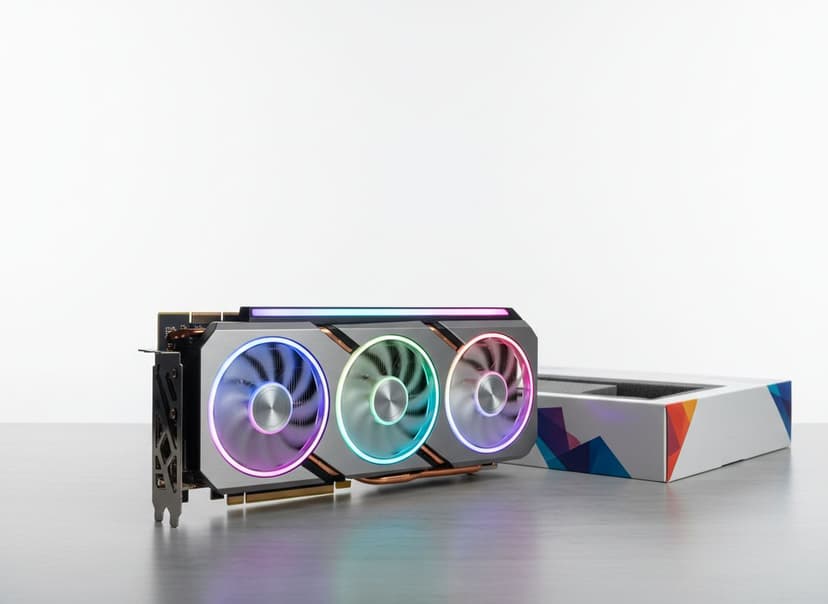
Used GPU pricing is the most volatile segment in consumer electronics because it responds to three independent forces: new-generation launches, cryptocurrency mining cycles, and AI compute demand. A card's price can move thirty percent in a month for reasons unrelated to the card itself. The structural rule is that used GPUs settle at roughly fifty to seventy percent of their launch MSRP once a successor generation ships, and then decline slowly until they fall below the performance threshold for current games. VRAM capacity has become disproportionately important because modern games and local AI models are memory hungry, which is why an older card with 16GB can outsell a newer one with 8GB. Mining history is the specific risk buyers price in: cards run continuously under load have degraded thermal pads and fans, though the silicon itself usually survives. Warranty transferability varies by manufacturer and adds real value where it applies.
Generation and performance tier set the baseline, but VRAM capacity has become an unusually strong secondary factor because both modern games and local AI workloads are memory constrained. A card with 16GB or more holds value considerably better than an equivalent-performance card with 8GB. Mining history reduces price by fifteen to thirty percent when disclosed, and buyers look for telltale signs including replaced thermal pads, dust patterns, and cards sold in multiples. Cooler design and brand matter modestly, with triple-fan and higher-end AIB models selling above blower and reference designs. Warranty remaining and its transferability add real money where the manufacturer permits it. Physical condition is judged on fan noise, sag damage to the PCB, and whether the card has been repasted. Finally, timing dominates: prices drop sharply in the weeks around a new generation launch and recover partially afterward.
Buying & Selling Tips
Buying
Ask directly about mining history and look for replaced thermal pads or a repaste. Sellers who volunteer this information are usually being honest.
Prioritize VRAM. A 16GB card from an older generation often outlasts an 8GB card from a newer one for both gaming and AI work.
Run a stress test immediately on receipt. Artifacting, thermal throttling, and crashes appear within minutes under load.
Check whether the warranty transfers. EVGA, ASUS, and MSI have different policies and a transferable warranty is worth real money.
Buy in the months between generation launches. Prices are lowest right after a new series ships and before supply tightens.
Selling
Sell before the next generation is announced. Prices drop sharply on announcement, not on availability.
Include benchmark screenshots and temperature readings under load. It converts skeptical buyers faster than any description.
Disclose mining use honestly. Undisclosed mining history is the top cause of disputes and reversed payments in this category.
Clean the card and replace thermal pads if they are visibly degraded. It is inexpensive and improves both temperatures and presentation.
Ship in the original box with anti-static packaging. GPU shipping damage is common and expensive to resolve.
Used Graphics Cards FAQ
How much does a used GPU depreciate?
A graphics card typically settles at fifty to seventy percent of its launch MSRP once the next generation ships, then declines gradually. Cards with large VRAM buffers hold value longer because both games and AI workloads are memory constrained.
Is it safe to buy a mining GPU?
Usually the silicon is fine, since mining runs cards at steady moderate load rather than thermal cycling. Fans, thermal pads, and paste wear out though, so expect to service the cooler and pay fifteen to thirty percent less than a clean card.
How can I tell if a GPU was used for mining?
Look for replaced thermal pads, evidence of a repaste, heavy dust in the fins, worn fan bearings, and sellers listing multiple identical cards. Mining cards also often come without the original box or accessories.
Does VRAM matter more than the GPU model?
Increasingly yes, at the margins. An RTX 3060 with 12GB can outperform an 8GB card of nominally higher tier in memory-heavy workloads, and its resale value reflects that.
When is the best time to sell a graphics card?
Before a new generation is announced, not after. Prices on the outgoing generation fall sharply on announcement day, well before the new cards are actually available to buy.
Got Used Graphics Cards to Value?
Upload a photo and get a free AI-powered valuation in seconds. No sign-up required.