Last updated: September 2026
How Much Are the Power Nine Magic Cards Worth?
Check current market values, learn what affects pricing, and get tips for buying and selling.
← All Magic: The Gathering Cards valuationsWhat do you want to value?
Get the free app for unlimited scans


Power Nine Magic Cards Price Guide
Current market values based on recent sales data and market trends.
| Item | Condition | Price Range |
|---|---|---|
| Black Lotus (Alpha) | PSA 9 | $500,000 - $900,000 |
| Black Lotus (Beta) | PSA 8 | $180,000 - $320,000 |
| Black Lotus (Unlimited) | PSA 7 | $18,000 - $32,000 |
| Ancestral Recall (Beta) | PSA 8 | $45,000 - $80,000 |
| Time Walk (Beta) | PSA 8 | $35,000 - $65,000 |
| Mox Sapphire (Beta) | PSA 8 | $30,000 - $55,000 |
| Mox Jet / Mox Ruby (Beta) | PSA 8 | $20,000 - $40,000 |
| Mox Pearl / Mox Emerald (Beta) | PSA 8 | $14,000 - $28,000 |
| Timetwister (Unlimited) | PSA 7 | $3,500 - $7,000 |
| Any Power Nine (Unlimited) | Played / Raw | $1,200 - $12,000 |
What Determines Power Nine Magic Cards Value
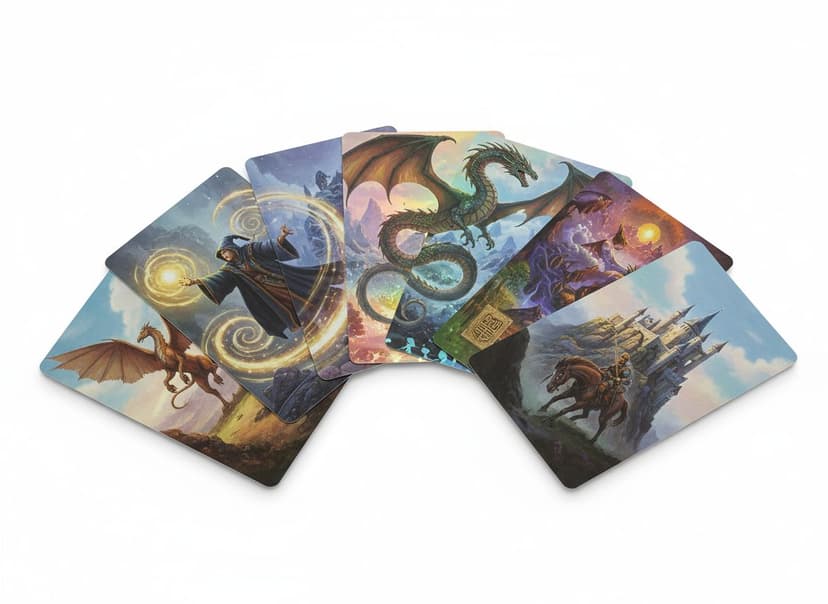
The Power Nine are the nine most broken cards ever printed in Magic: The Gathering, all from the 1993 Alpha, Beta, and Unlimited sets: Black Lotus, the five Moxen, Ancestral Recall, Time Walk, and Timetwister. They exist in tiny numbers because Wizards of the Coast had no idea the game would succeed and printed Alpha at roughly 2.6 million cards total across the entire set, of which only about 1,100 copies of each rare exist. Alpha is distinguishable by its rounded corners and slightly smaller card size, Beta by square corners with a thin black border, and Unlimited by a white border. The price ladder between those three printings is steep, with Alpha typically running two to four times Beta and Beta running three to five times Unlimited. Condition is the other axis, and because these cards were played in the 1990s before sleeves were standard, high-grade copies are exceptionally scarce.
Printing is the first and largest multiplier: Alpha, Beta, and Unlimited are three distinct markets for the same card name. Grade follows, and the curve is exponential rather than linear at the top, since a PSA 9 Beta Lotus is worth several times a PSA 8. Centering is the most common grade limiter on 1993 cards, followed by print lines and the notorious edge chipping on the black borders. Provenance and authentication matter more here than in almost any other collectible because high-quality counterfeits of Power Nine cards circulate widely. Signed or altered copies trade in a separate niche and generally sell below clean examples. Finally, Unlimited copies remain tournament legal in the Vintage format while Alpha and Beta are collector items, which means the Unlimited market has a floor set by actual play demand.
Buying & Selling Tips
Buying
Buy graded. Counterfeit Power Nine cards have improved to the point that light tests and rosette checks are no longer sufficient for a private sale.
Learn the corner and border differences between Alpha, Beta, and Unlimited before shopping. The price difference for a misidentified card is life-changing.
If you are buying to play Vintage, buy the lowest grade Unlimited copy you can find. Played copies function identically and cost a fraction.
Check the light test and bend test only on cards you already own. Both can damage the card and void a return.
Track auction comparables rather than dealer ask prices. The dealer spread on Power Nine is unusually wide.
Selling
Send anything ungraded to PSA, BGS, or CGC before selling. Raw Power Nine sells at a heavy discount because buyers price in counterfeit risk.
Sell through a major auction house or a dedicated Magic auction platform. General marketplaces cap payment protection well below these values.
Document the card's history if you have it. Original owner provenance measurably increases bids on Alpha and Beta cards.
Do not attempt to clean, flatten, or repair a card. Any restoration is detected in grading and drops the card into an altered designation.
Insure shipping for full value and require signature. This is the single most-stolen category in trading card shipping.
Power Nine Magic Cards FAQ
What are the Power Nine in Magic?
Black Lotus, Mox Pearl, Mox Sapphire, Mox Jet, Mox Ruby, Mox Emerald, Ancestral Recall, Time Walk, and Timetwister. All nine come from the 1993 Alpha, Beta, and Unlimited sets and are banned or restricted in every format because of how powerful they are.
How much is a Black Lotus worth?
It depends entirely on printing and grade. An Unlimited copy in played condition starts around $12,000, a Beta in PSA 8 runs $180,000 to $320,000, and an Alpha in PSA 9 has sold for well over $500,000.
How do I tell Alpha from Beta from Unlimited?
Alpha cards have noticeably rounded corners and are slightly smaller. Beta has square corners with a black border. Unlimited has square corners with a white border. Holding the three side by side makes the difference obvious.
Are Power Nine reprints worth anything?
Collector reprints such as the Vintage Masters or 30th Anniversary versions are not tournament legal and trade for a tiny fraction of originals, typically $30 to $500 depending on the card and printing.
Why is Black Lotus the most famous card?
It produces three mana of any single color for free and then goes to the graveyard, which effectively skips three turns of development. That, combined with its striking artwork and 1993 scarcity, made it the symbol of the entire hobby.
Got Power Nine Magic Cards to Value?
Upload a photo and get a free AI-powered valuation in seconds. No sign-up required.