Last updated: September 2026
How Much Are Movie Posters Worth?
Check current market values, learn what affects pricing, and get tips for buying and selling.
← All Movie Memorabilia valuationsWhat do you want to value?
Get the free app for unlimited scans


Movie Posters Price Guide
Current market values based on recent sales data and market trends.
| Item | Condition | Price Range |
|---|---|---|
| 1930s Universal horror one sheet | Restored, linen backed | $40,000 - $500,000 |
| 1950s classic sci-fi one sheet | Very good | $2,000 - $30,000 |
| 1960s James Bond one sheet | Very good | $800 - $8,000 |
| 1977 Star Wars style A one sheet | Near mint | $3,000 - $15,000 |
| 1970s-80s major release one sheet | Very good | $100 - $900 |
| 1990s one sheet | Near mint, rolled | $25 - $200 |
| Lobby card set of 8, 1950s | Very good | $150 - $2,500 |
| Modern release one sheet | Mint, double sided | $15 - $80 |
| Linen backing service | Per poster | $150 - $500 |
| Commercial reproduction | Any | $5 - $25 |
What Determines Movie Posters Value
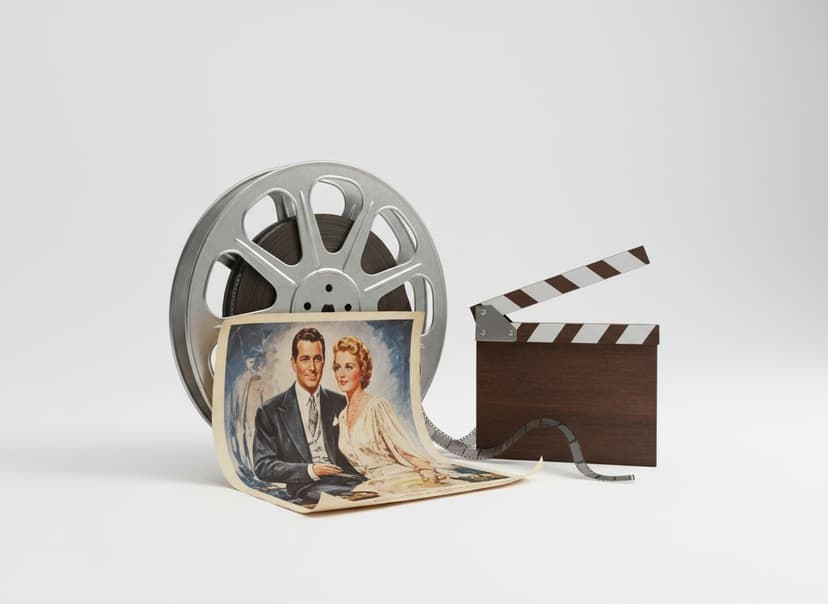
Movie poster collecting is a mature market with clear conventions, and the first thing to understand is format. The standard American theatrical poster is the one sheet, measuring 27 by 41 inches for most of the twentieth century and 27 by 40 inches from the 1980s onward. Other formats include the half sheet, insert, window card, lobby card set, and the large three sheet and six sheet. Value depends on title, year, format, and condition, with iconic films from the 1930s through 1960s at the top. Universal horror posters from the 1930s are the most valuable category in the hobby, with a Dracula one sheet having exceeded half a million dollars. The critical practical issue is distinguishing originals from reproductions, since commercial reprints of famous posters are everywhere. Original posters were folded until the 1980s, printed on specific paper stocks, and carry National Screen Service numbers that reproductions get wrong.
Title and cultural significance drive the top of the market, and the same year and format can differ by three orders of magnitude between an iconic film and a forgotten one. Format matters enormously, with one sheets being the standard collectible and the larger three and six sheets scarcer but harder to display. Original release versus rerelease is a major distinction, since a 1938 rerelease of a 1933 film is worth a fraction of the original, and this is determined by the National Screen Service number printed at the bottom. Condition follows a specific grading scale, and paper issues including tears, pinholes, tape, fold separation, and fading all reduce value. Linen backing, a conservation treatment that mounts the poster on canvas, is standard and accepted for valuable posters and generally increases value by making the poster stable and displayable. Style variants for a single film create separate markets.
Buying & Selling Tips
Buying
Check the size precisely. Original one sheets are 27 by 41 inches before 1985 and 27 by 40 after; reproductions are often 24 by 36.
Look for the National Screen Service number at the bottom. It identifies the year and confirms an original release printing.
Expect fold lines on pre-1985 posters. Posters were shipped folded, and a perfectly flat vintage poster is a warning sign.
Feel the paper. Original posters are printed on matte or semi-gloss stock, while reproductions are typically glossy and thinner.
Buy linen-backed for valuable posters. It stabilizes the paper and is accepted practice rather than a defect.
Selling
Photograph the full poster flat, plus close-ups of the bottom border with the NSS number and any damage.
State the exact dimensions in the listing. It is the first thing buyers use to filter originals from reproductions.
Do not attempt repairs yourself. Amateur tape and backing reduce value more than the original damage.
Consider professional linen backing for valuable posters. It typically adds more than its $150 to $500 cost.
Sell high-value posters through a specialist auction. The buyer pool for five-figure posters exists only there.
Movie Posters FAQ
How can I tell if a movie poster is original?
Check the dimensions, which should be 27 by 41 inches for pre-1985 one sheets, look for the National Screen Service number at the bottom, and examine the paper stock. Original posters before 1985 were shipped folded, so fold lines are expected.
What is the most valuable movie poster?
1930s Universal horror posters lead the hobby, with a 1931 Dracula one sheet having sold for over $500,000. The 1927 Metropolis and 1932 The Mummy posters have reached similar figures.
Does linen backing hurt a poster's value?
No, it generally helps. Linen backing is an accepted conservation treatment that mounts the poster on canvas, stabilizing the paper and allowing restoration of fold lines. It is standard practice for valuable posters.
Are folded posters worth less than rolled ones?
For posters printed before 1985, folds are original and expected since that is how studios shipped them. For posters after roughly 1985, when rolled distribution became standard, folds indicate damage and reduce value.
Are modern movie posters worth anything?
Most bring $15 to $80. Double-sided originals used in theater light boxes are worth more than single-sided commercial versions, and advance or teaser designs typically outsell the final theatrical poster.
Got Movie Posters to Value?
Upload a photo and get a free AI-powered valuation in seconds. No sign-up required.