Last updated: September 2026
How Much Is a MacBook Worth?
Check current market values, learn what affects pricing, and get tips for buying and selling.
← All MacBooks valuationsWhat do you want to value?
Get the free app for unlimited scans


MacBooks Price Guide
Current market values based on recent sales data and market trends.
| Item | Condition | Price Range |
|---|---|---|
| MacBook Air M4, 13 inch, 256GB | Excellent, under 1 year | $720 - $890 |
| MacBook Air M2, 13 inch, 256GB | Excellent | $500 - $680 |
| MacBook Air M1, 8GB / 256GB | Excellent | $380 - $520 |
| MacBook Pro 14, M4 Pro, 512GB | Excellent | $1,450 - $1,800 |
| MacBook Pro 14, M1 Pro, 512GB | Excellent | $780 - $1,050 |
| MacBook Pro 16, M3 Max | Excellent | $1,900 - $2,600 |
| MacBook Pro 16 Intel, 2019 | Good, working | $330 - $600 |
| MacBook Pro 13 Intel, 2017-2019 | Good | $180 - $360 |
| Any MacBook, battery under 80% | Working | $60 - $150 below normal |
| MacBook with screen damage | Functional | 25% - 45% of clean |
What Determines MacBooks Value
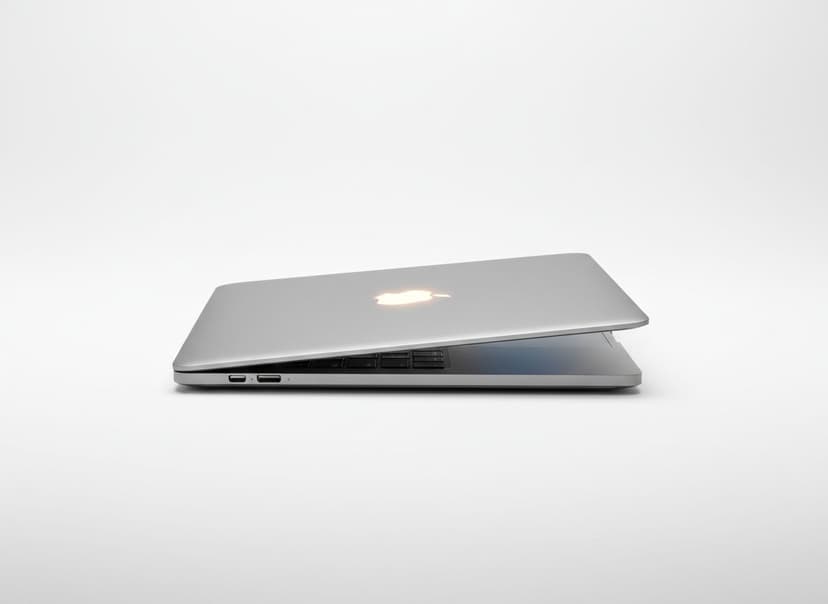
MacBook resale values are shaped by one clean dividing line: Apple silicon versus Intel. The M-series transition beginning in late 2020 made every Intel MacBook obsolete far faster than normal, because Apple's own software support and the performance gap both moved against them. An Intel MacBook Pro from 2019 that cost $2,400 now resells for $300 to $550, while an M1 Air from 2020 that cost $999 still brings $400 to $600. Within the Apple silicon generation, depreciation follows a predictable curve of roughly twenty-five to thirty percent in year one and fifteen percent annually after that. The variables that move an individual machine most are battery cycle count and health, storage capacity, and whether the machine has any keyboard or display issues. The 2016 to 2019 butterfly keyboard models carry a permanent discount because of their known failure rate, and buyers price that risk in even on repaired units.
Chip generation dominates, and the Intel to Apple silicon divide created the steepest single depreciation event in MacBook history. Within Apple silicon, the specific chip tier from base M-series through Pro and Max creates clear price bands. Storage and memory configuration matter substantially because Apple charges heavily for upgrades at purchase and those upgrades are soldered, so an upgraded machine holds a real premium. Battery health is checked by every informed buyer through the cycle count and condition report, and a machine showing Service Recommended loses $60 to $150 immediately. Cosmetic condition affects price modestly, with dents on the lid and worn keycaps the common issues. Keyboard generation is a specific factor on 2016 to 2019 models due to the butterfly mechanism's failure history. AppleCare remaining coverage transfers with the machine and adds real value, as does the original box, which improves both price and shipping safety.
Buying & Selling Tips
Buying
Check battery cycle count and condition in System Information before buying. Anything over 800 cycles or showing Service Recommended should be discounted.
Avoid 8GB memory configurations for anything beyond light use. They cannot be upgraded and resale demand is noticeably weaker.
Verify Activation Lock is off. A MacBook still linked to another Apple ID is unusable and cannot be reset.
Steer clear of 2016 to 2019 butterfly keyboard models unless the price reflects the risk. Key failures are common and repair is expensive.
Buy the previous generation Air rather than the current one. The value gap is large and the performance difference is modest for most users.
Selling
Sign out of iCloud and disable Find My before listing. Buyers will not complete a purchase on a locked machine.
Screenshot the battery condition and cycle count and include it in the listing. It preempts the most common question.
Clean the machine thoroughly and photograph all four corners plus the screen powered on. Cosmetic presentation affects offers.
Sell Intel machines sooner rather than later. Their values continue to fall as software support narrows.
Include the original charger. A missing charger costs $60 to $80 to replace and buyers deduct more than that.
MacBooks FAQ
How much does a MacBook depreciate per year?
Roughly twenty-five to thirty percent in the first year and fifteen percent annually after that for Apple silicon models. Intel MacBooks have depreciated much faster since the 2020 transition, often losing seventy-five percent or more of their value.
Is an Intel MacBook worth buying in 2026?
Only at a steep discount for basic tasks. Apple has narrowed software support for Intel Macs and the performance gap with M-series is substantial. A 2019 MacBook Pro 16 that cost $2,400 now sells for $330 to $600.
Does battery health affect MacBook resale value?
Yes, by $60 to $150. Buyers check the cycle count and condition report, and a machine showing Service Recommended is discounted heavily because Apple battery replacement costs $160 to $250.
Which MacBook holds its value best?
The MacBook Air with base M-series chips holds value best in percentage terms because demand is broad and the entry price is low. High-spec Pro models hold more absolute dollars but depreciate at a similar rate.
What is the butterfly keyboard problem?
MacBooks from 2016 to 2019 used a butterfly key mechanism prone to sticking and failure from dust. Apple ran a repair program that has now largely expired, so those models carry a permanent resale discount.
Got MacBooks to Value?
Upload a photo and get a free AI-powered valuation in seconds. No sign-up required.