Last updated: September 2026
How Much Are Lladro Figurines Worth?
Check current market values, learn what affects pricing, and get tips for buying and selling.
← All Lladro Figurines valuationsWhat do you want to value?
Get the free app for unlimited scans


Lladro Figurines Price Guide
Current market values based on recent sales data and market trends.
| Item | Condition | Price Range |
|---|---|---|
| Common small figurine, 1980s-90s | Mint with box | $40 - $120 |
| Medium figurine, retired | Mint with box | $100 - $350 |
| Large multi-figure sculpture | Mint with box | $400 - $2,500 |
| Limited edition, numbered | Mint with certificate | $300 - $4,000 |
| Early blue backstamp (1960s-70s) | Mint | $150 - $900 |
| Gres finish (matte) pieces | Mint | $60 - $500 |
| Nao by Lladro | Mint with box | $20 - $80 |
| Elite / high complexity pieces | Mint | $1,500 - $12,000 |
| Any piece without box | Excellent | 60% - 80% of boxed |
| Chipped or restored piece | Damaged | $10 - $60 |
What Determines Lladro Figurines Value
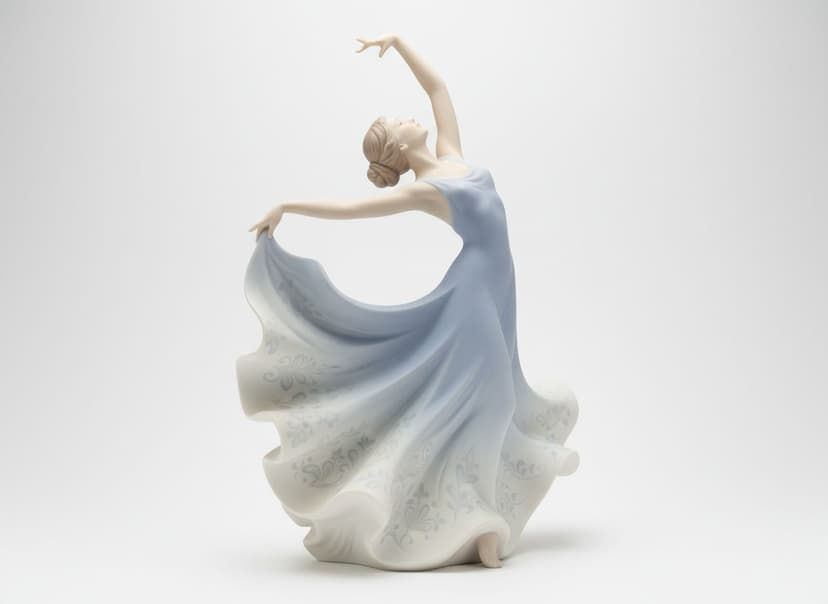
Lladro has produced hand-crafted porcelain in Valencia since 1953, and its figurines are genuinely well made, which makes their resale performance especially disappointing to owners. A piece that retailed for six hundred dollars in the 1990s commonly sells for one hundred to two hundred today. The cause is the same demographic shift affecting all twentieth-century figurine collecting: the buyer base has aged out and estates are liquidating simultaneously. Value is determined first by the backstamp, which dates the piece, then by the model, size, and whether it was a limited edition. The earliest blue backstamps from the 1960s and 1970s carry premiums. Large, complex sculptures with multiple figures and delicate elements hold value far better than the small single-figure pieces that were produced in the greatest numbers. Limited editions with certificates and numbered bases are the segment where original retail is sometimes recovered. Condition must be perfect, since Lladro's characteristic thin porcelain elements chip easily.
Size and complexity are the strongest drivers, because large multi-figure sculptures were expensive to produce, made in smaller numbers, and are far harder to find undamaged. Backstamp era dates the piece and the earliest blue marks command premiums. Limited edition status with a numbered base and original certificate is the segment where values hold best, and a missing certificate reduces a limited edition to near the price of an open-edition piece. Retirement helps but only modestly, since Lladro has retired thousands of models. Condition must be flawless because the brand's signature thin elements, particularly flowers, fingers, and trailing fabric, chip readily and repairs are visible under magnification. The Nao sub-brand is a separate and much lower tier. Finally, current market realism matters: sellers anchored to original retail or to 1990s guide values will find no buyers.
Buying & Selling Tips
Buying
Inspect delicate elements under magnification. Flowers, fingers, and thin trailing details are the standard break points.
Check the backstamp to date the piece. Early blue marks indicate 1960s and 1970s production and carry premiums.
Require the certificate for any limited edition. Without it the piece prices as a standard open edition.
Buy large complex sculptures if collecting for value. Small single figures are the most oversupplied segment.
Distinguish Lladro from Nao. Nao is the lower-priced sister brand and is worth substantially less.
Selling
Photograph the backstamp, the base number, and every delicate element. Buyers assess condition from those close-ups.
Include the certificate and box for limited editions. Their absence materially reduces the price.
Sell large pieces individually and small common ones in lots. The value spread justifies different approaches.
Double box with foam around every protruding element. Shipping damage is the most common failure in this category.
Price from recent sold listings, not from retail or guide values. The market is well below both.
Lladro Figurines FAQ
Are Lladro figurines worth anything?
Common small figurines bring $40 to $120 against original retail of $200 to $500. Large multi-figure sculptures and numbered limited editions hold far better, reaching $400 to $4,000 or more.
How do I date a Lladro figurine?
Check the backstamp on the base. Lladro has used several marks over the decades, with the earliest blue backstamps indicating 1960s and 1970s production. Reference charts map each mark to its production period.
Why did Lladro values decline?
The original collector base has aged and estates are selling simultaneously, while younger buyers have not adopted the category. Supply now far exceeds demand for the small common figurines that were produced in the greatest numbers.
What is the difference between Lladro and Nao?
Nao is Lladro's lower-priced sister brand with simpler designs and less hand finishing. Nao pieces typically sell for $20 to $80 against several hundred for comparable Lladro figurines.
Which Lladro pieces hold value best?
Large, complex sculptures with multiple figures and elaborate detail, and numbered limited editions with their original certificates. Those segments were produced in far smaller quantities and are difficult to find undamaged.
Got Lladro Figurines to Value?
Upload a photo and get a free AI-powered valuation in seconds. No sign-up required.