Last updated: September 2026
How Much Are Hallmark Ornaments Worth?
Check current market values, learn what affects pricing, and get tips for buying and selling.
← All Christmas Ornaments valuationsWhat do you want to value?
Get the free app for unlimited scans


Hallmark Ornaments Price Guide
Current market values based on recent sales data and market trends.
| Item | Condition | Price Range |
|---|---|---|
| 1973 first year ornament | Mint in box | $60 - $300 |
| 1975-79 ornaments | Mint in box | $25 - $150 |
| First edition in a popular series | Mint in box | $30 - $250 |
| 1980s ornaments, common | Mint in box | $10 - $40 |
| 1990s ornaments, common | Mint in box | $5 - $15 |
| 2000s onward, common | Mint in box | $4 - $12 |
| Limited event or club exclusive | Mint in box | $20 - $120 |
| Licensed property ornament (Star Wars, Trek) | Mint in box | $12 - $80 |
| Any ornament without its box | Excellent | 30% - 50% of boxed |
| Complete series set | Mint in boxes | $60 - $500 |
What Determines Hallmark Ornaments Value
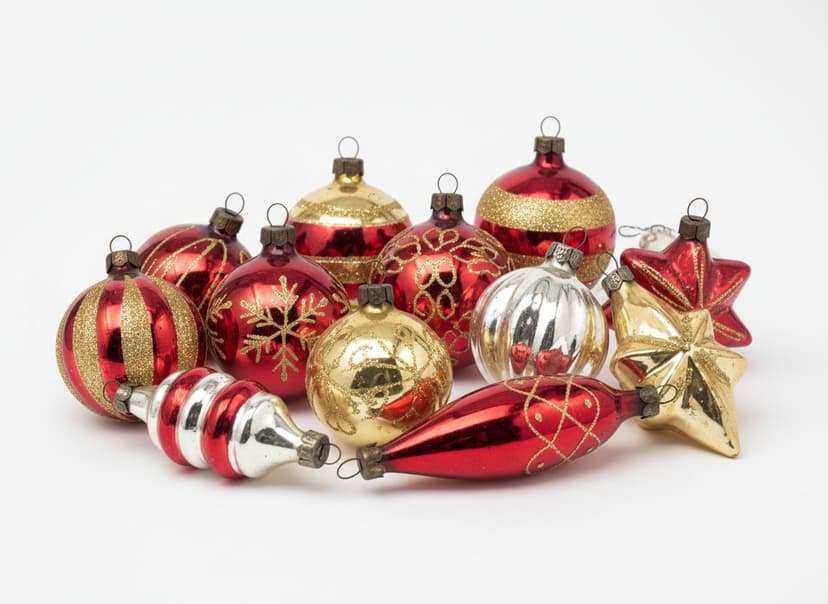
Hallmark Keepsake ornaments launched in 1973 and were explicitly marketed as collectibles, complete with a collectors club, series with numbered editions, and annual retirement. That marketing worked so well that the market is now saturated: millions of people saved millions of ornaments in their original boxes, and a typical 1990s ornament that retailed for fifteen dollars sells for five to twelve today. Value concentrates in a narrow band. The earliest ornaments from 1973 to 1979 were produced in far smaller quantities before the collecting phenomenon took hold, and first editions in ongoing series carry premiums because collectors starting a series need them. Limited event exclusives, artist-signed pieces, and production errors form the remaining valuable categories. Box condition matters more here than in most collectibles because the entire market assumes boxes were kept, so an ornament without its box is discounted sharply.
Year of production is the primary driver, and the pre-1980 ornaments made before the collecting boom are the only group with genuine scarcity. Series position matters, with first editions worth substantially more than later entries because collectors work backward to complete a series. Licensed property ornaments benefit from franchise fandom that extends beyond ornament collectors. Box condition is unusually important because the entire collector base kept boxes, so an unboxed ornament is discounted by half. Physical condition covers paint chips, discoloration of white plastic, and any deformation from attic heat, which is a common problem. Magic and light-up ornaments have the added variable of whether their electronics still work, and dead ones are heavily discounted. Complete series sets sell for more than the sum of individual pieces because assembling one requires patience.
Buying & Selling Tips
Buying
Focus on pre-1980 ornaments if buying for value. Everything after is heavily oversupplied.
Check for yellowing and heat deformation. Attic storage warps plastic and the damage is permanent.
Test light-up and sound ornaments before buying. Failed electronics substantially reduce value.
Buy first editions in ongoing series. Series starters hold value better than any other category.
Buy complete series as lots. Assembling one piece at a time costs more than buying the set.
Selling
Keep and include the original box with the price sticker if present. Unboxed ornaments sell for half as much.
State the year and series position in the title. Collectors search by year and by series name.
Sell common 1990s ornaments in themed lots. Individually they do not cover shipping and listing time.
Photograph the box condition alongside the ornament. Box damage affects the price directly.
Sell complete series together. The set premium over individual pieces is meaningful.
Hallmark Ornaments FAQ
Are Hallmark ornaments worth anything?
Most are not. A typical 1990s ornament sells for $5 to $15 in its box. The 1973 to 1979 ornaments are the exception, bringing $25 to $300 because they were produced before the collecting boom.
Which Hallmark ornaments are the most valuable?
The 1973 first year ornaments lead at $60 to $300 mint in box. First editions in long-running series and limited event exclusives form the next tier at $20 to $250.
Does the box matter for Hallmark ornaments?
Yes, substantially. Because the collector base kept boxes as a matter of course, an ornament without its box sells for roughly thirty to fifty percent of a boxed example.
Why are Hallmark ornaments worth so little?
They were marketed explicitly as collectibles, so millions of people saved them in their boxes. Supply now far exceeds demand, and estate liquidations have added to it as original collectors downsize.
What is a first edition Hallmark ornament?
It is the first entry in an ongoing annual series, marked with a numbered series symbol on the box. Collectors joining a series later need the first edition, which supports prices of $30 to $250 for popular series.
Got Hallmark Ornaments to Value?
Upload a photo and get a free AI-powered valuation in seconds. No sign-up required.