Last updated: September 2026
How Much Is a Gold Chain Worth?
Check current market values, learn what affects pricing, and get tips for buying and selling.
← All Gold Chain valuationsWhat do you want to value?
Get the free app for unlimited scans


Gold Chains Price Guide
Current market values based on recent sales data and market trends.
| Item | Condition | Price Range |
|---|---|---|
| 10k gold, per gram | Scrap value | $38 - $46 per gram |
| 14k gold, per gram | Scrap value | $53 - $64 per gram |
| 18k gold, per gram | Scrap value | $68 - $82 per gram |
| 22k gold, per gram | Scrap value | $83 - $100 per gram |
| 14k Cuban link, 20 inch, 50g | Scrap value | $2,650 - $3,200 |
| 14k rope chain, 22 inch, 15g | Scrap value | $800 - $960 |
| 10k figaro, 24 inch, 12g | Scrap value | $455 - $550 |
| Pawn shop payout | Any karat | 50% - 70% of scrap |
| Refiner payout | Any karat | 80% - 95% of scrap |
| Gold-plated / gold-filled chain | Any | $0 - $15 |
What Determines Gold Chains Value
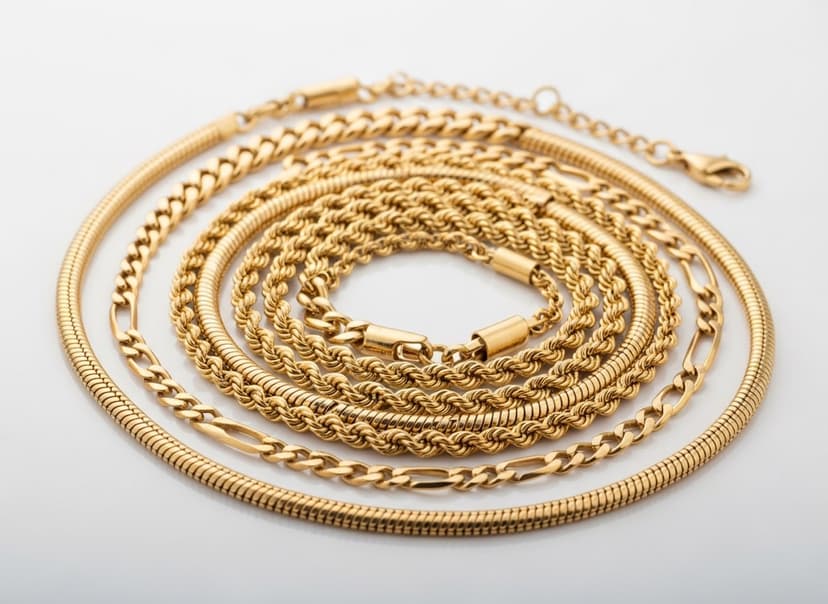
A gold chain's value is overwhelmingly determined by two numbers: its karat purity and its weight in grams. Everything else, including brand, style, and craftsmanship, adds only a modest premium unless the piece is signed by a major house. The calculation is straightforward. Multiply the weight in grams by the purity fraction, then by the current gold price per gram. Purity fractions are 0.417 for 10k, 0.585 for 14k, 0.750 for 18k, 0.916 for 22k, and 0.999 for 24k. That result is the pure gold content value, and what a buyer pays you is a percentage of it, typically seventy to ninety percent for a refiner and fifty to seventy percent for a pawn shop. The single most common disappointment in this category comes from gold-plated and gold-filled chains, which contain a tiny fraction of the gold their appearance suggests and are worth almost nothing as scrap.
Karat and weight together account for the overwhelming majority of value, and no styling premium overcomes a low weight. Hollow versus solid construction is the most commonly overlooked variable, since hollow chains look identical to solid ones but weigh a fraction as much, and manufacturers make popular styles like Cuban and rope in both. The current gold spot price moves value daily and has been historically elevated, which means chains bought years ago are often worth more as scrap than they cost. Brand adds a premium only for recognized houses such as Cartier, Tiffany, and Van Cleef, where the design and hallmark can double the scrap value. Condition matters little for scrap but matters for resale as jewelry, where a broken clasp or stretched links push a piece into the melt market. Stamps such as 10k, 14k, 585, and 750 are the primary purity indicator, and their absence should trigger acid or electronic testing.
Buying & Selling Tips
Buying
Weigh the chain and check the karat stamp before agreeing on any price. Those two numbers give you the scrap floor immediately.
Ask whether the chain is hollow or solid. A hollow 14k Cuban link can weigh one third of a solid one in the same visual size.
Test unstamped chains with an electronic gold tester or acid kit. Plated chains are common and visually convincing.
Buy by the gram from a dealer who quotes against spot. Paying a flat retail price for a plain chain usually means a large markup.
For designer pieces, verify the hallmark and serial. The brand premium is only real if the piece authenticates.
Selling
Calculate scrap value yourself before getting offers. Weight times purity times spot gives you the number to negotiate against.
Get at least three quotes. Payouts between pawn shops, local jewelers, and mail-in refiners vary by more than thirty percent.
Sell designer pieces as jewelry, not scrap. A Cartier or Tiffany chain is worth far more intact than melted.
Do not accept a per-piece offer on mixed lots. Insist on weighing and pricing each karat separately.
Watch the spot price. Gold moves enough week to week that timing a sale can change your payout by hundreds of dollars.
Gold Chains FAQ
How do I calculate what my gold chain is worth?
Multiply the weight in grams by the purity fraction, then by the current gold price per gram. For 14k the fraction is 0.585, so a 20 gram 14k chain contains 11.7 grams of pure gold. Buyers then pay a percentage of that figure.
How much do pawn shops pay for gold chains?
Typically fifty to seventy percent of the scrap gold value. Refiners and mail-in buyers pay eighty to ninety-five percent but take longer and require shipping the item.
Is a gold-plated chain worth anything?
Almost nothing. Plating is measured in microns and contains a negligible amount of gold, so scrap buyers will not pay for it. Gold-filled chains contain slightly more but are still worth only a few dollars.
Is 10k or 14k gold better for value?
14k contains 58.5 percent gold versus 41.7 percent for 10k, so it is worth roughly forty percent more per gram. 10k is harder and more scratch resistant, which is why it is common in chains meant for daily wear.
How can I tell if my chain is solid or hollow?
Compare its weight to published weights for that style and length, or feel the balance in your hand. Hollow chains feel noticeably light for their size and often dent easily under light pressure.
Got Gold Chains to Value?
Upload a photo and get a free AI-powered valuation in seconds. No sign-up required.