Last updated: September 2026
How Much Are Disney Pins Worth?
Check current market values, learn what affects pricing, and get tips for buying and selling.
← All Disney Pins valuationsWhat do you want to value?
Get the free app for unlimited scans


Disney Trading Pins Price Guide
Current market values based on recent sales data and market trends.
| Item | Condition | Price Range |
|---|---|---|
| Open edition park pin | Mint on card | $6 - $16 |
| Limited edition 3000-5000 | Mint on card | $12 - $35 |
| Limited edition 500-1000 | Mint on card | $30 - $90 |
| Limited edition 100-250 | Mint on card | $80 - $350 |
| Limited edition under 100 | Mint on card | $250 - $1,500 |
| Cast member exclusive pin | Excellent | $25 - $200 |
| Hidden Mickey pin, complete set | Excellent | $30 - $120 |
| Vintage 1999-2003 pin | Excellent | $15 - $120 |
| Jumbo or spinner pin, LE | Mint on card | $60 - $400 |
| Scrapper / counterfeit pin | Any | $0 - $2 |
What Determines Disney Trading Pins Value
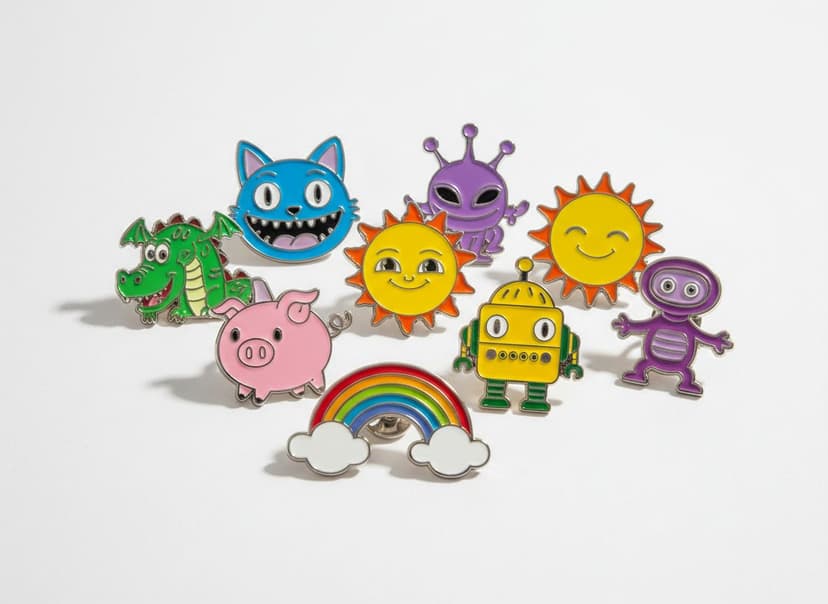
Disney pin trading began as a park activity in 1999 and grew into a secondary market where a small number of pins sell for hundreds while the overwhelming majority are worth a few dollars. The critical distinction is the edition type printed on the back of the pin. Open edition pins, produced continuously and sold in park shops, have essentially no resale value beyond their retail price. Limited edition pins carry a stamped edition size, and the smaller that number the higher the value, with LE 250 and below being the collectible tier. Limited release pins are produced for a set period without a stated quantity and sit in between. Cast member exclusives and Hidden Mickey pins, distributed only to employees or through trading, have their own markets. Counterfeit pins, known in the community as scrappers, flooded the market from overseas manufacturers and are so common that authentication is the first step in any transaction.
Edition type and size are the primary drivers, and the stamped edition number on the back is the first thing collectors read. Character popularity creates significant spreads within the same edition size, with villains, classic characters, and current franchise properties outselling obscure ones. Event exclusivity matters, with pins released only at conventions, park anniversaries, or special events commanding the largest premiums. Condition is judged on the enamel surface, the pin back mechanism, and whether the pin remains on its original card, which adds a modest premium. Authenticity is the dominant practical concern, since counterfeit scrappers are widespread and are identified by rough edges, incorrect color shades, missing or shallow back stamps, and pins that fail the magnet test. Series completeness matters for set-based releases, where the final pin needed by collectors carries a premium.
Buying & Selling Tips
Buying
Read the back stamp. Genuine pins have a clean Disney copyright, edition information where applicable, and a smooth reverse.
Check the edges for roughness. Scrappers typically have visible burrs and uneven enamel fill.
Test with a magnet. Many counterfeit pins use ferrous metal while genuine Disney pins generally do not.
Focus on editions under 500 if buying for value. Larger editions carry almost no premium over retail.
Buy from established traders or verified sellers. The counterfeit rate in casual online sales is very high.
Selling
Photograph the back of every pin. The back stamp is how buyers verify authenticity and edition size.
State the edition size explicitly in the title. Collectors filter by LE number before looking at the design.
Sell common open edition pins in lots. Individually they are not worth the listing time or shipping.
Keep pins on their original cards where possible. It adds a modest premium and protects the enamel.
Sell complete sets together. Collectors pay a premium to avoid hunting individual pins from a series.
Disney Trading Pins FAQ
How much are Disney pins worth?
Open edition park pins bring $6 to $16, roughly their retail price. Limited editions under 500 reach $30 to $350, and editions under 100 can exceed $1,000 for desirable designs.
What is a scrapper Disney pin?
A scrapper is a counterfeit pin, typically produced from rejected or stolen molds overseas. They are identified by rough edges, incorrect enamel colors, shallow or missing back stamps, and often a magnetic base.
Where is the edition size on a Disney pin?
It is stamped on the back, usually reading Limited Edition followed by a number. Open edition pins have no such marking, and limited release pins state the release period rather than a quantity.
Are Hidden Mickey pins valuable?
Individually they are modest, but complete sets bring $30 to $120. They are distributed to cast members for trading rather than sold, which gives them a distinct collecting appeal.
How can I tell if a Disney pin is real?
Check for a crisp Disney copyright stamp on the back, smooth edges with no burrs, correct enamel colors with clean fill lines, and the absence of magnetic attraction. Comparing to a known authentic pin is the most reliable method.
Got Disney Trading Pins to Value?
Upload a photo and get a free AI-powered valuation in seconds. No sign-up required.