Last updated: September 2026
How Much Is a Classic Mustang Worth?
Check current market values, learn what affects pricing, and get tips for buying and selling.
← All Classic Ford Mustang valuationsWhat do you want to value?
Get the free app for unlimited scans


Classic Mustangs Price Guide
Current market values based on recent sales data and market trends.
| Item | Condition | Price Range |
|---|---|---|
| 1969 Boss 429 fastback | Excellent, documented | $250,000 - $500,000 |
| 1965 Shelby GT350 | Excellent, registry documented | $200,000 - $500,000 |
| 1967-68 Shelby GT500 | Excellent | $150,000 - $350,000 |
| 1969-70 Boss 302 | Excellent, documented | $90,000 - $180,000 |
| 1969 Mach 1, 428 Cobra Jet | Excellent | $70,000 - $150,000 |
| 1965-66 fastback, V8 | Excellent restored | $40,000 - $80,000 |
| 1965-66 convertible, V8 | Excellent restored | $30,000 - $60,000 |
| 1965-68 coupe, V8 | Excellent restored | $18,000 - $35,000 |
| Any Mustang, six cylinder coupe | Good driver | $8,000 - $18,000 |
| Clone or tribute car | Excellent | 25% - 40% of genuine |
What Determines Classic Mustangs Value
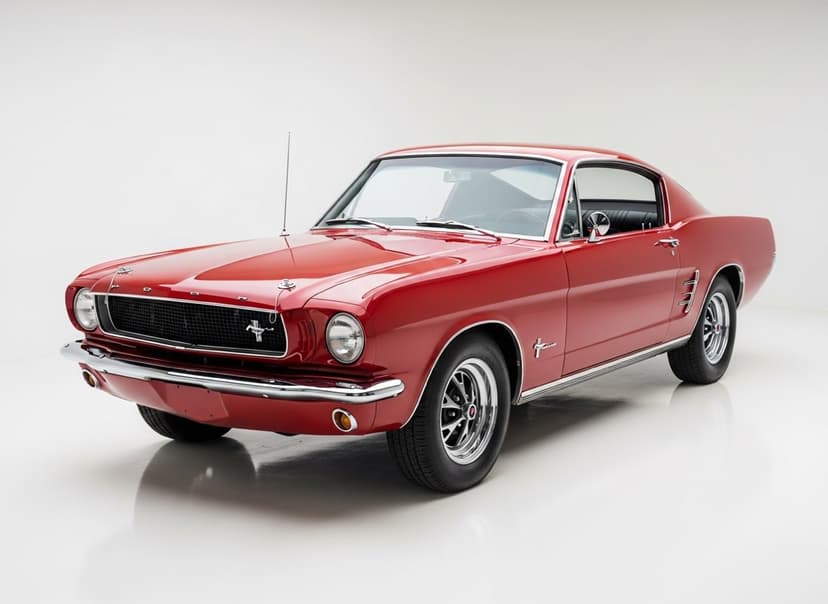
Classic Mustang values are determined primarily by what the VIN says the car left the factory as, and the fifth character of the VIN encodes the original engine. That single character can swing a car's value by a factor of ten, because a six-cylinder coupe and a big-block fastback share a body but not a market. The first generation runs from the 1964 and a half introduction through 1973, and within it the desirable configurations are clear: fastbacks over convertibles over coupes, V8 over six-cylinder, and factory performance packages over base cars. At the top sit the Shelby GT350 and GT500, the Boss 302, Boss 429, and Mach 1, all of which have documented registries. The most consequential issue in this market is clones and tributes, where an ordinary coupe has been modified to resemble a rare model. Marti Reports, which reproduce Ford's original build records, are the standard documentation buyers require.
The VIN is the starting point, and its fifth character identifies the original engine, which is the largest single value determinant. Body style follows, with fastbacks commanding the most, then convertibles, then coupes. Factory options and packages documented on the build sheet add substantially, and the Marti Report is the accepted verification. Numbers-matching status, meaning the engine and transmission are the originals that left the factory with the car, is critical at the top of the market and can double a rare car's value. Restoration quality and completeness matter, with concours restorations well above driver-quality cars. Rust is the primary condition issue, particularly in the torque boxes, floor pans, and shock towers, and structural rust repair is expensive. Documentation including the original window sticker, build sheet, and ownership history adds real value. Clones are common and must be disclosed.
Buying & Selling Tips
Buying
Decode the VIN before anything else. The fifth character identifies the original engine and determines the value bracket.
Order a Marti Report. It reproduces Ford's build records and is the standard verification that a car is what it claims to be.
Inspect the shock towers, torque boxes, and floor pans for rust. Structural repair on these cars runs into five figures.
Verify numbers-matching on high-value cars. Engine and transmission casting numbers and dates should align with the build date.
Assume a car is a clone until documented otherwise. Tribute Shelbys and Mach 1s are extremely common.
Selling
Get a Marti Report before listing. It answers the first question every serious buyer asks.
Photograph the VIN plate, the door tag, the engine bay, and the underside including the floor pans.
Disclose clone status clearly. Undisclosed tributes destroy trust and sales at every price level.
Compile all documentation including receipts, build sheet, and ownership history. Paperwork adds real money.
Sell high-end cars through a collector car auction. The buyer pool for six-figure Mustangs concentrates there.
Classic Mustangs FAQ
How do I tell what engine my classic Mustang originally had?
The fifth character of the VIN is the engine code. Ford used specific letters for each engine, so a VIN decoder identifies the original powerplant regardless of what is installed now.
What is a Marti Report?
It is an official reproduction of Ford's original build records for a specific VIN, showing the factory configuration, options, and production data. It is the accepted documentation standard in the Mustang market.
Which classic Mustang is the most valuable?
The 1969 and 1970 Boss 429 leads at $250,000 to $500,000, with around 860 built. Early Shelby GT350s from 1965 and 1967 to 1968 GT500s occupy the same range.
How much less is a clone Mustang worth?
Typically twenty-five to forty percent of a genuine car. A well-built Shelby tribute might bring $50,000 against $250,000 for a documented original, so documentation is where the money is.
Does numbers matching matter on a Mustang?
Enormously on rare models, where an original engine and transmission can double the value. On common V8 coupes and convertibles the effect is smaller, though it still adds a meaningful premium.
Got Classic Mustangs to Value?
Upload a photo and get a free AI-powered valuation in seconds. No sign-up required.