Last updated: September 2026
How Much Is a Catalytic Converter Worth?
Check current market values, learn what affects pricing, and get tips for buying and selling.
← All Catalytic Converters valuationsWhat do you want to value?
Get the free app for unlimited scans


Catalytic Converters Price Guide
Current market values based on recent sales data and market trends.
| Item | Condition | Price Range |
|---|---|---|
| Toyota Prius converter | Complete, uncut | $500 - $1,400 |
| Domestic full-size truck converter | Complete | $100 - $350 |
| Standard foreign car converter | Complete | $120 - $450 |
| Standard domestic car converter | Complete | $70 - $250 |
| Diesel particulate filter unit | Complete | $180 - $700 |
| Aftermarket converter | Complete | $15 - $60 |
| Pre-cat or small secondary unit | Complete | $30 - $120 |
| Converter with broken substrate | Rattling | 40% - 70% of intact |
| Loose catalyst material | Powder or fragments | Assay dependent |
| Empty or gutted shell | No substrate | $3 - $10 |
What Determines Catalytic Converters Value
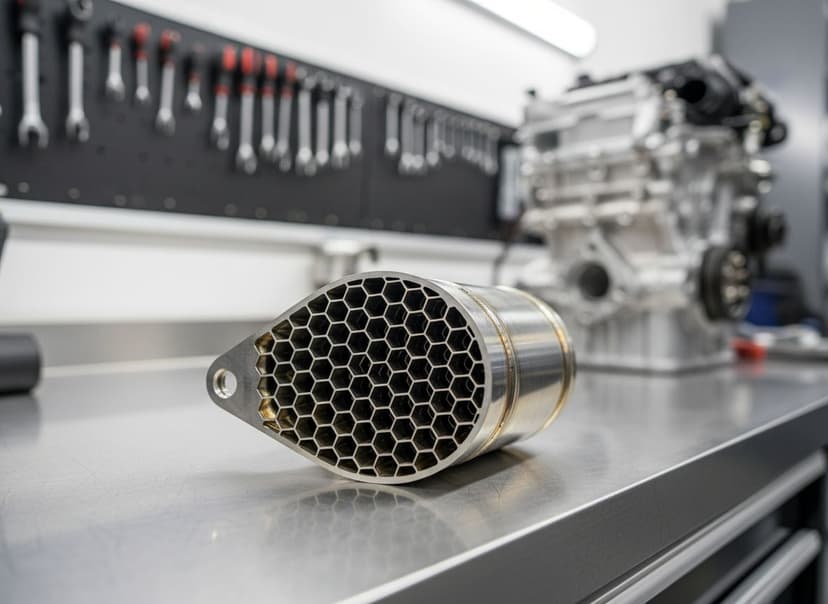
Catalytic converter scrap value comes from three precious metals in the ceramic honeycomb: platinum, palladium, and rhodium. Rhodium is the reason values became dramatic, having traded above twenty thousand dollars per ounce at its 2021 peak before falling substantially, and the metal content varies enormously by vehicle. Hybrid converters, particularly from the Toyota Prius, contain the most because hybrid engines run cooler and require more catalyst to meet emissions standards, which is why they became theft targets. Standard domestic converters contain far less. Value is assessed by identifying the serial number stamped or printed on the converter shell and looking it up against a database of assay results, since visual inspection cannot determine metal loading. Because of theft, most jurisdictions now require sellers to provide identification, proof of vehicle ownership, and in many places the vehicle VIN, and cash payment is restricted or banned. Legitimate sellers should expect and comply with this paperwork.
Precious metal loading is the entire basis of value and varies by vehicle make, model, engine, and emissions standard, which is why serial number identification is the only reliable pricing method. Rhodium content drives the largest swings because the metal is scarce and its price is volatile, having moved by an order of magnitude within a few years. Vehicle type matters enormously, with hybrids at the top and older domestic vehicles at the bottom. Substrate integrity affects yield, and a converter that rattles has lost material and assays lower. Original equipment versus aftermarket is a major distinction, since aftermarket converters use far less catalyst and are worth a small fraction. Current metal prices set the daily rate. Finally, the regulatory environment is now a real factor: theft-driven legislation in most jurisdictions requires documentation from the seller, and buyers who do not ask for it are usually operating outside the law.
Buying & Selling Tips
Buying
Identify the converter by its stamped serial number and look it up in a pricing database. Visual inspection cannot determine metal content.
Shake the unit and listen for rattling. Loose substrate means material has been lost and the assay will be lower.
Check whether the converter is original equipment or aftermarket. Aftermarket units are worth a small fraction.
Understand that hybrid converters carry the highest loading, which is also why they are the primary theft target.
Deal only with buyers who follow documentation requirements. A buyer who does not ask for paperwork is a warning sign.
Selling
Bring identification, proof of vehicle ownership, and the VIN. Most jurisdictions now require all three for a legal sale.
Get quotes from several buyers using the serial number. Prices for the same unit vary widely between recyclers.
Do not cut or gut the converter. Buyers assay complete units and a damaged one yields less.
Photograph the serial number and the full unit. It lets buyers quote accurately without a visit.
Watch precious metal prices before selling. Rhodium in particular is volatile enough to change a converter's value substantially within weeks.
Catalytic Converters FAQ
Why are catalytic converters valuable?
They contain platinum, palladium, and rhodium in a ceramic honeycomb substrate. Rhodium in particular has traded at extremely high prices, and the combined metal content in a single converter can be worth hundreds of dollars.
Which catalytic converters are worth the most?
Hybrid vehicle converters, especially from the Toyota Prius, contain the highest metal loading and bring $500 to $1,400. Standard domestic car converters are at the bottom at $70 to $250.
How do I find out what my converter is worth?
Locate the serial number stamped or printed on the shell and look it up in a converter pricing database. Metal loading varies too much between models for visual estimation to be reliable.
What paperwork do I need to sell a catalytic converter?
Most jurisdictions now require photo identification, proof that you own the vehicle the converter came from, and the vehicle VIN. Many also restrict or prohibit cash payment. These rules exist because of widespread theft.
Are aftermarket catalytic converters worth anything?
Very little, typically $15 to $60. Aftermarket units use substantially less precious metal than original equipment converters, which is why identifying whether a unit is OEM matters before pricing it.
Got Catalytic Converters to Value?
Upload a photo and get a free AI-powered valuation in seconds. No sign-up required.