Last updated: September 2026
How Much Are Cabbage Patch Kids Worth?
Check current market values, learn what affects pricing, and get tips for buying and selling.
← All Cabbage Patch Kids valuationsWhat do you want to value?
Get the free app for unlimited scans


Cabbage Patch Kids Price Guide
Current market values based on recent sales data and market trends.
| Item | Condition | Price Range |
|---|---|---|
| Xavier Roberts Little People, pre-1983 | Excellent, signed | $1,500 - $10,000 |
| 1983 Coleco, first run | Excellent with papers | $100 - $400 |
| 1983-84 Coleco, common | Played with | $15 - $45 |
| 1983-84 Coleco, mint in box | NRFB with papers | $120 - $500 |
| Rare hair or eye combination | Excellent | $150 - $800 |
| Factory error doll | Excellent | $200 - $1,200 |
| Circus Kids / specialty lines | Excellent with box | $60 - $300 |
| 1985-89 Coleco | Played with | $10 - $30 |
| Hasbro or Mattel era (1989+) | Any | $5 - $25 |
| Any doll with stains or hair loss | Poor | $3 - $12 |
What Determines Cabbage Patch Kids Value
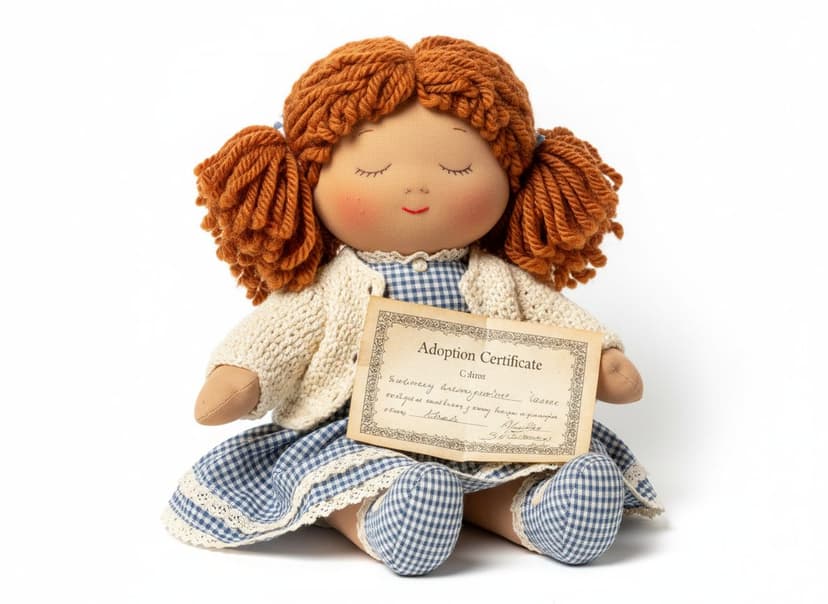
Cabbage Patch Kids caused genuine riots in toy stores during the 1983 holiday season, and that memory has convinced two generations that their childhood doll is valuable. For the overwhelming majority, it is not. Coleco produced tens of millions of dolls between 1983 and 1989, and a typical played-with example from that period sells for $15 to $40. Value concentrates in a narrow set of exceptions. Xavier Roberts' original hand-stitched Little People soft sculpture dolls, made before the Coleco licensing deal, are genuine art objects and bring thousands. Within the Coleco line, the earliest 1983 dolls with specific head molds, rare hair and eye color combinations, and factory-error dolls carry premiums. Condition and completeness with the original box, birth certificate, and adoption papers matter enormously, since almost nobody kept them. The signature on the doll's left buttock identifies the factory and year and is the first thing collectors check.
Manufacturer and era create the fundamental split, with Xavier Roberts' pre-licensing Little People dolls in a completely different market from mass-produced Coleco toys. Within Coleco production, the 1983 first run carries premiums, and the factory code and signature color on the doll's backside identify both. Rare feature combinations drive value, with red hair, green eyes, freckles, and certain skin tones produced in far smaller numbers. Completeness with the original box, birth certificate, and adoption papers is a major multiplier because those items were routinely discarded. Condition is judged on the cloth body, which stains permanently, the vinyl head, which can develop discoloration, and the yarn hair, which frets and thins. Factory errors are their own collecting niche. Later Hasbro and Mattel production has minimal collector interest regardless of condition.
Buying & Selling Tips
Buying
Check the signature on the left buttock. Its color and the factory code identify the production year and plant.
Look for the original birth certificate and adoption papers. They are frequently missing and add real value.
Inspect the cloth body under bright light for staining. Cloth stains are permanent and heavily discount a doll.
Learn to identify pre-Coleco Little People dolls. They are hand-stitched, individually signed, and worth vastly more.
Do not pay a premium for common 1983 dolls. Tens of millions exist and most sell for under $40.
Selling
Photograph the signature and factory code clearly. Collectors identify and price dolls from that image alone.
Include the box and papers if you have them. Complete examples sell for three to five times a bare doll.
Do not wash the cloth body aggressively. Washing can set stains and damage the stuffing.
Group common dolls into lots. Individually they are barely worth the shipping and listing effort.
Sell rare feature combinations individually and describe them precisely. Collectors search for specific hair and eye pairings.
Cabbage Patch Kids FAQ
Are Cabbage Patch Kids worth anything?
Most are not. A typical 1980s Coleco doll played with sells for $15 to $45. Value concentrates in pre-Coleco Xavier Roberts originals, 1983 first-run dolls with papers, and rare feature combinations.
What is the most valuable Cabbage Patch Kid?
Xavier Roberts' original hand-stitched Little People soft sculpture dolls, made before the 1983 Coleco licensing deal, bring $1,500 to $10,000 depending on condition and signature.
How do I identify the year of my Cabbage Patch Kid?
Check the signature stamped on the doll's left buttock. Its ink color corresponds to a production year, and the tush tag lists the factory code. Both together identify the doll precisely.
Does the birth certificate matter?
Yes, significantly. Original birth certificates and adoption papers were usually discarded, so a complete doll with its documentation sells for three to five times one without.
Which Cabbage Patch features are rare?
Red yarn hair combined with green eyes and freckles is the most sought-after combination. Certain skin tones and unusual hairstyles were also produced in smaller numbers and command premiums.
Got Cabbage Patch Kids to Value?
Upload a photo and get a free AI-powered valuation in seconds. No sign-up required.