Last updated: September 2026
How Much Are Baseball Rookie Cards Worth?
Check current market values, learn what affects pricing, and get tips for buying and selling.
← All Baseball Cards valuationsWhat do you want to value?
Get the free app for unlimited scans


Baseball Rookie Cards Price Guide
Current market values based on recent sales data and market trends.
| Item | Condition | Price Range |
|---|---|---|
| 1952 Topps Mickey Mantle #311 | PSA 3 (VG) | $80,000 - $120,000 |
| 1952 Topps Mickey Mantle #311 | PSA 7 (NM) | $1,500,000 - $3,000,000+ |
| 1955 Topps Roberto Clemente #164 | PSA 6 (EX-MT) | $15,000 - $25,000 |
| 1954 Topps Hank Aaron #128 | PSA 5 (EX) | $15,000 - $25,000 |
| 1989 Upper Deck Ken Griffey Jr. #1 | PSA 10 | $3,000 - $5,000 |
| 1993 SP Foil Derek Jeter #279 | PSA 10 | $80,000 - $120,000 |
| 2011 Topps Update Mike Trout #US175 | PSA 10 | $300,000 - $500,000 |
| 2018 Topps Update Shohei Ohtani #US1 | PSA 10 | $1,500 - $3,000 |
| 2018 Topps Update Ronald Acuna Jr. #US250 | PSA 10 | $200 - $400 |
| 1986 Topps Traded Barry Bonds #11T | PSA 9 | $80 - $150 |
What Determines Baseball Rookie Cards Value
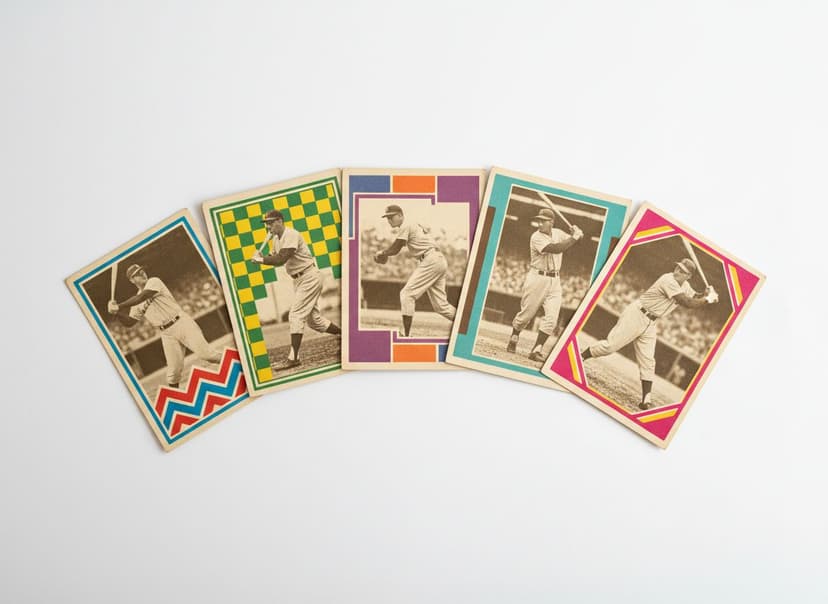
Baseball rookie cards are the cornerstone of sports card collecting and represent the single most valuable category in the hobby. A player's rookie card. Their first officially licensed card. Captures the beginning of a career and becomes the defining collectible for that player. Vintage rookie cards from the 1950s-1960s golden era (Mickey Mantle, Willie Mays, Hank Aaron) routinely sell for six and seven figures in high grades. Modern rookie cards have also reached extraordinary prices: a 2011 Mike Trout Update RC sold for $3.93 million in 2021. The market is driven by player performance, nostalgia, scarcity, and condition, with PSA and BGS grading being essential for establishing value on any card worth more than $50.
Baseball rookie card values are driven by the player's career accomplishments and Hall of Fame status (MVPs, 3,000 hits, 500 HRs significantly boost value), card condition and grade (the jump from PSA 9 to PSA 10 can be 5-20x for modern cards), scarcity and print run (vintage Topps cards had much lower production than modern sets), the specific set and card design (1952 Topps is the gold standard for vintage, SP for 1990s), population count at top grades (fewer PSA 10s means higher per-card value), and current player hype. Active players' card values fluctuate with on-field performance. An injury or slump can temporarily reduce values 20-40%, while an MVP season or milestone pushes them up.
Buying & Selling Tips
Buying
Always buy graded cards (PSA, BGS, or SGC) for any purchase over $50. The raw card market is rife with trimmed, altered, and counterfeit cards.
Check PSA's pop report before buying to understand how many copies exist at each grade. A PSA 10 with 50,000 copies is very different from one with 50.
For modern rookies, focus on Topps flagship and Topps Chrome as the primary RC. Parallels and inserts from other sets carry less long-term value.
Be cautious buying active players at career peaks. Card values can drop sharply with injuries or declining performance.
Vintage cards in PSA 3-5 range offer affordable entry into premium players like Mantle, Aaron, and Mays without six-figure price tags.
Selling
Get any ungraded card you believe is in excellent condition professionally graded before selling. The cost ($20-$50) is negligible compared to the value added.
Use eBay auction format for high-value vintage cards and rare modern cards. Auction competition often pushes prices above fixed-price expectations.
List modern cards on eBay and card-specific platforms like COMC (Check Out My Cards) for maximum visibility.
Time sales around player milestones (Hall of Fame induction, jersey retirement, hitting milestones) for peak demand.
Provide high-resolution scans of both front and back, plus clear photos of the PSA/BGS label and case condition.
Baseball Rookie Cards FAQ
What is the most valuable baseball card?
The 1952 Topps Mickey Mantle #311 holds the record as the most valuable baseball card, with a PSA 9.5 (Mint+) copy selling for $12.6 million in August 2022. The T206 Honus Wagner from 1909, while not technically a rookie card, is another contender and has sold for up to $7.25 million. For modern cards, the 2011 Topps Update Mike Trout in PSA 10 has sold for nearly $4 million.
How do I know if my baseball card is a rookie card?
A true rookie card (RC) is a player's first card in a major, fully licensed set. Since 2006, Topps has been the sole MLB licensee, so only Topps-produced cards qualify as official RCs. Look for the 'RC' logo on the card front (modern cards) or check hobby databases like Beckett or Trading Card Database. A player's rookie card is typically from the year after their MLB debut.
Are 1990s baseball cards worth anything?
Most 1990s baseball cards from common sets (1990 Donruss, 1991 Fleer, 1992 Topps) are worth very little due to massive overproduction. These were printed in the hundreds of millions. However, key exceptions include: 1993 SP Derek Jeter ($100,000+ in PSA 10), 1989 Upper Deck Ken Griffey Jr. ($3,000-$5,000 in PSA 10), and select insert and parallel cards from premium sets. The 'junk wax era' (1987-1994) produced billions of cards, keeping common card values near zero.
Should I invest in current players' rookie cards?
Buying active players' rookie cards is speculative. Values rise and fall with performance. Focus on generational talents with a clear path to the Hall of Fame (historically: consistent All-Star selections, MVP awards, milestone stats). Diversify rather than going all-in on one player. Buy graded PSA 10 copies of flagship Topps rookie cards for the strongest long-term potential. Be prepared for volatility. Even Mike Trout's card dropped 50% from its 2021 peak.
What is the difference between PSA and BGS grading?
PSA (Professional Sports Authenticator) uses a 1-10 scale and is the most popular and liquid grading service.PSA cards generally sell for 10-20% more than equivalent BGS grades. BGS (Beckett Grading Services) grades on a 1-10 scale with half-point subgrades for centering, corners, edges, and surface. A BGS 9.5 (Gem Mint) is roughly equivalent to a PSA 10 in quality but typically sells for less. SGC (Sportscard Guaranty) is a third option gaining popularity, especially for vintage cards.
Related Articles
Got Baseball Rookie Cards to Value?
Upload a photo and get a free AI-powered valuation in seconds. No sign-up required.