Last updated: September 2026
How Much Is Antique Furniture Worth?
Check current market values, learn what affects pricing, and get tips for buying and selling.
← All Furniture valuationsWhat do you want to value?
Get the free app for unlimited scans


Antique Furniture Price Guide
Current market values based on recent sales data and market trends.
| Item | Condition | Price Range |
|---|---|---|
| 18th century American highboy | Original finish | $3,000 - $40,000 |
| Georgian mahogany chest of drawers | Original | $400 - $2,500 |
| Victorian mahogany dining table | Good | $150 - $700 |
| Victorian sideboard or wardrobe | Good | $100 - $500 |
| Eames lounge chair and ottoman | Original, Herman Miller | $3,000 - $7,000 |
| Hans Wegner Wishbone chair | Original Carl Hansen | $500 - $1,400 |
| Danish teak sideboard, 1960s | Excellent | $800 - $3,500 |
| Arts and Crafts Stickley piece | Original finish, marked | $1,500 - $15,000 |
| Any antique that has been refinished | Good | 30% - 60% of original finish |
| Reproduction period furniture | Excellent | $100 - $600 |
What Determines Antique Furniture Value
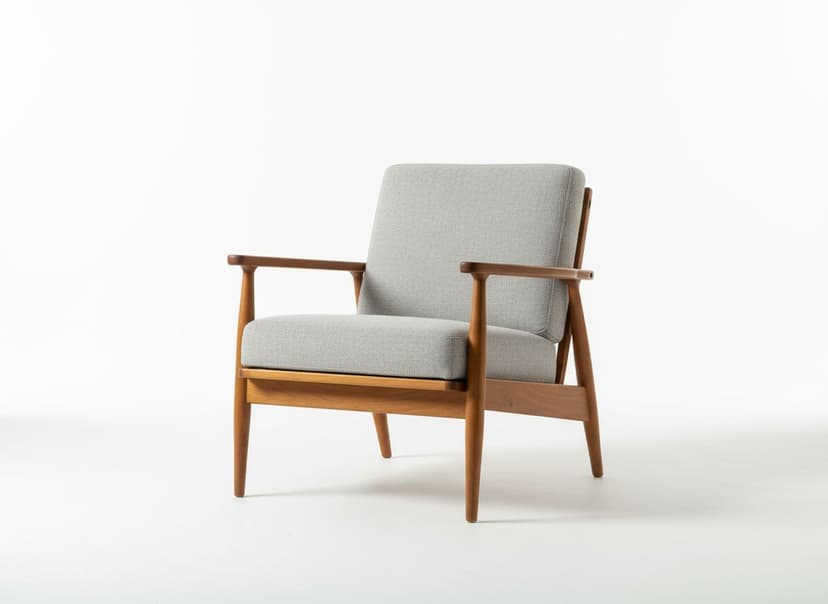
Antique furniture is the most misunderstood category in this entire field, because the market has inverted over the past twenty-five years. Traditional dark wood antiques, known in the trade as brown furniture, have collapsed in value: a Victorian mahogany dining table that brought two thousand dollars in 1995 might sell for two hundred today. Meanwhile mid-century modern furniture from the 1950s and 1960s, once considered used furniture, has appreciated enormously, with designer pieces by Eames, Wegner, and Jacobsen bringing thousands. The drivers are straightforward: smaller homes, changed aesthetics, and a generation that does not want inherited formal furniture. Value now concentrates in three areas: genuinely early and rare pieces from the eighteenth century and before, documented designer pieces from any era, and anything with exceptional provenance. Condition and originality matter enormously in the surviving high-value segments, and refinishing an antique can destroy most of its value.
Period and rarity establish the tier, and genuinely early pieces from the eighteenth century remain valuable while nineteenth-century mass-produced furniture has collapsed. Designer attribution has become the dominant factor in twentieth-century furniture, and a documented Eames or Wegner piece is worth many times an anonymous one of similar quality. Original finish and surface are critical and frequently misunderstood, since refinishing an antique removes patina that took two centuries to develop and typically cuts value by half. Construction details date and authenticate pieces, including dovetail cut, saw marks, secondary woods, and hardware. Size is a real market factor now, since large wardrobes and dining suites do not fit modern homes and sell at steep discounts regardless of quality. Provenance and documentation add substantially at the top. Finally, condition of structural elements, veneer, and upholstery all affect price, with veneer loss being expensive to repair invisibly.
Buying & Selling Tips
Buying
Do not refinish antiques. Original surface and patina are major value components and stripping them is irreversible.
Check dovetails and saw marks to date construction. Hand-cut dovetails are irregular; machine-cut ones are uniform and indicate later production.
Look for designer marks and labels on mid-century pieces. Attribution is the difference between hundreds and thousands.
Buy brown furniture for use. Georgian and Victorian pieces are extraordinarily good value at current prices.
Measure your space before buying large pieces. Size is the main reason quality Victorian furniture goes unsold.
Selling
Never strip or refinish before selling. It reduces value by roughly half on genuine antiques.
Photograph maker marks, labels, and construction details including drawer interiors and undersides.
Sell mid-century designer pieces through specialist dealers or auctions where the buyers are.
Set realistic expectations for Victorian furniture. Prices are a fraction of what they were in the 1990s.
Consider local pickup only. Furniture shipping is expensive enough to exceed the value of most brown furniture.
Antique Furniture FAQ
Why has antique furniture dropped in value?
Smaller homes, changed tastes, and a generation that does not want inherited formal furniture. Traditional dark wood pieces known as brown furniture have fallen by eighty to ninety percent from their 1990s peak.
Should I refinish an antique before selling?
No. Original finish and patina are major value components, and refinishing typically cuts a genuine antique's value by half or more. Clean gently at most.
Which antique furniture is still valuable?
Eighteenth-century American and English pieces with original surfaces, documented designer furniture from any era, marked Arts and Crafts pieces by Stickley and similar makers, and mid-century modern by recognized designers.
Is mid-century modern furniture a good investment?
Documented designer pieces have appreciated substantially, with an original Eames lounge chair bringing $3,000 to $7,000. Anonymous mid-century furniture of similar age is worth far less, so attribution is everything.
How can I date a piece of antique furniture?
Examine the joinery, saw marks, secondary woods, and hardware. Hand-cut dovetails with irregular spacing indicate pre-1860 construction, while uniform machine-cut dovetails and circular saw marks indicate later production.
Got Antique Furniture to Value?
Upload a photo and get a free AI-powered valuation in seconds. No sign-up required.