Last updated: September 2026
How Much Does a Nose Job Cost?
Rhinoplasty is one of the most popular cosmetic procedures, with costs ranging from $5,000 to $25,000+ depending on complexity and surgeon expertise. The average nose job costs $7,500-$12,000 for a primary rhinoplasty. Revision rhinoplasty is more complex and costs $8,000-$20,000+. Our calculator provides a personalized estimate based on your procedure type, surgeon experience level, geographic location, and whether insurance may cover any portion.
Get the free app for unlimited scans


Nose Job (Rhinoplasty) Value Calculator
Fill in the details below for an accurate estimate
Why Knowing Your Nose Job (Rhinoplasty) Value Matters
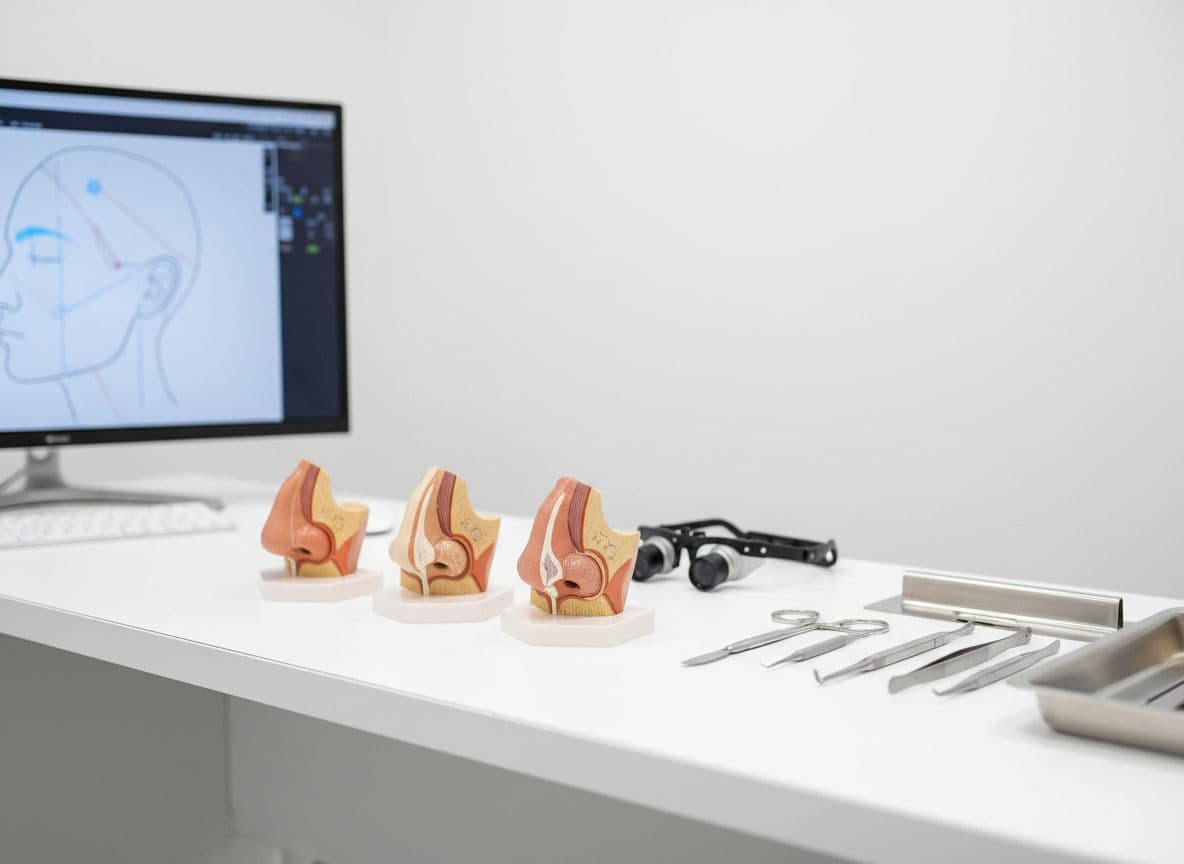
A nose job is a significant investment in your appearance and confidence, and costs vary dramatically based on the surgeon's expertise and the complexity of your procedure. Choosing a surgeon based solely on the lowest price is risky. Rhinoplasty is considered one of the most technically challenging cosmetic procedures, and revision rhinoplasty (to fix a poor result) costs even more. Understanding the full cost breakdown helps you budget properly and choose a qualified surgeon within your price range.
Key Factors That Affect Nose Job (Rhinoplasty) Value
Understanding what drives the price of nose job (rhinoplasty) helps you get the most accurate valuation.
Procedure Complexity
Simple cosmetic refinement (bump removal, minor tip work): $5,000-$8,000. Standard rhinoplasty (reshaping bridge and tip): $7,000-$12,000.complex rhinoplasty (significant reshaping, functional correction): $10,000-$18,000. Revision rhinoplasty (correcting previous surgery): $8,000-$25,000. Ethnic rhinoplasty (preserving ethnic features while refining): $8,000-$15,000. Liquid/non-surgical rhinoplasty (filler-based, temporary): $800-$2,500.
Surgeon Experience & Reputation
Surgeon fees are the largest component (60-70% of total cost). Board-certified plastic surgeons charge $4,000-$15,000+ for their fee alone. Surgeons who specialize in rhinoplasty and have extensive before/after portfolios typically charge 30-50% more than general plastic surgeons. Celebrity or 'Instagram-famous' surgeons in major cities can charge $20,000-$40,000+.
Geographic Location
Location significantly impacts pricing. Major metros (NYC, LA, Miami, San Francisco): $8,000-$20,000+. Mid-size cities: $6,000-$12,000. Smaller cities and rural areas: $5,000-$9,000. Medical tourism destinations (Turkey, Mexico, Colombia, South Korea): $2,000-$6,000, but with added travel costs and risks of follow-up complications far from your surgeon.
Facility & Anesthesia Fees
Beyond the surgeon's fee: Operating room/facility fee: $1,000-$3,000. Anesthesia (general or IV sedation): $800-$2,000. Pre-operative tests and consultation: $100-$500. Post-operative care (splints, follow-ups): included or $200-$500 extra.compression garment and supplies: $50-$200. Some surgeons quote all-inclusive pricing while others itemize, making comparison shopping confusing.
Tips for Valuing Nose Job (Rhinoplasty)
Get the most accurate estimate by following these tips when evaluating your nose job (rhinoplasty).
Choose a board-certified plastic surgeon (ABPS) or facial plastic surgeon (ABFPRS) who specializes in rhinoplasty. Ask to see at least 20-30 before/after photos of noses similar to yours.
Get an all-inclusive quote that covers surgeon fee, anesthesia, facility, and follow-up visits. Avoid surprises from separately billed items.
If you have breathing problems or a deviated septum, ask about combining functional and cosmetic rhinoplasty. Insurance may cover the functional portion ($3,000-$7,000 savings).
Budget for 1-2 weeks off work for recovery. The financial impact of downtime should be factored into your total cost planning.
Nose Job (Rhinoplasty) Market Insights
Rhinoplasty remains among the top 5 cosmetic surgical procedures worldwide. The rise of social media and video calls has increased demand, particularly among 18-35 year olds. Non-surgical rhinoplasty (using dermal fillers for temporary reshaping) has grown rapidly as a lower-cost, lower-risk alternative for minor refinements. Medical tourism for rhinoplasty has expanded, with Turkey and South Korea becoming major destinations. Financing options through CareCredit, Prosper Healthcare Lending, and surgeon-offered payment plans have made the procedure more accessible.
Notable Nose Job (Rhinoplasty) Values
Real-world examples of what specific nose job (rhinoplasty) have sold for, so you can benchmark your own.
| Nose Job (Rhinoplasty) | Condition | Typical Value |
|---|---|---|
| Basic Reduction Rhinoplasty (Midwest/South US) | Board-Certified Surgeon | $4,000 - $7,000 |
| Standard Primary Rhinoplasty (Major US City) | Board-Certified Surgeon | $7,000 - $12,000 |
| Tip Plasty / Minor Tip Refinement | Board-Certified Surgeon | $3,500 - $6,500 |
| Septorhinoplasty (Functional + Cosmetic) | Board-Certified Surgeon | $6,000 - $14,000 |
| Revision Rhinoplasty (Secondary Procedure) | Board-Certified Surgeon | $8,000 - $18,000 |
| Ethnic Rhinoplasty (Preservation Technique) | Specialist Surgeon | $8,000 - $15,000 |
| Non-Surgical Rhinoplasty (Filler) | Injector (MD/DO) | $600 - $1,800 |
| Elite / Celebrity Surgeon (Beverly Hills, NYC) | Top-Tier Specialist | $15,000 - $35,000+ |
| Medical Tourism Rhinoplasty (Turkey, Thailand) | Accredited Facility | $2,500 - $5,500 |
Based on published surgeon fee schedules, RealSelf cost data, ASPS surgeon fee surveys, and medical tourism package listings.
Find Out What Your Nose Job (Rhinoplasty) Are Worth
Upload a photo now and get a free AI-powered valuation in seconds. No sign-up required.
Nose Job (Rhinoplasty) Valuation FAQ
How much does a nose job cost with insurance?
Insurance typically does not cover cosmetic rhinoplasty, which is considered elective. However, if your rhinoplasty includes a functional component. Correcting a deviated septum (septoplasty), fixing a nasal valve collapse, or addressing breathing obstruction caused by injury. Insurance may cover that portion. In a combined functional + cosmetic rhinoplasty, insurance might cover $3,000-$7,000 of the total cost, leaving you to pay the cosmetic portion out of pocket. Your out-of-pocket cost with insurance coverage for the functional component might be $4,000-$10,000 vs. $7,000-$15,000 for purely cosmetic. Get pre-authorization from your insurance before scheduling.
Is a nose job worth the money?
Patient satisfaction rates for rhinoplasty are high. Studies show 80-90% satisfaction when performed by experienced, board-certified rhinoplasty specialists. The procedure can significantly improve facial harmony, self-confidence, and breathing. However, results take 12-18 months to fully settle, and expectations must be realistic. It's 'worth it' if: (1) You have a specific, correctable concern that significantly affects your confidence. (2) You've chosen a highly qualified surgeon with proven results. (3) Your expectations are realistic (improvement, not perfection). It may not be worth it if you're seeking surgery to please others or have body dysmorphic disorder, which should be addressed with a mental health professional first.
How much is a non-surgical nose job?
Non-surgical rhinoplasty (liquid rhinoplasty) using dermal fillers costs $800-$2,500 per treatment. It can smooth bumps, lift a drooping tip, improve symmetry, and reshape the nose without surgery. Advantages: no downtime, immediate results, reversible (with hyaluronidase), and 90% less expensive than surgical rhinoplasty. Disadvantages: temporary (lasts 6-18 months, then needs repeating), cannot reduce nose size, limited in what it can achieve, and carries a small risk of vascular complications. Over 3-5 years of repeat treatments, costs can approach surgical rhinoplasty. Best for: minor refinements, bridge smoothing, and patients who want to 'test' a new look before committing to surgery.
Value anything, anytime
Unlimited valuations, saved history and full reports in the free app.