Last updated: September 2026
How Much Does It Cost to Wrap a Car?
A full car wrap costs $2,500-$6,000+ in 2026 depending on vehicle size, film type, and design complexity. Partial wraps and accents cost $500-$2,000. Premium films (satin, matte, color-shift) add to cost.
Get the free app for unlimited scans


Car Wrap Value Calculator
Fill in the details below for an accurate estimate
Why Knowing Your Car Wrap Value Matters
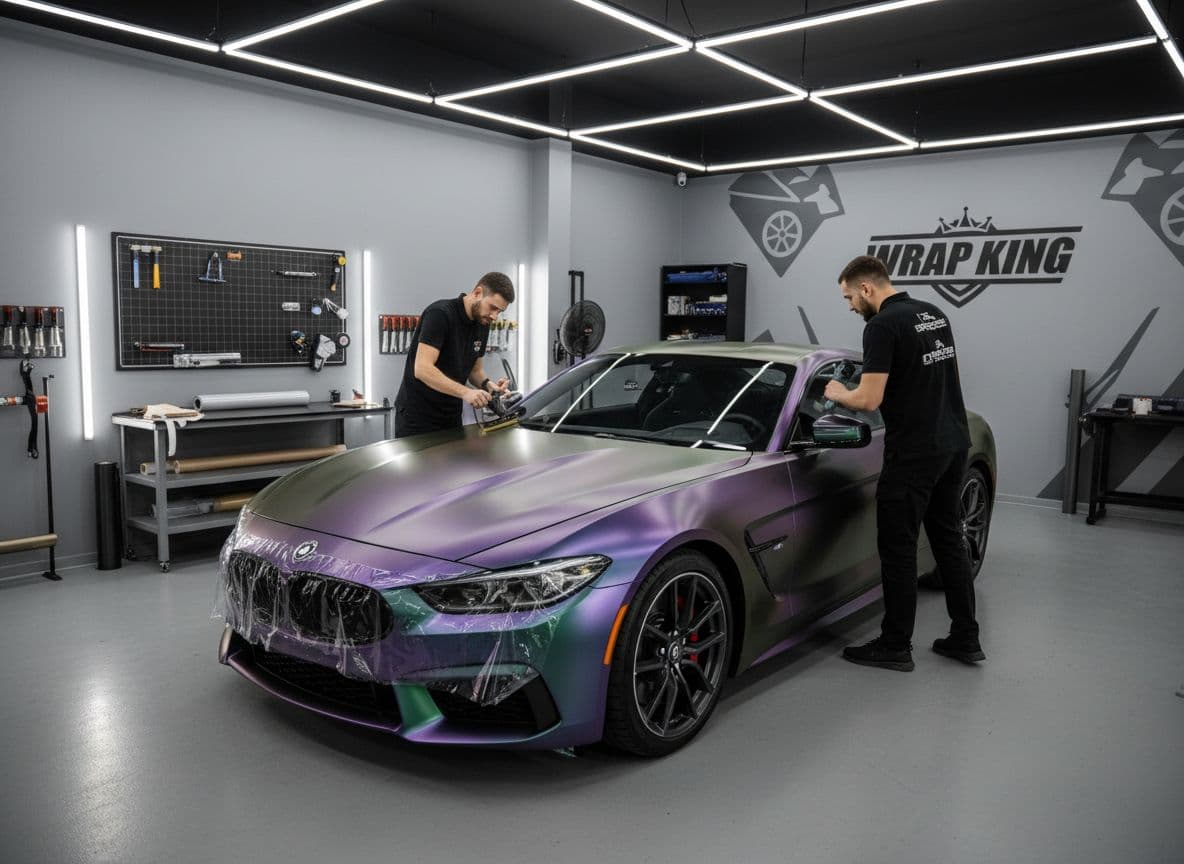
Vinyl wrapping has become a mainstream alternative to paint for changing a car's appearance. It's reversible, protects factory paint, and offers colors and finishes (matte, satin, chrome, color-shift) that paint can't easily replicate. Understanding pricing helps you budget for this increasingly popular modification.
Key Factors That Affect Car Wrap Value
Understanding what drives the price of car wrap helps you get the most accurate valuation.
Coverage
Full wrap (entire vehicle): $2,500-$6,000. Partial wrap (roof, hood, trunk): $500-$2,000. Accent wrap (mirrors, trim, stripes): $200-$800. Chrome delete (black out chrome trim): $500-$1,500. Full wrap with printed design/graphics: $3,000-$8,000.
Film Type
Gloss solid color: $2,500-$4,000. Matte/satin: $3,000-$5,000. Color-shift/iridescent: $4,000-$7,000. Chrome/mirror: $5,000-$8,000+. Carbon fiber texture: $3,500-$6,000. Premium brands (3M, Avery, Inozetek) cost more than budget films.
Vehicle Size
Compact (Civic, Golf): $2,500-$4,000. Mid-size (Camry, Model 3): $3,000-$5,000. Full-size SUV (Tahoe, X5): $4,000-$6,000. Truck: $3,500-$5,500. Exotic/complex body (Lamborghini): $5,000-$10,000+.
Design Complexity
Single color: base price. Two-tone: add $500-$1,500. Custom printed graphics: add $1,000-$3,000.complex curves and body lines increase labor time. Disassembly (bumpers, handles) for cleaner edges: add $500-$1,000.
Surface Preparation
Clean vehicle: base price. Paint correction needed first: add $200-$500. Existing damage (chips, dents): should be repaired before wrapping, varies. Old wrap removal: add $500-$1,500.
Tips for Valuing Car Wrap
Get the most accurate estimate by following these tips when evaluating your car wrap.
Choose an installer with a portfolio. Wrapping skill varies enormously
Premium films (3M 2080, Avery Supreme) last longer and look better than budget options
Wraps last 3-7 years with proper care. Hand wash only, avoid automatic car washes
Get any paint chips or dents fixed before wrapping. The film won't hide defects
Car Wrap Market Insights
Car wrapping has grown 20%+ annually as more consumers discover it as a reversible alternative to paint. The aftermarket is driven by social media and car culture communities. Premium film brands continue to innovate with new finishes. Paint Protection Film (PPF) is a related growing category focused on invisible protection rather than color change.
Find Out What Your Car Wrap Are Worth
Upload a photo now and get a free AI-powered valuation in seconds. No sign-up required.
Car Wrap Valuation FAQ
How long does a car wrap last?
Quality wraps last 5-7 years with proper care. Budget films may start peeling at 2-3 years. Factors: sun exposure, washing method, film quality, and installation quality. Garage-parked cars with premium film can look great for 7+ years.
Does wrapping a car damage the paint?
No. Quality wraps actually protect factory paint. When properly removed, the paint underneath is in better condition than exposed paint. However, wrapping over damaged or poorly repainted surfaces can cause issues during removal.
Is it cheaper to wrap or paint a car?
For basic color changes, they're similar ($2,500-$5,000). Wrapping advantages: reversible, protects paint, unique finishes available. Painting advantages: permanent, handles complex areas better, doesn't peel. For matte/satin finishes, wrapping is significantly cheaper than matte paint.
Can I wrap my car myself?
Small sections (roof, mirrors, trim) are DIY-doable with practice. Full wraps require significant skill, tools, and space. DIY materials cost $500-$1,500 vs $2,500-$6,000 professionally installed. Practice on small areas first if attempting DIY.
Can you wrap a car any color?
Yes. Wraps are available in virtually any color, finish (gloss, matte, satin, chrome, carbon fiber), and can include custom printed designs. Color-shift and iridescent films offer effects impossible with paint. The range of options is one of wrapping's biggest advantages.
Value anything, anytime
Unlimited valuations, saved history and full reports in the free app.