Last updated: September 2026
How Much Are Comic Books Worth?
Check current market values, learn what affects pricing, and get tips for buying and selling.
← All Comic Books valuationsWhat do you want to value?
Get the free app for unlimited scans


Valuable Comic Books Price Guide
Current market values based on recent sales data and market trends.
| Item | Condition | Price Range |
|---|---|---|
| Action Comics #1 (1st Superman, 1938) | CGC 2.0 (Good) | $1,000,000 - $2,000,000 |
| Amazing Fantasy #15 (1st Spider-Man, 1962) | CGC 4.0 (VG) | $100,000 - $175,000 |
| Incredible Hulk #181 (1st Wolverine, 1974) | CGC 9.2 (NM-) | $15,000 - $25,000 |
| X-Men #1 (1st X-Men, 1963) | CGC 5.0 (VG/FN) | $10,000 - $18,000 |
| Batman #1 (1st Joker & Catwoman, 1940) | CGC 3.0 (G/VG) | $150,000 - $250,000 |
| Giant-Size X-Men #1 (New X-Men Team, 1975) | CGC 9.4 (NM) | $8,000 - $12,000 |
| Amazing Spider-Man #300 (1st Venom, 1988) | CGC 9.8 (NM/MT) | $3,000 - $5,000 |
| New Mutants #98 (1st Deadpool, 1991) | CGC 9.8 (NM/MT) | $2,500 - $4,000 |
| Ultimate Fallout #4 (1st Miles Morales, 2011) | CGC 9.8 | $1,500 - $3,000 |
| Common Comic (1980s-2000s) | Raw, Good-Fine | $0.25 - $3 |
What Determines Valuable Comic Books Value
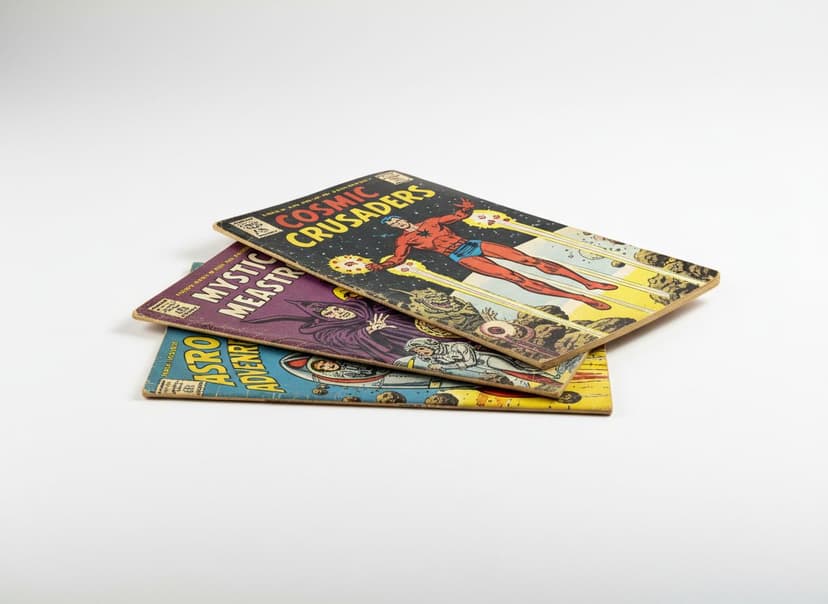
Comic books are one of the oldest and most established collectible markets, with the hobby dating back to the 1930s. The most valuable comics feature first appearances of iconic characters.Action Comics #1 (first Superman, 1938) holds the record at $6 million, while Amazing Fantasy #15 (first Spider-Man, 1962) has sold for $3.6 million. The market is divided into eras: Golden Age (1938-1956), Silver Age (1956-1970), Bronze Age (1970-1985), and Modern Age (1985-present). CGC (Certified Guaranty Company) grading has transformed the market by providing standardized condition assessment and tamper-proof encapsulation. While most common comics are worth $1-$5, key issues with first appearances, deaths, or iconic covers can be worth thousands or even millions.
Comic book values are driven by key issue status (first appearances, deaths, origin stories, and iconic covers command the highest premiums), condition and CGC grade (the difference between CGC 9.6 and 9.8 can be 3-5x for modern keys), era and rarity (Golden Age comics survive in small numbers, while Modern Age comics were printed in millions), character popularity and media adaptations (MCU movie announcements spike related comic values 50-200%), page quality (white pages are worth more than cream or off-white), and whether Marvel Value Stamps or coupons are intact (clipped stamps in Bronze Age comics reduce value 30-50%). The comic market closely tracks pop culture. A character getting a movie, TV show, or video game appearance causes immediate price spikes.
Buying & Selling Tips
Buying
Always buy CGC or CBCS graded copies for key issues over $100. Restoration, trimming, and pressing can be invisible to untrained eyes.
Use GPA (GPAnalysis) or GoCollect to check recent sales data before buying. Asking prices on eBay are often inflated above actual sale prices.
For Bronze Age Marvels, check that the Marvel Value Stamp (MVS) page is intact. A clipped stamp reduces value by 30-50%.
Speculate carefully on movie rumors. Buying comics based on MCU casting leaks can be profitable but is risky if plans change.
Raw (ungraded) comics in apparent high grade can be good values. Buy, press, and submit to CGC for potential profit if the grade comes back 9.6+.
Selling
Get key issues professionally graded by CGC before selling. A raw Amazing Spider-Man #300 might sell for $200, but a CGC 9.8 sells for $3,000-$5,000.
Consider professional pressing before grading. Pressing can remove non-color-breaking bends and spine ticks, potentially increasing the grade by 0.5-1.0 points.
Sell through eBay auction for high-value graded books. Auction competition often exceeds fixed-price expectations.
For bulk common comics, sell in lots by title or era rather than individually. The time investment of listing $3 comics individually is not worthwhile.
Time sales around MCU announcements, movie releases, and TV show debuts for maximum demand on related characters.
Valuable Comic Books FAQ
What makes a comic book valuable?
The most important factor is whether the comic is a 'key issue'. Featuring the first appearance of a popular character, a major story event, or an iconic cover. Condition is the second most important factor. A common comic in perfect condition is still worth very little, but a key issue in any condition has value. Rarity matters most for Golden and Silver Age comics where few copies survive. Modern comics need to be in CGC 9.8 or higher grade to command significant premiums.
How do I get my comics graded by CGC?
Submit comics to CGC through their website (cgccomics.com) or through an authorized dealer at comic conventions. Choose a service tier based on value and turnaround time: Economy ($25, 60+ days), Standard ($50, 30 days), Express ($100, 15 days), or Walk-Through ($150+, 2 days at conventions). CGC will grade on a 0.5-10.0 scale, encapsulate the comic in a tamper-proof case, and add a certification number you can verify online.
Are 1990s comics worth anything?
Most 1990s comics are worth very little due to massive overproduction during the speculator boom. Millions of copies were printed and hoarded. However, key exceptions include: New Mutants #98 (1st Deadpool, $2,500+ in CGC 9.8), Amazing Spider-Man #361 (1st Carnage), and Batman Adventures #12 (1st Harley Quinn, $5,000+ in 9.8). The 90s also produced valuable independent comics like Bone #1 and Spawn #1.
Should I read or preserve my comics?
If a comic is worth under $20, enjoy reading it. The joy of reading outweighs any marginal value loss. For comics worth $50+, consider buying a reader copy and preserving the high-grade copy. Store valuable comics in acid-free bags with backing boards, upright in a cool, dry, dark location. Never store comics in attics, basements, or garages where temperature and humidity fluctuations cause damage.
Do comic book movies affect comic values?
Yes, significantly. When a character is announced for an MCU movie or TV show, their first appearance comic typically spikes 50-200% in value. Prices peak around the movie's release date and often correct 20-40% afterward. Long-term, major characters (Spider-Man, Wolverine, Deadpool) retain their elevated values, while minor characters may return to pre-announcement levels if the movie underperforms.
Got Valuable Comic Books to Value?
Upload a photo and get a free AI-powered valuation in seconds. No sign-up required.