Last updated: September 2026
How Much Is a 1 Carat Diamond Ring Worth?
Check current market values, learn what affects pricing, and get tips for buying and selling.
← All Engagement Rings valuationsWhat do you want to value?
Get the free app for unlimited scans


One Carat Diamond Ring Price Guide
Current market values based on recent sales data and market trends.
| Item | Condition | Price Range |
|---|---|---|
| 1.00ct Round Brilliant, D/IF, Excellent Cut | GIA Certified | $10,000 - $14,000 |
| 1.00ct Round Brilliant, E/VS1, Excellent Cut | GIA Certified | $7,500 - $10,000 |
| 1.00ct Round Brilliant, G/VS2, Excellent Cut | GIA Certified | $5,000 - $7,000 |
| 1.00ct Round Brilliant, H/SI1, Very Good Cut | GIA Certified | $3,500 - $5,000 |
| 1.00ct Round Brilliant, J/SI2, Good Cut | GIA Certified | $2,000 - $3,500 |
| 1.00ct Princess Cut, G/VS2 | GIA Certified | $3,500 - $5,000 |
| 1.00ct Oval Cut, G/VS2 | GIA Certified | $4,000 - $5,500 |
| 1.00ct Lab-Grown Round, G/VS2, Ideal Cut | IGI Certified | $800 - $1,500 |
| 1.00ct in Used Ring Setting | Pre-Owned | $1,500 - $4,000 |
What Determines One Carat Diamond Ring Value
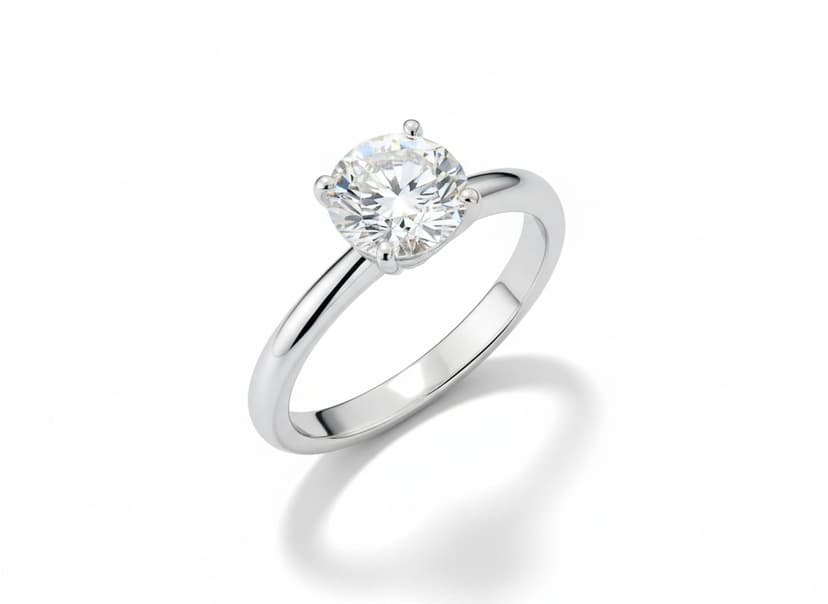
The one-carat diamond ring is the most popular engagement ring size and one of the most frequently searched valuations online. However, there is no single answer to 'how much is a 1 carat diamond worth' because values vary enormously based on the 4Cs: cut, color, clarity, and carat weight. A well-cut 1 carat diamond with excellent color (D-F) and high clarity (VS1 or better) can be worth $6,000-$12,000 wholesale, while a lower-quality 1 carat diamond (J-K color, SI2 clarity) may be worth only $2,000-$3,000. Resale values are typically 30-60% of retail, which surprises many sellers. Understanding what drives diamond value will help you buy smarter or sell with realistic expectations.
Diamond value is determined by the 4Cs: Cut (the most important factor for brilliance.Excellent or Ideal cut grades command the highest prices), Color (D is colorless and most valuable, descending to Z with increasing yellow tint), Clarity (Flawless to I3, with VS2 and above being 'eye-clean'), and Carat weight. Beyond the 4Cs, certification matters enormously.GIA-certified diamonds sell for 10-20% more than those with lesser lab reports. Fluorescence (blue glow under UV light) can lower value in higher-color diamonds but may improve appearance in lower-color stones. The shape also affects price: round brilliants are the most expensive per carat, while fancy shapes (oval, princess, cushion) trade at a 20-40% discount.
Buying & Selling Tips
Buying
Always insist on a GIA or AGS certificate. Other lab reports (EGL, IGI for natural diamonds) tend to overgrade, meaning you may pay more for a lesser stone.
The G-H color and VS2-SI1 clarity range offers the best value. These diamonds face up white and eye-clean but cost significantly less than D/IF.
Consider going slightly below 1.00ct (0.90-0.99ct) for a 10-20% price savings with virtually no visible size difference.
Prioritize cut quality over all other factors. A well-cut diamond with lower color and clarity will look better than a poorly cut D/IF.
Lab-grown diamonds offer identical visual and physical properties at 70-90% less than natural diamonds, but they have minimal resale value.
Selling
Get a GIA grading report if you do not already have one. Ungraded diamonds sell for significantly less due to buyer uncertainty.
Set realistic expectations: resale value for diamonds is typically 30-50% of what was originally paid at retail.
Sell through diamond-specific buyers like Worthy.com, I Do Now I Don't, or local jewelers for the best prices.
Remove the diamond from its setting if selling to a diamond buyer. They only pay for the stone, not the mounting.
Get multiple offers before accepting any. Diamond buyback prices vary significantly between buyers.
One Carat Diamond Ring FAQ
Why is my diamond ring worth so much less than I paid?
Diamond retail prices include significant markups: the jeweler's overhead, marketing costs, and profit margins typically add 100-200% over wholesale cost. When you sell, buyers pay closer to wholesale prices. Additionally, lab-grown diamonds have put downward pressure on natural diamond resale values. A diamond purchased at retail for $8,000 might be worth $3,000-$4,000 on the secondary market.
Is a lab-grown diamond worth buying?
Lab-grown diamonds are chemically, physically, and optically identical to natural diamonds but cost 70-90% less. They are an excellent choice if you prioritize size and quality for your budget. However, lab-grown diamonds have very low resale value (often under $200 for a 1 carat stone), so they should be considered a purchase rather than an investment.
What is the best diamond shape for value?
Round brilliant diamonds cost the most per carat due to high demand and material waste during cutting. For the best value, consider oval, cushion, or princess cuts, which cost 20-40% less per carat and can actually appear larger than rounds of the same carat weight due to their elongated shapes.
Does diamond fluorescence affect value?
Medium to strong blue fluorescence reduces the value of high-color diamonds (D-G) by 5-15% because it can cause a hazy or oily appearance in some stones. However, fluorescence in lower-color diamonds (H-J) can actually improve appearance by counteracting yellow tint, making the diamond face up whiter. Faint fluorescence has negligible impact on value.
Related Articles
Related Price Guides
Got One Carat Diamond Ring to Value?
Upload a photo and get a free AI-powered valuation in seconds. No sign-up required.